Doomreader

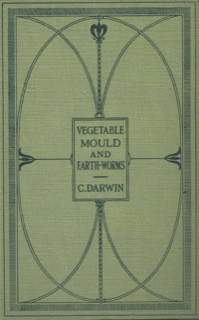
The Formation of Vegetable Mould Through the Action of Worms

by Charles Darwin

Length: 63,386 words, about 254 pages, about 4 hours to read

Science and nature

Read The Formation of Vegetable Mould Through the Action of Worms free, starting with its best pages and lines below. Listen to it free too, read aloud by your phone's own voice.

The best passages

Pages from the book itself, chosen to make you want to read on. Each opens in the reader at that exact spot.

INTRODUCTION.

As I was led to keep in my study during many months worms in pots filled with earth, I became interested in them, and wished to learn how far they acted consciously, and how much mental power they displayed. I was the more desirous to learn something on this head, as few observations of this kind have been made, as far as I know, on animals so low in the scale of organization and so poorly provided with sense-organs, as are earth-worms.

In the year 1837, a short paper was read by me before the Geological Society of London, [3] “On the Formation of Mould,” in which it was shown that small fragments of burnt marl, cinders, &c., which had been thickly strewed over the surface of several meadows, were found after a few years lying at the depth of some inches beneath the turf, but still forming a layer. This apparent sinking of superficial bodies is due, as was first suggested to me by Mr. Wedgwood of Maer Hall in Staffordshire, to the large quantity of fine earth continually brought up to the surface by worms in the form of castings. These castings are sooner or later spread out and cover up any object left on the surface. I was thus led to conclude that all the vegetable mould over the whole country has passed many times through, and will again pass many times through, the intestinal canals of worms. Hence the term “animal mould” would be in some respects more appropriate than that commonly used of “vegetable mould.”


Keep reading from here

CHAPTER III. THE AMOUNT OF FINE EARTH BROUGHT UP BY WORMS TO THE SURFACE.

A field, which adjoins the one just described, slopes in one part rather steeply (viz., at from 10° to 15°); this part was last ploughed in 1841, was then harrowed and left to become pasture-land. For several years it was clothed with an extremely scant vegetation, and was so thickly covered with small and large flints (some of them half as large as a child’s head) that the field was always called by my sons “the stony field.” When they ran down the slope the stones clattered together, I remember doubting whether I should live to see these larger flints covered with vegetable mould and turf. But the smaller stones disappeared before many years had elapsed, as did every one of the larger ones after a time; so that after thirty years (1871) a horse could gallop over the compact turf from one end of the field to the other, and not strike a single stone with his shoes. To anyone who remembered the appearance of the field in 1842, the transformation was wonderful. This was certainly the work of the worms, for though castings were not frequent for several years, yet some were thrown up month after month, and these gradually increased in numbers as the pasture improved. In the year 1871 a trench was dug on the above slope, and the blades of grass were cut off close to the roots, so that the thickness of the turf and of the vegetable mould could be measured accurately. The turf was rather less than half an inch, and the mould, which did not contain any stones, 2½ inches in thickness. Beneath this lay coarse clayey earth full of flints, like that in any of the neighbouring ploughed fields.

Keep reading from here

CHAPTER IV. THE PART WHICH WORMS HAVE PLAYED IN THE BURIAL OF ANCIENT BUILDINGS.

A second wall was exposed to view for the first time, and an open burrow was seen on its broken summit. By separating the flints this burrow was traced far down in the interior of the wall; but as some of the flints cohered firmly, the whole mass was disturbed in pulling down the wall, and the burrow could not be traced to the bottom. The foundations of a third wall, which appeared quite sound, lay at a depth of 4 feet beneath one of the floors, and of course at a considerably greater depth beneath the level of the ground. A large flint was wrenched out of the wall at about a foot from the base, and this required much force, as the mortar was sound; but behind the flint in the middle of the wall, the mortar was friable, and here there were worm-burrows. Mr. Joyce and my sons were surprised at the blackness of the mortar in this and in several other cases, and at the presence of mould in the interior of the walls. Some may have been placed there by the old builders instead of mortar; but we should remember that worms line their burrows with black humus. Moreover open spaces would almost certainly have been occasionally left between the large irregular flints; and these spaces, we may feel sure, would be filled up by the worms with their castings, as soon as they were able to penetrate the wall. Rain-water, oozing down the burrows would also carry fine dark-coloured particles into every crevice.

Keep reading from here

10 of the best lines

I was thus led to conclude that all the vegetable mould over the whole country has passed many times through, and will again pass many times through, the intestinal canals of worms.

INTRODUCTION.Keep reading from here

Worms are nocturnal in their habits, and at night may be seen crawling about in large numbers, but usually with their tails still inserted in their burrows.

CHAPTER I. HABITS OF WORMS.Keep reading from here

When a worm is suddenly illuminated and dashes like a rabbit into its burrow—to use the expression employed by a friend—we are at first led to look at the action as a reflex one.

CHAPTER I. HABITS OF WORMS.Keep reading from here

Worms do not possess any sense of hearing.

CHAPTER I. HABITS OF WORMS.Keep reading from here

To anyone who remembered the appearance of the field in 1842, the transformation was wonderful.

CHAPTER III. THE AMOUNT OF FINE EARTH BROUGHT UP BY WORMS TO THE SURFACE.Keep reading from here

In the permanence of a coat of vegetable mould on the surface of the earth, we have a demonstrative proof of the continued destruction of the rocks.

CHAPTER VI. THE DENUDATION OF THE LAND—continued.Keep reading from here

Worms have played a more important part in the history of the world than most persons would at first suppose.

CHAPTER VII. CONCLUSION.Keep reading from here

Archæologists ought to be grateful to worms, as they protect and preserve for an indefinitely long period every object, not liable to decay, which is dropped on the surface of the land, by burying it beneath their castings.

CHAPTER VII. CONCLUSION.Keep reading from here

It is a marvellous reflection that the whole of the superficial mould over any such expanse has passed, and will again pass, every few years through the bodies of worms.

CHAPTER VII. CONCLUSION.Keep reading from here

The plough is one of the most ancient and most valuable of man’s inventions; but long before he existed the land was in fact regularly ploughed, and still continues to be thus ploughed by earth-worms.

CHAPTER VII. CONCLUSION.Keep reading from here

All 13 The Formation of Vegetable Mould Through the Action of Worms quotes, with the words around each

Reviews

No reviews yet. Be the first, in the app.

Write a review in Doomreader

Contents

  1. INTRODUCTION.
  2. CHAPTER I. HABITS OF WORMS.
  3. CHAPTER II. HABITS OF WORMS—continued.
  4. CHAPTER III. THE AMOUNT OF FINE EARTH BROUGHT UP BY WORMS TO THE SURFACE.
  5. CHAPTER IV. THE PART WHICH WORMS HAVE PLAYED IN THE BURIAL OF ANCIENT BUILDINGS.
  6. Measurements by Dr. H. Johnson of the thickness of the vegetable mould over the Roman ruins at Wroxeter.
  7. CHAPTER V. THE ACTION OF WORMS IN THE DENUDATION OF THE LAND.
  8. CHAPTER VI. THE DENUDATION OF THE LAND—continued.
  9. CHAPTER VII. CONCLUSION.
  10. FOOTNOTES.

Listen to The Formation of Vegetable Mould Through the Action of Worms free

The Formation of Vegetable Mould Through the Action of Worms as a free audiobook: Doomreader reads any book aloud, free, in your phone's or computer's own voice. Open the book and tap listen, at the speed you like, hands free.

Want a more natural voice? The AI voices read with AI credits.

Listen free in Doomreader

Download The Formation of Vegetable Mould Through the Action of Worms free

The whole book as an EPUB file, free and legal, from Project Gutenberg. It opens in any ebook app, or read it here in Doomreader with nothing to install.

Download the EPUB (3.0 MB)

More by Charles Darwin

More like The Formation of Vegetable Mould Through the Action of Worms

About this edition

Text from Project Gutenberg. In the public domain in the USA. The Project Gutenberg License is kept inside the file. Every passage and line on this page is the book's own words, checked against the text.