Doomreader

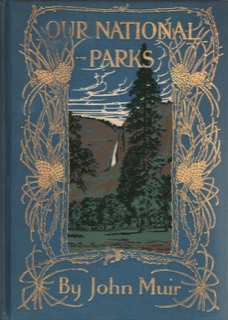
Our National Parks

by John Muir

Length: 93,722 words, about 375 pages, about 7 hours to read

Science and nature

Read Our National Parks free, starting with its best pages and lines below. Listen to it free too, read aloud by your phone's own voice.

The best passages

Pages from the book itself, chosen to make you want to read on. Each opens in the reader at that exact spot.

CHAPTER I The Wild Parks and Forest Reservations of the West

The tendency nowadays to wander in wildernesses is delightful to see. Thousands of tired, nerve-shaken, over-civilized people are beginning to find out that going to the mountains is going home; that wildness is a necessity; and that mountain parks and reservations are useful not only as fountains of timber and irrigating rivers, but as fountains of life. Awakening from the stupefying effects of the vice of over-industry and the deadly apathy of luxury, they are trying as best they can to mix and enrich their own little ongoings with those of Nature, and to get rid of rust and disease. Briskly venturing and roaming, some are washing off sins and cobweb cares of the devil’s spinning in all-day storms on mountains; sauntering in rosiny pinewoods or in gentian meadows, brushing through chaparral, bending down and parting sweet, flowery sprays; tracing rivers to their sources, getting in touch with the nerves of Mother Earth; jumping from rock to rock, feeling the life of them, learning the songs of them, panting in whole-souled exercise, and rejoicing in deep, long-drawn breaths of pure wildness. This is fine and natural and full of promise. So also is the growing interest in the care and preservation of forests and wild places in general, and in the half wild parks and gardens of towns. Even the scenery habit in its most artificial forms, mixed with spectacles, silliness, and kodaks; its devotees arrayed more gorgeously than scarlet tanagers, frightening the wild game with red umbrellas,—even this is encouraging, and may well be regarded as a hopeful sign of the times.

All the Western mountains are still rich in wildness, and by means of good roads are being brought nearer civilization every year.
Keep reading from here

CHAPTER IV The Forests of the Yosemite Park

But the noble oaks and all these rock-shading, stream-embowering trees are as nothing amid the vast abounding billowy forests of conifers. During my first years in the Sierra I was ever calling on everybody within reach to admire them, but I found no one half warm enough until Emerson came. I had read his essays, and felt sure that of all men he would best interpret the sayings of these noble mountains and trees. Nor was my faith weakened when I met him in Yosemite. He seemed as serene as a sequoia, his head in the empyrean; and forgetting his age, plans, duties, ties of every sort, I proposed an immeasurable camping trip back in the heart of the mountains. He seemed anxious to go, but considerately mentioned his party. I said: “Never mind. The mountains are calling; run away, and let plans and parties and dragging lowland duties all ‘gang tapsal-teerie’. We’ll go up a cañon singing your own song, ‘Good-by, proud world! I’m going home,’ in divine earnest. Up there lies a new heaven and a new earth; let us go to the show.” But alas, it was too late,—too near the sundown of his life. The shadows were growing long, and he leaned on his friends. His party, full of indoor philosophy, failed to see the natural beauty and fullness of promise of my wild plan, and laughed at it in good-natured ignorance, as if it were necessarily amusing to imagine that Boston people might be led to accept Sierra manifestations of God at the price of rough camping. Anyhow, they would have none of it, and held Mr. Emerson to the hotels and trails.

Keep reading from here

CHAPTER VI Among the Animals of the Yosemite

I was encamped in the woods about a mile back of the rim of Yosemite, beside a stream that falls into the valley by the way of Indian Cañon. Nearly every day for weeks I went to the top of the North Dome to sketch; for it commands a general view of the valley, and I was anxious to draw every tree and rock and waterfall. Carlo, a St. Bernard dog, was my companion,—a fine, intelligent fellow that belonged to a hunter who was compelled to remain all summer on the hot plains, and who loaned him to me for the season for the sake of having him in the mountains, where he would be so much better off. Carlo knew bears through long experience, and he it was who led me to my first interview, though he seemed as much surprised as the bear at my unhunter-like behavior. One morning in June, just as the sunbeams began to stream through the trees, I set out for a day’s sketching on the dome; and before we had gone half a mile from camp Carlo snuffed the air and looked cautiously ahead, lowered his bushy tail, drooped his ears, and began to step softly like a cat, turning every few yards and looking me in the face with a telling expression, saying plainly enough, “There is a bear a little way ahead.” I walked carefully in the indicated direction, until I approached a small flowery meadow that I was familiar with, then crawled to the foot of a tree on its margin, bearing in mind what I had been told about the shyness of bears.

Keep reading from here

CHAPTER VI Among the Animals of the Yosemite

Sheep-owners and their shepherds have killed a great many bears, mostly by poison and traps of various sorts. Bears are fond of mutton, and levy heavy toll on every flock driven into the mountains. They usually come to the corral at night, climb in, kill a sheep with a stroke of the paw, carry it off a little distance, eat about half of it, and return the next night for the other half; and so on all summer, or until they are themselves killed. It is not, however, by direct killing, but by suffocation through crowding against the corral wall in fright, that the greatest losses are incurred. From ten to fifteen sheep are found dead, smothered in the corral, after every attack; or the walls are broken, and the flock is scattered far and wide. A flock may escape the attention of these marauders for a week or two in the spring; but after their first taste of the fine mountain-fed meat the visits are persistently kept up, in spite of all precautions. Once I spent a night with two Portuguese shepherds, who were greatly troubled with bears, from two to four or five visiting them almost every night. Their camp was near the middle of the Park, and the wicked bears, they said, were getting worse and worse. Not waiting now until dark, they came out of the brush in broad daylight, and boldly carried off as many sheep as they liked.

Keep reading from here

CHAPTER VIII The Fountains and Streams of the Yosemite National Park

In Yosemite Valley, one morning about two o’clock, I was aroused by an earthquake; and though I had never before enjoyed a storm of this sort, the strange, wild thrilling motion and rumbling could not be mistaken, and I ran out of my cabin, near the Sentinel Rock, both glad and frightened, shouting, “A noble earthquake!” feeling sure I was going to learn something. The shocks were so violent and varied, and succeeded one another so closely, one had to balance in walking as if on the deck of a ship among the waves, and it seemed impossible the high cliffs should escape being shattered. In particular, I feared that the sheer-fronted Sentinel Rock, which rises to a height of three thousand feet, would be shaken down, and I took shelter back of a big pine, hoping I might be protected from outbounding boulders, should any come so far. I was now convinced that an earthquake had been the maker of the taluses, and positive proof soon came. It was a calm moonlight night, and no sound was heard for the first minute or two save a low muffled underground rumbling and a slight rustling of the agitated trees, as if, in wrestling with the mountains, Nature were holding her breath. Then, suddenly, out of the strange silence and strange motion there came a tremendous roar. The Eagle Rock, a short distance up the valley, had given way, and I saw it falling in thousands of the great boulders I had been studying so long, pouring to the valley floor in a free

Keep reading from here

10 of the best lines

The tendency nowadays to wander in wildernesses is delightful to see.

CHAPTER I The Wild Parks and Forest Reservations of the WestKeep reading from here

Bears are a peaceable people, and mind their own business, instead of going about like the devil seeking whom they may devour.

CHAPTER I The Wild Parks and Forest Reservations of the WestKeep reading from here

You may be a little cold some nights, on mountain tops above the timber-line, but you will see the stars, and by and by you can sleep enough in your town bed, or at least in your grave.

CHAPTER II The Yellowstone National ParkKeep reading from here

To defrauded town toilers, parks in magazine articles are like pictures of bread to the hungry.

CHAPTER III The Yosemite National ParkKeep reading from here

Surely no merrier adventurers ever set out to seek their fortunes.

CHAPTER IV The Forests of the Yosemite ParkKeep reading from here

Everybody admires it as a wonderful curiosity, but nobody loves it.

CHAPTER V The Wild Gardens of the Yosemite ParkKeep reading from here

Travelers in the Sierra forests usually complain of the want of life.

CHAPTER VII Among the Birds of the YosemiteKeep reading from here

“Come, cheer up; smile a little and clap your hands, now that kind Mother Earth is trotting us on her knee to amuse us and make us good.”

CHAPTER VIII The Fountains and Streams of the Yosemite National ParkKeep reading from here

Finer, braver hospitality I never found in all this good world so often called selfish.

CHAPTER IX The Sequoia and General Grant National ParksKeep reading from here

Any fool can destroy trees.

CHAPTER X The American ForestsKeep reading from here

All 49 Our National Parks quotes, with the words around each

Reviews

No reviews yet. Be the first, in the app.

Write a review in Doomreader

Contents

  1. NOTE
  2. PREFACE
  3. CHAPTER I The Wild Parks and Forest Reservations of the West
  4. CHAPTER II The Yellowstone National Park
  5. CHAPTER III The Yosemite National Park
  6. CHAPTER IV The Forests of the Yosemite Park
  7. CHAPTER V The Wild Gardens of the Yosemite Park
  8. CHAPTER VI Among the Animals of the Yosemite
  9. CHAPTER VII Among the Birds of the Yosemite
  10. CHAPTER VIII The Fountains and Streams of the Yosemite National Park
  11. CHAPTER IX The Sequoia and General Grant National Parks
  12. CHAPTER X The American Forests
  13. APPENDIX

Listen to Our National Parks free

Our National Parks as a free audiobook: Doomreader reads any book aloud, free, in your phone's or computer's own voice. Open the book and tap listen, at the speed you like, hands free.

Want a more natural voice? The AI voices read with AI credits.

Listen free in Doomreader

Download Our National Parks free

The whole book as an EPUB file, free and legal, from Project Gutenberg. It opens in any ebook app, or read it here in Doomreader with nothing to install.

Download the EPUB (3.0 MB)

More by John Muir

More like Our National Parks

About this edition

Text from Project Gutenberg. In the public domain in the USA. The Project Gutenberg License is kept inside the file. Every passage and line on this page is the book's own words, checked against the text.