
John Muir
7 books by John Muir to read free, each with its best passages and lines, and the best quotes from all of them below.
Where to start
-
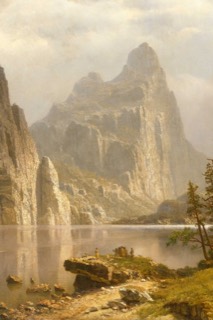
My First Summer in the Sierra
The influential Scottish-American naturalist spends a summer exploring the high country surrounding the headwaters of the Merced and Tuolumne rivers in the Sierra Nevada, and records what he sees in a diary.
58,148 words, about 4 hours
Then
-
A Thousand-Mile Walk to the Gulf
43,142 words, about 3 hours
-
The Mountains of California
93,628 words, about 7 hours
-
The Yosemite
63,973 words, about 4 hours
-
Our National Parks
93,722 words, about 7 hours
-
The Story of My Boyhood and Youth
54,634 words, about 4 hours
-
Travels in Alaska
87,266 words, about 6 hours
John Muir quotes
Beauty beyond thought everywhere, beneath, above, made and being made forever.
My plan was simply to push on in a general southward direction by the wildest, leafiest, and least trodden way I could find, promising the greatest extent of virgin forest.
Then it seemed to me the Sierra should be called not the Nevada, or Snowy Range, but the Range of Light.
All the world was before me and every day was a holiday, so it did not seem important to which one of the world’s wildernesses I first should wander.
The tendency nowadays to wander in wildernesses is delightful to see.
In spite of the sure sore punishments that followed like shadows, the natural inherited wildness in our blood ran true on its glorious course as invincible and unstoppable as stars.
Gazing from the deck of the steamer, one is borne smoothly over calm blue waters, through the midst of countless forest-clad islands.
Even the howls and ki-yis of coyotes might be blessings if well heard, but he hears them only through a blur of mutton and wool, and they do him no good.
I think I could enjoy traveling with it in the midst of such beauty all my life.
Every glacier in the world is smaller than it once was.
Then it seemed to me that the Sierra should be called, not the Nevada or Snowy Range, but the Range of Light.
In the noblest forests of the world, the ground, once divinely beautiful, is desolate and repulsive, like a face ravaged by disease.
Kings may be blessed; we were glorious, we were free,—school cares and scoldings, heart thrashings and flesh thrashings alike, were forgotten in the fullness of Nature’s glad wildness.
“What can the fellow be up to?” they inquired. “He seems to spend most of his time among stumps and weeds. I saw him the other day on his knees, looking at a stump as if he expected to find gold in it. He seems to have no serious object whatever.”
How many mouths Nature has to fill, how many neighbors we have, how little we know about them, and how seldom we get in each other’s way!
How little we know as yet of the life of plants—their hopes and fears, pains and enjoyments!
But we little know until tried how much of the uncontrollable there is in us, urging across glaciers and torrents, and up dangerous heights, let the judgment forbid as it may.
One must labor for beauty as for bread, here as elsewhere.
Bears are a peaceable people, and mind their own business, instead of going about like the devil seeking whom they may devour.
This sudden plash into pure wildness—baptism in Nature’s warm heart—how utterly happy it made us!