Doomreader

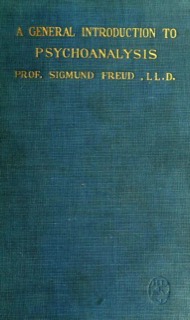
A General Introduction to Psychoanalysis

by Sigmund Freud

Length: 157,780 words, about 631 pages, about 11 hours to read

Psychology and mind

Read A General Introduction to Psychoanalysis free, starting with its best pages and lines below. Listen to it free too, read aloud by your phone's own voice.

The best passages

Pages from the book itself, chosen to make you want to read on. Each opens in the reader at that exact spot.

FIRST LECTURE INTRODUCTION

I DO not know how familiar some of you may be, either from your reading or from hearsay, with psychoanalysis. But, in keeping with the title of these lectures—A General Introduction to Psychoanalysis—I am obliged to proceed as though you knew nothing about this subject, and stood in need of preliminary instruction.

To be sure, this much I may presume that you do know, namely, that psychoanalysis is a method of treating nervous patients medically. And just at this point I can give you an example to illustrate how the procedure in this field is precisely the reverse of that which is the rule in medicine. Usually when we introduce a patient to a medical technique which is strange to him we minimize its difficulties and give him confident promises concerning the result of the treatment. When, however, we undertake psychoanalytic treatment with a neurotic patient we proceed differently. We hold before him the difficulties of the method, its length, the exertions and the sacrifices which it will cost him; and, as to the result, we tell him that we make no definite promises, that the result depends on his conduct, on his understanding, on his adaptability, on his perseverance. We have, of course, excellent motives for conduct which seems so perverse, and into which you will perhaps gain insight at a later point in these lectures.
Keep reading from here

FIRST LECTURE INTRODUCTION

Unfortunately, everything is different in psychoanalysis. In psychoanalysis nothing occurs but the interchange of words between the patient and the physician. The patient talks, tells of his past experiences and present impressions, complains, confesses his wishes and emotions. The physician listens, tries to direct the thought processes of the patient, reminds him of things, forces his attention into certain channels, gives him explanations and observes the reactions of understanding or denial which he calls forth in the patient. The uneducated relatives of our patients—persons who are impressed only by the visible and tangible, preferably by such procedure as one sees in the moving picture theatres—never miss an opportunity of voicing their scepticism as to how one can "do anything for the malady through mere talk." Such thinking, of course, is as shortsighted as it is inconsistent. For these are the very persons who know with such certainty that the patients "merely imagine" their symptoms. Words were originally magic, and the word retains much of its old magical power even to-day. With words one man can make another blessed, or drive him to despair; by words the teacher transfers his knowledge to the pupil; by words the speaker sweeps his audience with him and determines its judgments and decisions. Words call forth effects and are the universal means of influencing human beings. Therefore let us not underestimate the use of words in psychotherapy, and let us be satisfied if we may be auditors of the words which are exchanged between the analyst and his patient.

Keep reading from here

FIFTH LECTURE THE DREAM

Difficulties and Preliminary Approach

ONE day the discovery was made that the disease symptoms of certain nervous patients have a meaning.[22] Thereupon the psychoanalytic method of therapy was founded. In this treatment it happened that the patients also presented dreams in place of their symptoms. Herewith originated the conjecture that these dreams also have a meaning.

We will not, however, pursue this historical path, but enter upon the opposite one. We wish to discover the meaning of dreams as preparation for the study of the neuroses. This inversion is justified, for the study of dreams is not only the best preparation for that of the neuroses, but the dream itself is also a neurotic symptom, and in fact one which possesses for us the incalculable advantage of occurring in all normals. Indeed, if all human beings were well and would dream, we could gain from their dreams almost all the insight to which the study of the neuroses has led.

Thus it is that the dream becomes the object of psychoanalytic research—again an ordinary, little-considered phenomenon, apparently of no practical value, like the errors with which, indeed, it shares the character of occurring in normals. But otherwise the conditions are rather less favorable for our work. Errors had been neglected only by science, which had paid little attention to them; but at least it was no disgrace to occupy one's self with them. People said there are indeed more important things, but perhaps something may come of it. Preoccupation with the dream, however, is not merely impractical and superfluous, but actually ignominious; it carries the odium of the unscientific, awakens the suspicion of a personal leaning towards mysticism.

Keep reading from here

FIFTH LECTURE THE DREAM

"I go walking one spring morning and saunter through the green fields to a neighboring village. There I see the inhabitants in gala attire, their hymn books under their arms, going church-ward in great numbers. To be sure, this is Sunday, and the early morning service will soon begin. I decide to attend, but since I am somewhat overheated, decide to cool off in the cemetery surrounding the church. While I am there reading several inscriptions, I hear the bell ringer ascend the tower, and now see the little village church bell which is to give the signal for the beginning of the service. The bell hangs a good bit longer, then it begins to swing, and suddenly its strokes sound clear and penetrating, so clear and penetrating that they make an end of—my sleep. The bell-strokes, however, come from my alarm clock.

Keep reading from here

TWELFTH LECTURE THE DREAM

"He is walking with two persons whose name he knows but has forgotten. By the time he is awake, over a very high, steep iron bridge. Suddenly the two people are gone and he sees a ghostly man with a cap, and clad in white. He asks this man whether he is the telegraph messenger.... No. Or is he a coachman? No. Then he goes on," and even in the dream he is in great fear. After waking he continues the dream by a phantasy in which the iron bridge suddenly breaks, and he plunges into the abyss.

When the dreamer emphasizes the fact that certain individuals in a dream are unknown, that he has forgotten their names, they are generally persons standing in very close relationship to the dreamer.

Keep reading from here

10 of the best lines

Words call forth effects and are the universal means of influencing human beings.

FIRST LECTURE INTRODUCTIONKeep reading from here

The trouble is that you believe in the illusion of psychic freedom and will not give it up.

THIRD LECTURE THE PSYCHOLOGY OF ERRORS—(Continued)Keep reading from here

It seems as if the world did not wholly possess us adults, it has only two-thirds of our life, we are still one-third unborn.

FIFTH LECTURE THE DREAMKeep reading from here

There is indeed no proverb that tells us that the pig or the goose dreams of being slaughtered.

EIGHTH LECTURE THE DREAMKeep reading from here

I can probably give you an idea of the confusion which this produces by reminding you of the story of the blacksmith who had committed a capital crime. The court decided that the penalty for the crime must be paid, but since he was the only blacksmith in the village and therefore indispensable, while there were three tailors, one of the latter was hung in his stead.

ELEVENTH LECTURE THE DREAMKeep reading from here

We say to ourselves in our sleep: "It's only a dream," and we sleep on.

FOURTEENTH LECTURE THE DREAMKeep reading from here

He may shift, but he cannot annul the compulsion.

SEVENTEENTH LECTURE GENERAL THEORY OF THE NEUROSESKeep reading from here

If something displeases him, he can defend himself against it very ingeniously and appear most critical. But if something strikes his fancy, then he may show himself easily convinced.

NINETEENTH LECTURE GENERAL THEORY OF THE NEUROSESKeep reading from here

If it were possible to choose, it were indeed best to perish in an honorable struggle with destiny.

TWENTY-FOURTH LECTURE GENERAL THEORY OF THE NEUROSESKeep reading from here

Faith repeats the history of its own origin; it is a derivative of love and at first requires no arguments.

TWENTY-SEVENTH LECTURE GENERAL THEORY OF THE NEUROSESKeep reading from here

All 78 A General Introduction to Psychoanalysis quotes, with the words around each

Reviews

No reviews yet. Be the first, in the app.

Write a review in Doomreader

Contents

All 32 parts
  1. PREFACE
  2. PART I THE PSYCHOLOGY OF ERRORS
  3. FIRST LECTURE INTRODUCTION
  4. SECOND LECTURE THE PSYCHOLOGY OF ERRORS
  5. THIRD LECTURE THE PSYCHOLOGY OF ERRORS—(Continued)
  6. FOURTH LECTURE THE PSYCHOLOGY OF ERRORS—(Conclusion)
  7. II THE DREAM
  8. FIFTH LECTURE THE DREAM
  9. SIXTH LECTURE THE DREAM
  10. SEVENTH LECTURE THE DREAM
  11. EIGHTH LECTURE THE DREAM
  12. NINTH LECTURE THE DREAM
  13. TENTH LECTURE THE DREAM
  14. ELEVENTH LECTURE THE DREAM
  15. TWELFTH LECTURE THE DREAM
  16. THIRTEENTH LECTURE THE DREAM
  17. FOURTEENTH LECTURE THE DREAM
  18. FIFTEENTH LECTURE THE DREAM
  19. III GENERAL THEORY OF THE NEUROSES
  20. SIXTEENTH LECTURE GENERAL THEORY OF THE NEUROSES
  21. SEVENTEENTH LECTURE GENERAL THEORY OF THE NEUROSES
  22. EIGHTEENTH LECTURE GENERAL THEORY OF THE NEUROSES
  23. NINETEENTH LECTURE GENERAL THEORY OF THE NEUROSES
  24. TWENTIETH LECTURE GENERAL THEORY OF THE NEUROSES
  25. TWENTY-FIRST LECTURE GENERAL THEORY OF THE NEUROSES
  26. TWENTY-SECOND LECTURE GENERAL THEORY OF THE NEUROSES
  27. TWENTY-THIRD LECTURE GENERAL THEORY OF THE NEUROSES
  28. TWENTY-FOURTH LECTURE GENERAL THEORY OF THE NEUROSES
  29. TWENTY-FIFTH LECTURE GENERAL THEORY OF THE NEUROSES
  30. TWENTY-SIXTH LECTURE GENERAL THEORY OF THE NEUROSES
  31. TWENTY-SEVENTH LECTURE GENERAL THEORY OF THE NEUROSES
  32. TWENTY-EIGHTH LECTURE GENERAL THEORY OF THE NEUROSES

Listen to A General Introduction to Psychoanalysis free

A General Introduction to Psychoanalysis as a free audiobook: Doomreader reads any book aloud, free, in your phone's or computer's own voice. Open the book and tap listen, at the speed you like, hands free.

Want a more natural voice? The AI voices read with AI credits.

Listen free in Doomreader

Download A General Introduction to Psychoanalysis free

The whole book as an EPUB file, free and legal, from Project Gutenberg. It opens in any ebook app, or read it here in Doomreader with nothing to install.

Download the EPUB (0.7 MB)

More by Sigmund Freud

More like A General Introduction to Psychoanalysis

About this edition

Text from Project Gutenberg. In the public domain in the USA. The Project Gutenberg License is kept inside the file. Every passage and line on this page is the book's own words, checked against the text.