Doomreader

Twenty Years After

by Alexandre Dumas

Length: 242,049 words, about 968 pages, about 17 hours to read

Adventure

Read Twenty Years After free, starting with its best pages and lines below. Listen to it free too, read aloud by your phone's own voice.

What it is

Four musketeers are drawn back together by current events after many years apart, try to save Charles I from Cromwell, and are pursued by the now-grown son of a former female adversary.

The best passages

Pages from the book itself, chosen to make you want to read on. Each opens in the reader at that exact spot.

I: The Ghost of Cardinal Richelieu

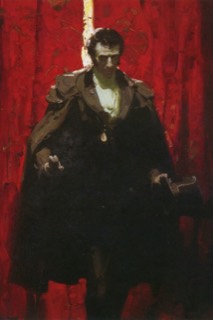
In a splendid chamber of the Palais Royal, formerly styled the Palais Cardinal, a man was sitting in deep reverie, his head supported on his hands, leaning over a gilt and inlaid table which was covered with letters and papers. Behind this figure glowed a vast fireplace alive with leaping flames; great logs of oak blazed and crackled on the polished brass andirons whose flicker shone upon the superb habiliments of the lonely tenant of the room, which was illumined grandly by twin candelabra rich with wax lights.

Anyone who happened at that moment to contemplate that red simar⁠—the gorgeous robe of office⁠—and the rich lace, or who gazed on that pale brow, bent in anxious meditation, might, in the solitude of that apartment, combined with the silence of the antechambers and the measured paces of the guards upon the landing-place, have fancied that the shade of Cardinal Richelieu lingered still in his accustomed haunt.

It was, alas! the ghost of former greatness. France enfeebled, the authority of her sovereign contemned, her nobles returning to their former turbulence and insolence, her enemies within her frontiers⁠—all proved the great Richelieu no longer in existence.
Keep reading from here

III: Dead Animosities

The carriage drove on and d’Artagnan, availing himself of the darkness in the archway under which they were passing, threw himself into the arms of the prisoner.

“Rochefort!” he exclaimed; “you! is it you, indeed? I am not mistaken?”

“D’Artagnan!” cried Rochefort.

“Ah! my poor friend!” resumed d’Artagnan, “not having seen you for four or five years I concluded you were dead.”

“I’faith,” said Rochefort, “there’s no great difference, I think, between a dead man and one who has been buried alive; now I have been buried alive, or very nearly so.”

“And for what crime are you imprisoned in the Bastille.”

“Do you wish me to speak the truth?”

“Yes.”

“Well, then, I don’t know.”

“Have you any suspicion of me, Rochefort?”

“No! on the honor of a gentleman; but I cannot be imprisoned for the reason alleged; it is impossible.”

“What reason?” asked d’Artagnan.

“For stealing.”

“For stealing! you, Rochefort! you are laughing at me.”

Keep reading from here

VIII: How d’Artagnan, on Going to a Distance to Discover Aramis, Discovers His Old Friend on Horseback Behind His Own Planchet

And the troop, grumbling angrily, disappeared in the darkness and took the road to Paris. D’Artagnan and Planchet remained for some moments still on the defensive; then, as the noise of the horsemen became more and more distant, they sheathed their swords.

“Thou seest, simpleton,” said d’Artagnan to his servant, “that they wished no harm to us.”

“But to whom, then?”

“I’faith! I neither know nor care. What I do care for now, is to make my way into the Jesuits’ convent; so to horse and let us knock at their door. Happen what will, the devil take them, they can’t eat us.”

And he mounted his horse. Planchet had just done the same when an unexpected weight fell upon the back of the horse, which sank down.

“Hey! your honor!” cried Planchet, “I’ve a man behind me.”

D’Artagnan turned around and plainly saw two human forms on Planchet’s horse.

“ ’Tis then the devil that pursues!” he cried; drawing his sword and preparing to attack the new foe.

“No, no, dear d’Artagnan,” said the figure, “ ’tis not the devil, ’tis Aramis; gallop fast, Planchet, and when you come to the end of the village turn swiftly to the left.”

And Planchet, with Aramis behind him, set off at full gallop, followed by d’Artagnan, who began to think he was in the merry maze of some fantastic dream.

Keep reading from here

XI: How d’Artagnan, in Discovering the Retreat of Porthos, Perceives That Wealth Does Not Necessarily Produce Happiness

“Madame du Vallon was of doubtful gentility. She had, in her first marriage⁠—I don’t think, d’Artagnan, I am telling you anything new⁠—married a lawyer; they thought that ‘nauseous’; you can understand that’s a word bad enough to make one kill thirty thousand men. I have killed two, which has made people hold their tongues, but has not made me their friend. So that I have no society; I live alone; I am sick of it⁠—my mind preys on itself.”

D’Artagnan smiled. He now saw where the breastplate was weak, and prepared the blow.

“But now,” he said, “that you are a widower, your wife’s connection cannot injure you.”

“Yes, but understand me; not being of a race of historic fame, like the de Courcys, who were content to be plain sirs, or the Rohans, who didn’t wish to be dukes, all these people, who are all either vicomtes or comtes, go before me at church in all the ceremonies, and I can say nothing to them. Ah! If I only were a⁠—”

“A baron, don’t you mean?” cried d’Artagnan, finishing his friend’s sentence.

“Ah!” cried Porthos; “would I were but a baron!”

“Well, my friend, I am come to give you this very title which you wish for so much.”

Porthos gave a start that shook the room; two or three bottles fell and were broken. Mousqueton ran thither, hearing the noise.

Porthos waved his hand to Mousqueton to pick up the bottles.

Keep reading from here

XXVI: The Rencontre

D’Artagnan, in two steps, was engaged with the foe, whom, according to custom, he attacked impetuously, but he met this time with a skill and a strength of arm that gave him pause. Twice he was obliged to step back; his opponent stirred not one inch. D’Artagnan returned and again attacked him.

Twice or thrice thrusts were attempted on both sides, without effect; sparks were emitted from the swords like water spouting forth.

At last d’Artagnan thought it was time to try one of his favorite feints in fencing. He brought it to bear, skillfully executed it with the rapidity of lightning, and struck the blow with a force which he fancied would prove irresistible.

The blow was parried.

“ ’Sdeath!” he cried, with his Gascon accent.

At this exclamation his adversary bounded back and, bending his bare head, tried to distinguish in the gloom the features of the lieutenant.

As to d’Artagnan, afraid of some feint, he still stood on the defensive.

“Have a care,” cried Porthos to his opponent; “I’ve still two pistols charged.”

“The more reason you should fire the first!” cried his foe.

Porthos fired; the flash threw a gleam of light over the field of battle.

As the light shone on them a cry was heard from the other two combatants.

“Athos!” exclaimed d’Artagnan.

“D’Artagnan!” ejaculated Athos.

Athos raised his sword; d’Artagnan lowered his.

“Aramis!” cried Athos, “don’t fire!”

“Ah! ha! is it you, Aramis?” said Porthos.

And he threw away his pistol.

Aramis pushed his back into his saddlebags and sheathed his sword.

Keep reading from here

10 of the best lines

It was, alas! the ghost of former greatness.

I: The Ghost of Cardinal RichelieuKeep reading from here

One believes readily what he wishes to believe.

VI: D’Artagnan in His Fortieth YearKeep reading from here

Perhaps all blood demands some expiation.

XIV: The Castle of BragelonneKeep reading from here

“You are not called ‘Lionne’ for nothing,” observed Madame de Chevreuse, “your teeth are terrible.”

XXI: The Abbé ScarronKeep reading from here

Absolution comes not from him who administers it, but from God.

XXXI: The MonkKeep reading from here

“Since they force me to wear a hat of a form which does not become me,” said Gondy, “I wish at least that the hat should be red.”

XLVI: The Tower of St. Jacques de la BoucherieKeep reading from here

“But,” argued Porthos, “I speak French and they are all English.”

LVIII: Jésus SeigneurKeep reading from here

Such is the atrocious logic of revolutions.

LXIV: WhitehallKeep reading from here

“Had I been as great a friend of Jonah as I am of d’Artagnan I should have followed him even into the inside of the whale itself; and you would have done the same, Aramis.”

LXXIX: The Road to PicardyKeep reading from here

“Do not be unhappy, dear friend, on that account; if you have done nothing as yet, you will do something soon,” replied Athos.

LXXXVII: In Which We Begin to Think That Porthos Will Be at Last a Baron, and d’Artagnan a CaptainKeep reading from here

All 139 Twenty Years After quotes, with the words around each

Reviews

No reviews yet. Be the first, in the app.

Write a review in Doomreader

Contents

All 90 parts
  1. I: The Ghost of Cardinal Richelieu
  2. II: A Nightly Patrol
  3. III: Dead Animosities
  4. IV: Anne of Austria at the Age of Forty-Six
  5. V: The Gascon and the Italian
  6. VI: D’Artagnan in His Fortieth Year
  7. VII: Touches Upon the Strange Effects a Half-Pistole May Have Upon a Beadle and a Chorister
  8. VIII: How d’Artagnan, on Going to a Distance to Discover Aramis, Discovers His Old Friend on Horseback Behind His Own Planchet
  9. IX: The Abbé d’Herblay
  10. X: Monsieur Porthos du Vallon de Bracieux de Pierrefonds
  11. XI: How d’Artagnan, in Discovering the Retreat of Porthos, Perceives That Wealth Does Not Necessarily Produce Happiness
  12. XII: In Which It Is Shown That if Porthos Was Discontented with His Condition, Mousqueton Was Completely Satisfied with His
  13. XIII: Two Angelic Faces
  14. XIV: The Castle of Bragelonne
  15. XV: Athos as a Diplomatist
  16. XVI: The Duc de Beaufort
  17. XVII: Describes How the Duc de Beaufort Amused His Leisure Hours in the Donjon of Vincennes
  18. XVIII: Grimaud Begins His Functions
  19. XIX: In Which the Contents of the Pâtés Made by the Successor of Father Marteau Are Described
  20. XX: One of Marie Michon’s Adventures
  21. XXI: The Abbé Scarron
  22. XXII: Saint Denis
  23. XXIII: One of the Forty Methods of Escape of the Duc de Beaufort
  24. XXIV: The Timely Arrival of d’Artagnan in Paris
  25. XXV: An Adventure on the High Road
  26. XXVI: The Rencontre
  27. XXVII: The Four Old Friends Prepare to Meet Again
  28. XXVIII: The Place Royale
  29. XXIX: The Ferry Across the Oise
  30. XXX: Skirmishing
  31. XXXI: The Monk
  32. XXXII: The Absolution
  33. XXXIII: Grimaud Speaks
  34. XXXIV: On the Eve of Battle
  35. XXXV: A Dinner in the Old Style
  36. XXXVI: A Letter from Charles the First
  37. XXXVII: Cromwell’s Letter
  38. XXXVIII: Henrietta Maria and Mazarin
  39. XXXIX: How, Sometimes, the Unhappy Mistake Chance for Providence
  40. XL: Uncle and Nephew
  41. XLI: Paternal Affection
  42. XLII: Another Queen in Want of Help
  43. XLIII: In Which It Is Proved That First Impulses Are Oftentimes the Best
  44. XLIV: Te Deum for the Victory of Lens
  45. XLV: The Beggar of St. Eustache
  46. XLVI: The Tower of St. Jacques de la Boucherie
  47. XLVII: The Riot
  48. XLVIII: The Riot Becomes a Revolution
  49. XLIX: Misfortune Refreshes the Memory
  50. L: The Interview
  51. LI: The Flight
  52. LII: The Carriage of Monsieur le Coadjuteur
  53. LIII: How d’Artagnan and Porthos Earned by Selling Straw, the One Two Hundred and Nineteen, and the Other Two Hundred and Fifteen Louis d’Or
  54. LIV: In Which We Hear Tidings of Aramis
  55. LV: The Scotchman
  56. LVI: The Avenger
  57. LVII: Oliver Cromwell
  58. LVIII: Jésus Seigneur
  59. LIX: In Which It Is Shown That Under the Most Trying Circumstances Noble Natures Never Lose Their Courage, nor Good Stomachs Their Appetites
  60. LX: Respect to Fallen Majesty
  61. LXI: D’Artagnan Hits on a Plan
  62. LXII: London
  63. LXIII: The Trial
  64. LXIV: Whitehall
  65. LXV: The Workmen
  66. LXVI: Remember!
  67. LXVII: The Man in the Mask
  68. LXVIII: Cromwell’s House
  69. LXIX: Conversational
  70. LXX: The Skiff Lightning
  71. LXXI: Port Wine
  72. LXXII: End of the Port Wine Mystery
  73. LXXIII: Fatality
  74. LXXIV: How Mousqueton, After Being Very Nearly Roasted, Had a Narrow Escape of Being Eaten
  75. LXXV: The Return
  76. LXXVI: The Ambassadors
  77. LXXVII: The Three Lieutenants of the Generalissimo
  78. LXXVIII: The Battle of Charenton
  79. LXXIX: The Road to Picardy
  80. LXXX: The Gratitude of Anne of Austria
  81. LXXXI: Cardinal Mazarin as King
  82. LXXXII: Precautions
  83. LXXXIII: Strength and Sagacity
  84. LXXXIV: Strength and Sagacity—Continued
  85. LXXXV: The Oubliettes of Cardinal Mazarin
  86. LXXXVI: Conferences
  87. LXXXVII: In Which We Begin to Think That Porthos Will Be at Last a Baron, and d’Artagnan a Captain
  88. LXXXVIII: Shows How with Threat and Pen More Is Effected Than by the Sword
  89. LXXXIX: In Which It Is Shown That It Is Sometimes More Difficult for Kings to Return to the Capitals of Their Kingdoms, Than to Make an Exit
  90. XC: Conclusion

Listen to Twenty Years After free

Twenty Years After as a free audiobook: Doomreader reads any book aloud, free, in your phone's or computer's own voice. Open the book and tap listen, at the speed you like, hands free.

Want a more natural voice? The AI voices read with AI credits.

Listen free in Doomreader

Download Twenty Years After free

The whole book as an EPUB file, free and legal, from Standard Ebooks. It opens in any ebook app, or read it here in Doomreader with nothing to install.

Download the EPUB (1.4 MB)

More by Alexandre Dumas

More like Twenty Years After

About this edition

Text from Standard Ebooks. Standard Ebooks dedicate their edition to the public domain (CC0 1.0). Every passage and line on this page is the book's own words, checked against the text.