Doomreader

Reading path

Founders and fortunes

How the first great fortunes were built, told by the men who built them, and by one who took them on.

8 books, in the order to read them, all free.

  1. Step 1

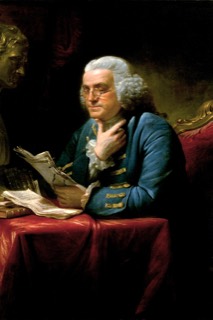
    The Autobiography of Benjamin Franklin

    by Benjamin Franklin

    The original self-made founder.

    I: Ancestry and Early Youth in Boston

    Dear Son: I have ever had pleasure in obtaining any little anecdotes of my ancestors. You may remember the inquiries I made among the remains of my relations when you were with me in England, and the journey I undertook for that purpose. Imagining it may be equally agreeable to you to know the circumstances of my life, many of which you are yet unacquainted with, and expecting the enjoyment of a week’s uninterrupted leisure in my present country retirement, I sit down to write them for you. To which I have besides some other inducements. Having emerged from the poverty and obscurity in which I was born and bred, to a state of affluence and some degree of reputation in the world, and having gone so far through life with a considerable share of felicity, the conducing means I made use of, which with the blessing of God so well succeeded, my posterity may like to know, as they may find some of them suitable to their own situations, and therefore fit to be imitated.


    Keep reading from here
  2. Step 2

    Autobiography of Andrew Carnegie

    by Andrew Carnegie

    From bobbin boy to steel.

    PARENTS AND CHILDHOOD

    To begin, then, I was born in Dunfermline, in the attic of the small one-story house, corner of Moodie Street and Priory Lane, on the 25th of November, 1835, and, as the saying is, "of poor but honest parents, of good kith and kin." Dunfermline had long been noted as the center of the damask trade in Scotland.[1] My father, William Carnegie, was a damask weaver, the son of Andrew Carnegie after whom I was named.

    Keep reading from here
  3. Step 3

    Random Reminiscences of Men and Events

    by John D. Rockefeller

    Oil, in Rockefeller's own short account.

    Some Old Friends

    It is not always possible to remember just how one first met an old friend or what one's impressions were, but I shall never forget my first meeting with Mr. John D. Archbold, who is now a vice-president of the Standard Oil Company.

    At that time, say thirty-five or forty years ago, I was travelling about the country visiting the point where something was happening, talking with the producers, the refiners, the agents, and actually getting acquainted.

    One day there was a gathering of the men somewhere near the oil regions, and when I came to the hotel, which was full of oil men, I saw this name writ large on the register:

    John D. Archbold, $4.00 a bbl.

    Keep reading from here
  4. Step 4

    The History of the Standard Oil Company

    by Ida M. Tarbell

    The reporter who took him apart.

    CHAPTER ONE THE BIRTH OF AN INDUSTRY

    One of the busiest corners of the globe at the opening of the year 1872 was a strip of Northwestern Pennsylvania, not over fifty miles long, known the world over as the Oil Regions. Twelve years before this strip of land had been but little better than a wilderness; its chief inhabitants the lumbermen, who every season cut great swaths of primeval pine and hemlock from its hills, and in the spring floated them down the Allegheny River to Pittsburg. The great tides of Western emigration had shunned the spot for years as too rugged and unfriendly for settlement, and yet in twelve years this region avoided by men had been transformed into a bustling trade centre, where towns elbowed each other for place, into which three great trunk railroads had built branches, and every foot of whose soil was fought for by capitalists. It was the discovery and development of a new raw product, petroleum, which had made this change from wilderness to market-place. This product in twelve years had not only peopled a waste place of the earth, it had revolutionised the world’s methods of illumination and added millions upon millions of dollars to the wealth of the United States.

    Keep reading from here
  5. Step 5

    Edison: His Life and Inventions

    by Frank Lewis Dyer and Thomas Commerford Martin

    The invention factory at Menlo Park.

    THE AGE OF ELECTRICITY

    THE year 1847 marked a period of great territorial acquisition by the American people, with incalculable additions to their actual and potential wealth. By the rational compromise with England in the dispute over the Oregon region, President Polk had secured during 1846, for undisturbed settlement, three hundred thousand square miles of forest, fertile land, and fisheries, including the whole fair Columbia Valley. Our active "policy of the Pacific" dated from that hour. With swift and clinching succession came the melodramatic Mexican War, and February, 1848, saw another vast territory south of Oregon and west of the Rocky Mountains added by treaty to the United States. Thus in about eighteen months there had been pieced into the national domain for quick development and exploitation a region as large as the entire Union of Thirteen States at the close of the War of Independence. Moreover, within its boundaries was embraced all the great American gold-field, just on the eve of discovery, for Marshall had detected the shining particles in the mill-race at the foot of the Sierra Nevada nine days before Mexico signed away her rights in California and in all the vague, remote hinterland facing Cathayward.

    Keep reading from here
  6. Step 6

    My Inventions

    by Nikola Tesla

    Edison's rival, in his own words.

    My Inventions

    The progressive development of man is vitally dependent on invention. It is the most important product of his creative brain. Its ultimate purpose is the complete mastery of mind over the material world, the harnessing of the forces of nature to human needs. This is the difficult task of the inventor who is often misunderstood and unrewarded. But he finds ample compensation in the pleasing exercises of his powers and in the knowledge of being one of that exceptionally privileged class without whom the race would have long ago perished in the bitter struggle against pitiless elements.

    Keep reading from here
  7. Step 7

    My Life and Work

    by Henry Ford

    The assembly line and the five-dollar day.

    CHAPTER I

    On May 31, 1921, the Ford Motor Company turned out Car No. 5,000,000. It is out in my museum along with the gasoline buggy that I began work on thirty years before and which first ran satisfactorily along in the spring of 1893. I was running it when the bobolinks came to Dearborn and they always come on April 2nd. There is all the difference in the world in the appearance of the two vehicles and almost as much difference in construction and materials, but in fundamentals the two are curiously alike—except that the old buggy has on it a few wrinkles that we have not yet quite adopted in our modern car.

    Keep reading from here
  8. Step 8

    The Gospel of Wealth

    by Andrew Carnegie

    What the rich owe everyone else.

    The Gospel of Wealth

    The problem of our age is the proper administration of wealth, so that the ties of brotherhood may still bind together the rich and poor in harmonious relationship. The conditions of human life have not only been changed, but revolutionized, within the past few hundred years. In former days there was little difference between the dwelling, dress, food, and environment of the chief and those of his retainers. The Indians are to-day where civilized man then was. When visiting the Sioux, I was led to the wigwam of the chief. It was just like the others in external appearance, and even within the difference was trifling between it and those of the poorest of his braves. The contrast between the palace of the millionaire and the cottage of the laborer with us to-day measures the change which has come with civilization.

    Keep reading from here

The longer list

This path is the short way in. Books for founders: how the first great fortunes were built ranks 14 books, with a line on why each is there.