Doomreader

Representative Men

by Ralph Waldo Emerson

Length: 58,491 words, about 234 pages, about 4 hours to read

Lives and letters, Essays and ideas

Read Representative Men free, starting with its best pages and lines below. Listen to it free too, read aloud by your phone's own voice.

What it is

A collection of seven lectures by Ralph Waldo Emerson on great men and their role in society.

The best passages

Pages from the book itself, chosen to make you want to read on. Each opens in the reader at that exact spot.

I: Uses of Great Men

It is natural to believe in great men. If the companions of our childhood should turn out to be heroes, and their condition regal, it would not surprise us. All mythology opens with demigods, and the circumstance is high and poetic; that is, their genius is paramount. In the legends of the Gautama, the first men ate the earth, and found it deliciously sweet.

Nature seems to exist for the excellent. The world is upheld by the veracity of good men: they make the earth wholesome. They who lived with them found life glad and nutritious. Life is sweet and tolerable only in our belief in such society; and actually, or ideally, we manage to live with superiors. We call our children and our lands by their names. Their names are wrought into the verbs of language, their works and effigies are in our houses, and every circumstance of the day recalls an anecdote of them.

Keep reading from here

I: Uses of Great Men

How to illustrate the distinctive benefit of ideas, the service rendered by those who introduce moral truths into the general mind?⁠—I am plagued, in all my living, with a perpetual tariff of prices. If I work in my garden, and prune an apple-tree, I am well enough entertained, and could continue indefinitely in the like occupation. But it comes to mind that a day is gone, and I have got this precious nothing done. I go to Boston or New York, and run up and down on my affairs: they are sped, but so is the day. I am vexed by the recollection of this price I have paid for a trifling advantage. I remember the peau d’ane, on which whoso sat should have his desire, but a piece of the skin was gone for every wish. I go to a convention of philanthropists. Do what I can, I cannot keep my eyes off the clock. But if there should appear in the company some gentle soul who knows little of persons or parties, of Carolina or Cuba, but who announces a law that disposes these particulars, and so certifies me of the equity which checkmates every false player, bankrupts every self-seeker, and apprises me of my independence on any conditions of country, or time, or human body, that man liberates me; I forget the clock.

Keep reading from here

II: Plato; or, the Philospher

This leads me to that central figure, which he has established in his Academy, as the organ through which every considered opinion shall be announced, and whose biography he has likewise so labored, that the historic facts are lost in the light of Plato’s mind. Socrates and Plato are the double star, which the most powerful instruments will not entirely separate. Socrates, again, in his traits and genius, is the best example of that synthesis which constitutes Plato’s extraordinary power. Socrates, a man of humble stem, but honest enough; of the commonest history; of a personal homeliness so remarkable, as to be a cause of wit in others⁠—the rather that his broad good nature and exquisite taste for a joke invited the sally, which was sure to be paid. The players personated him on the stage; the potters copied his ugly face on their stone jugs. He was a cool fellow, adding to his humor a perfect temper, and a knowledge of his man, be he who he might whom he talked with, which laid the companion open to certain defeat in any debate⁠—and in debate he immoderately delighted. The young men are prodigiously fond of him, and invite him to their feasts, whither he goes for conversation. He can drink, too; has the strongest head in Athens; and, after leaving the whole party under the table, goes away, as if nothing had happened, to begin new dialogues with somebody that is sober. In short, he was what our country-people call “an old one.”

Keep reading from here

IV: Montaigne; or, the Skeptic

Charles Fourier announced that “the attractions of man are proportioned to his destinies;” in other words, that every desire predicts its own satisfaction. Yet, all experience exhibits the reverse of this; the incompetency of power is the universal grief of young and ardent minds. They accuse the divine Providence of a certain parsimony. It has shown the heaven and earth to every child, and filled him with a desire for the whole; a desire raging, infinite; a hunger, as of space to be filled with planets; a cry of famine, as of devils for souls. Then for the satisfaction⁠—to each man is administered a single drop, a bead of dew of vital power per day⁠—a cup as large as space, and one drop of the water of life in it. Each man woke in the morning, with an appetite that could eat the solar system like a cake; a spirit for action and passion without bounds; he could lay his hand on the morning star; he could try conclusions with gravitation or chemistry; but, on the first motion to prove his strength⁠—hands, feet, senses, gave way, and would not serve him. He was an emperor deserted by his states, and left to whistle by himself, or thrust into a mob of emperors, all whistling: and still the sirens sang, “The attractions are proportioned to the destinies.” In every house, in the heart of each maiden, and of each boy, in the soul of the soaring saint, this chasm is found⁠—between the largest promise of ideal power, and the shabby experience.

Keep reading from here

V: Shakespeare; or, the Poet

There is somewhat touching in the madness with which the passing age mischooses the object on which all candles shine, and all eyes are turned; the care with which it registers every trifle touching Queen Elizabeth, and King James, and the Essexes, Leicesters, Burleighs, and Buckinghams; and let pass without a single valuable note the founder of another dynasty, which alone will cause the Tudor dynasty to be remembered⁠—the man who carries the Saxon race in him by the inspiration which feeds him, and on whose thoughts the foremost people of the world are now for some ages to be nourished, and minds to receive this and not another bias. A popular player⁠—nobody suspected he was the poet of the human race; and the secret was kept as faithfully from poets and intellectual men, as from courtiers and frivolous people. Bacon, who took the inventory of the human understanding for his times, never mentioned his name. Ben Jonson, though we have strained his few words of regard and panegyric, had no suspicion of the elastic fame whose first vibrations he was attempting. He no doubt thought the praise he has conceded to him generous, and esteemed himself, out of all question, the better poet of the two.

If it need wit to know wit, according to the proverb, Shakespeare’s time should be capable of recognizing it.

Keep reading from here

10 of the best lines

Nature seems to exist for the excellent.

I: Uses of Great MenKeep reading from here

The more we are drawn, the more we are repelled.

I: Uses of Great MenKeep reading from here

If Jove should descend to the earth, he would speak in the style of Plato.

II: Plato; or, the PhilospherKeep reading from here

Swedenborg is disagreeably wise, and, with all his accumulated gifts, paralyzes and repels.

III: Swedenborg; or, the MysticKeep reading from here

The wise skeptic is a bad citizen; no conservative; he sees the selfishness of property, and the drowsiness of institutions.

IV: Montaigne; or, the SkepticKeep reading from here

Thought is the property of him who can entertain it; and of him who can adequately place it.

V: Shakespeare; or, the PoetKeep reading from here

Daguerre learned how to let one flower etch its image on his plate of iodine; and then proceeds at leisure to etch a million.

V: Shakespeare; or, the PoetKeep reading from here

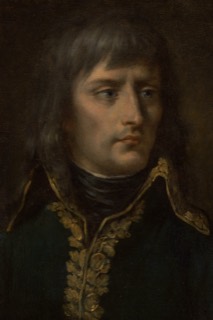
Bonaparte relied on his own sense, and did not care a bean for other people’s.

VI: Napoleon; or, the Man of the WorldKeep reading from here

He draws his rents from rage and pain. By acting rashly, he buys the power of talking wisely.

VII: Goethe; or, the WriterKeep reading from here

Goethe would have no word that does not cover a thing.

VII: Goethe; or, the WriterKeep reading from here

All 101 Representative Men quotes, with the words around each

Reviews

No reviews yet. Be the first, in the app.

Write a review in Doomreader

Contents

  1. I: Uses of Great Men
  2. II: Plato; or, the Philospher
  3. Plato: New Readings
  4. III: Swedenborg; or, the Mystic
  5. IV: Montaigne; or, the Skeptic
  6. V: Shakespeare; or, the Poet
  7. VI: Napoleon; or, the Man of the World
  8. VII: Goethe; or, the Writer

Listen to Representative Men free

Representative Men as a free audiobook: Doomreader reads any book aloud, free, in your phone's or computer's own voice. Open the book and tap listen, at the speed you like, hands free.

Want a more natural voice? The AI voices read with AI credits.

Listen free in Doomreader

Download Representative Men free

The whole book as an EPUB file, free and legal, from Standard Ebooks. It opens in any ebook app, or read it here in Doomreader with nothing to install.

Download the EPUB (1.3 MB)

More by Ralph Waldo Emerson

More like Representative Men

About this edition

Text from Standard Ebooks. Standard Ebooks dedicate their edition to the public domain (CC0 1.0). Every passage and line on this page is the book's own words, checked against the text.