Doomreader

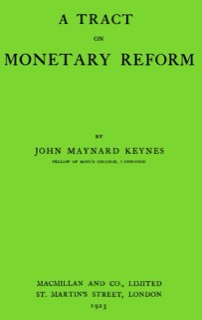
The Economic Consequences of the Peace

by John Maynard Keynes

Length: 70,181 words, about 281 pages, about 5 hours to read

History and travel, Economics

Read The Economic Consequences of the Peace free, starting with its best pages and lines below. Listen to it free too, read aloud by your phone's own voice.

What it is

Keynes presents a first-hand account of the 1919 Paris Peace Conference and an analysis of the resulting Versailles treaty.

The best passages

Pages from the book itself, chosen to make you want to read on. Each opens in the reader at that exact spot.

I: Introductory

The power to become habituated to his surroundings is a marked characteristic of mankind. Very few of us realize with conviction the intensely unusual, unstable, complicated, unreliable, temporary nature of the economic organization by which Western Europe has lived for the last half century. We assume some of the most peculiar and temporary of our late advantages as natural, permanent, and to be depended on, and we lay our plans accordingly. On this sandy and false foundation we scheme for social improvement and dress our political platforms, pursue our animosities and particular ambitions, and feel ourselves with enough margin in hand to foster, not assuage, civil conflict in the European family. Moved by insane delusion and reckless self-regard, the German people overturned the foundations on which we all lived and built. But the spokesmen of the French and British peoples have run the risk of completing the ruin, which Germany began, by a Peace which, if it is carried into effect, must impair yet further, when it might have restored, the delicate, complicated organization, already shaken and broken by war, through which alone the European peoples can employ themselves and live.
Keep reading from here

III: The Conference

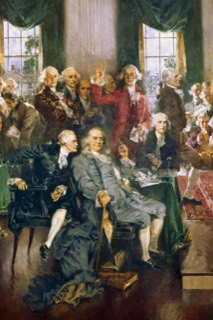
Not infrequently Mr. Lloyd George, after delivering a speech in English, would, during the period of its interpretation into French, cross the hearthrug to the President to reinforce his case by some ad hominem argument in private conversation, or to sound the ground for a compromise⁠—and this would sometimes be the signal for a general upheaval and disorder. The President’s advisers would press round him, a moment later the British experts would dribble across to learn the result or see that all was well, and next the French would be there, a little suspicious lest the others were arranging something behind them, until all the room were on their feet and conversation was general in both languages. My last and most vivid impression is of such a scene⁠—the President and the Prime Minister as the center of a surging mob and a babel of sound, a welter of eager, impromptu compromises and counter-compromises, all sound and fury signifying nothing, on what was an unreal question anyhow, the great issues of the morning’s meeting forgotten and neglected; and Clemenceau silent and aloof on the outskirts⁠—for nothing which touched the security of France was forward⁠—throned, in his gray gloves, on the brocade chair, dry in soul and empty of hope, very old and tired, but surveying the scene with a cynical and almost impish air; and when at last silence was restored and the company had returned to their places, it was to discover that he had disappeared.

Keep reading from here

III: The Conference

In November, 1918, the armies of Foch and the words of Wilson had brought us sudden escape from what was swallowing up all we cared for. The conditions seemed favorable beyond any expectation. The victory was so complete that fear need play no part in the settlement. The enemy had laid down his arms in reliance on a solemn compact as to the general character of the Peace, the terms of which seemed to assure a settlement of justice and magnanimity and a fair hope for a restoration of the broken current of life. To make assurance certain the President was coming himself to set the seal on his work.

When President Wilson left Washington he enjoyed a prestige and a moral influence throughout the world unequaled in history. His bold and measured words carried to the peoples of Europe above and beyond the voices of their own politicians. The enemy peoples trusted him to carry out the compact he had made with them; and the Allied peoples acknowledged him not as a victor only but almost as a prophet. In addition to this moral influence the realities of power were in his hands. The American armies were at the height of their numbers, discipline, and equipment. Europe was in complete dependence on the food supplies of the United States; and financially she was even more absolutely at their mercy. Europe not only already owed the United States more than she could pay; but only a large measure of further assistance could save her from starvation and bankruptcy. Never had a philosopher held such weapons wherewith to bind the princes of this world. How the crowds of the European capitals pressed about the carriage of the President! With what curiosity, anxiety, and hope we sought a glimpse of the features and bearing of the man of destiny who, coming from the

Keep reading from here

II: The Conference and the Terms of the Treaty

The Prime Minister never said that he himself believed that Germany could pay the whole cost of the war. But the program became in the mouths of his supporters on the hustings a great deal more than concrete. The ordinary voter was led to believe that Germany could certainly be made to pay the greater part, if not the whole cost of the war. Those whose practical and selfish fears for the future the expenses of the war had aroused, and those whose emotions its horrors had disordered, were both provided for. A vote for a Coalition candidate meant the Crucifixion of Antichrist and the assumption by Germany of the British National Debt.

It proved an irresistible combination, and once more Mr. George’s political instinct was not at fault. No candidate could safely denounce this program, and none did so. The old Liberal Party, having nothing comparable to offer to the electorate, was swept out of existence. A new House of Commons came into being, a majority of whose members had pledged themselves to a great deal more than the Prime Minister’s guarded promises. Shortly after their arrival at Westminster I asked a Conservative friend, who had known previous Houses, what he thought of them. “They are a lot of hard-faced men,” he said, “who look as if they had done very well out of the war.”

Keep reading from here

VI: Europe After the Treaty

Lenin is said to have declared that the best way to destroy the Capitalist System was to debauch the currency. By a continuing process of inflation, governments can confiscate, secretly and unobserved, an important part of the wealth of their citizens. By this method they not only confiscate, but they confiscate arbitrarily; and, while the process impoverishes many, it actually enriches some. The sight of this arbitrary rearrangement of riches strikes not only at security, but at confidence in the equity of the existing distribution of wealth. Those to whom the system brings windfalls, beyond their deserts and even beyond their expectations or desires, become “profiteers,” who are the object of the hatred of the bourgeoisie, whom the inflationism has impoverished, not less than of the proletariat. As the inflation proceeds and the real value of the currency fluctuates wildly from month to month, all permanent relations between debtors and creditors, which form the ultimate foundation of capitalism, become so utterly disordered as to be almost meaningless; and the process of wealth-getting degenerates into a gamble and a lottery.

Lenin was certainly right. There is no subtler, no surer means of overturning the existing basis of society than to debauch the currency. The process engages all the hidden forces of economic law on the side of destruction, and does it in a manner which not one man in a million is able to diagnose.

Keep reading from here

10 of the best lines

The power to become habituated to his surroundings is a marked characteristic of mankind.

I: IntroductoryKeep reading from here

One could not despise Clemenceau or dislike him, but only take a different view as to the nature of civilized man, or indulge, at least, a different hope.

III: The ConferenceKeep reading from here

He allowed himself to be drugged by their atmosphere, to discuss on the basis of their plans and of their data, and to be led along their paths.

III: The ConferenceKeep reading from here

But as it is, men have devised ways to impoverish themselves and one another; and prefer collective animosities to individual happiness.

IV: The TreatyKeep reading from here

Yet the financial problems which were about to exercise Europe could not be solved by greed. The possibility of their cure lay in magnanimity.

II: The Conference and the Terms of the TreatyKeep reading from here

Thus do the Viennese argue, still lightheaded in adversity.

IV: The Reparation CommissionKeep reading from here

There is no subtler, no surer means of overturning the existing basis of society than to debauch the currency.

VI: Europe After the TreatyKeep reading from here

But who can say how much is endurable, or in what direction men will seek at last to escape from their misfortunes?

VI: Europe After the TreatyKeep reading from here

Even if there is no moral solidarity between the nearly-related races of Europe, there is an economic solidarity which we cannot disregard.

VII: RemediesKeep reading from here

To the formation of the general opinion of the future I dedicate this book.

VII: RemediesKeep reading from here

All 58 The Economic Consequences of the Peace quotes, with the words around each

Reviews

No reviews yet. Be the first, in the app.

Write a review in Doomreader

Contents

  1. Preface
  2. I: Introductory
  3. II: Europe Before the War
  4. I: Population
  5. II: Organization
  6. III: The Psychology of Society
  7. IV: The Relation of the Old World to the New
  8. III: The Conference
  9. IV: The Treaty
  10. V: Reparation
  11. I: Undertakings Given Prior to the Peace Negotiations
  12. II: The Conference and the Terms of the Treaty
  13. III: Germany’s Capacity to Pay
  14. IV: The Reparation Commission
  15. V: The German Counterproposals
  16. VI: Europe After the Treaty
  17. VII: Remedies

Listen to The Economic Consequences of the Peace free

The Economic Consequences of the Peace as a free audiobook: Doomreader reads any book aloud, free, in your phone's or computer's own voice. Open the book and tap listen, at the speed you like, hands free.

Want a more natural voice? The AI voices read with AI credits.

Listen free in Doomreader

Download The Economic Consequences of the Peace free

The whole book as an EPUB file, free and legal, from Standard Ebooks. It opens in any ebook app, or read it here in Doomreader with nothing to install.

Download the EPUB (0.8 MB)

More by John Maynard Keynes

More like The Economic Consequences of the Peace

About this edition

Text from Standard Ebooks. Standard Ebooks dedicate their edition to the public domain (CC0 1.0). Every passage and line on this page is the book's own words, checked against the text.