Doomreader

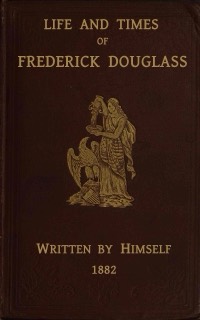
Life and Times of Frederick Douglass

by Frederick Douglass

Length: 193,061 words, about 772 pages, about 14 hours to read

Lives and letters, History and travel

Read Life and Times of Frederick Douglass free, starting with its best pages and lines below. Listen to it free too, read aloud by your phone's own voice.

The best passages

Pages from the book itself, chosen to make you want to read on. Each opens in the reader at that exact spot.

CHAPTER I. AUTHOR’S BIRTH.

The reader must not expect me to say much of my family. Genealogical trees did not flourish among slaves. A person of some consequence in civilized society, sometimes designated as father, was literally unknown to slave law and slave practice. I never met with a slave in that part of the country who could tell me with any certainty how old he was. Few at that time knew anything of the months of the year or of the days of the month. They measured the ages of their children by spring-time, winter-time, harvest-time, planting-time, and the like. Masters allowed no questions to be put to them by slaves concerning their ages. Such questions were regarded by the masters as evidence of an impudent curiosity. From certain events, however, the dates of which I have since learned, I suppose myself to have been born in February, 1817.

Keep reading from here

CHAPTER II. REMOVAL FROM GRANDMOTHER’S.

It was not long, however, before I began to learn the sad fact that this house of my childhood belonged not to my dear old grandmother, but to some one I had never seen, and who lived a great distance off. I learned, too, the sadder fact, that not only the home and lot, but that grandmother herself and all the little children around her belonged to a mysterious personage, called by grandmother, with every mark of reverence, “Old Master.” Thus early did clouds and shadows begin to fall upon my path.

I learned that this old master, whose name seemed ever to be mentioned with fear and shuddering, only allowed the little children to live with grandmother for a limited time, and that as soon as they were big enough they were promptly taken away to live with the said old master. These were distressing revelations indeed. My grandmother was all the world to me, and the thought of being separated from her was a most unwelcome suggestion to my affections and hopes. This mysterious old master was really a man of some consequence. He owned several farms in Tuckahoe, was the chief clerk and butler on the home plantation of Colonel Lloyd, had overseers as well as slaves on his own farms, and gave directions to the overseers on the farms owned by Colonel Lloyd. Captain Aaron Anthony, for such is the name and title of my old master, lived on Colonel Lloyd’s plantation, which was situated on the Wye river, and which was one of the largest, most fertile, and best appointed in the State.

Keep reading from here

CHAPTER XIV. EXPERIENCE IN ST. MICHAELS.

There was, in the Bay-side, very near the camp-ground where my master received his religious impressions, a man named Edward Covey, who enjoyed the reputation of being a first rate hand at breaking young negroes. This Covey was a poor man, a farm renter; and his reputation of being a good hand to break in slaves was of immense pecuniary advantage to him, since it enabled him to get his farm tilled with very little expense, compared with what it would have cost him otherwise. Some slaveholders thought it an advantage to let Mr. Covey have the government of their slaves a year or two, almost free of charge, for the sake of the excellent training they had under his management. Like some horse-breakers noted for their skill, who ride the best horses in the country without expense, Mr. Covey could have under him the most fiery bloods of the neighborhood, for the simple reward of returning them to their owners well broken. Added to the natural fitness of Mr. Covey for the duties of his profession, he was said “to enjoy religion,” and he was as strict in the cultivation of piety as he was in the cultivation of his farm. I was made aware of these traits in his character by some one who had been under his hand, and while I could not look forward to going to him with any degree of pleasure, I was glad to get away from St. Michaels. I believed I should get enough to eat at Covey’s, even if I suffered in other respects, and this to a hungry man is not a prospect to be regarded with indifference.

Keep reading from here

CHAPTER XV. COVEY, THE NEGRO BREAKER.

If at any one time in my life, more than another, I was made to drink the bitterest dregs of slavery, that time was during the first six months of my stay with this man Covey. We were worked all weathers. It was never too hot, or too cold; it could never rain, blow, snow, or hail too hard for us to work in the field. Work, work, work, was scarcely more the order of the day than of the night. The longest days were too short for him, and the shortest nights were too long for him. I was somewhat unmanageable at the first, but a few months of this discipline tamed me. Mr. Covey succeeded in breaking me—in body, soul, and spirit. My natural elasticity was crushed; my intellect languished; the disposition to read departed, the cheerful spark that lingered about my eye died out; the dark night of slavery closed in upon me, and behold a man transformed to a brute!

Sunday was my only leisure time. I spent this in a sort of beast-like stupor, between sleeping and waking, under some large tree. At times I would rise up, a flash of energetic freedom would dart through my soul, accompanied with a faint beam of hope that flickered for a moment, and then vanished. I sank down again, mourning over my wretched condition. I was sometimes tempted to take my life and that of Covey, but was prevented by a combination of hope and fear. My sufferings, as I remember them now, seem like a dream rather than a stern reality.

Our house stood within a few rods of the Chesapeake bay, whose broad bosom was ever white with sails from every quarter of the habitable globe.

Keep reading from here

CHAPTER XIX. THE RUNAWAY PLOT.

Early on the appointed morning we went as usual to the field, but with hearts that beat quickly and anxiously. Any one intimately acquainted with us might have seen that all was not well with us, and that some monster lingered in our thoughts. Our work that morning was the same as it had been for several days past—drawing out and spreading manure. While thus engaged, I had a sudden presentiment, which flashed upon me like lightning in a dark night, revealing to the lonely traveler the gulf before and the enemy behind. I instantly turned to Sandy Jenkins, who was near me, and said: “Sandy, we are betrayed! something has just told me so.” I felt as sure of it as if the officers were in sight. Sandy said: “Man, dat is strange; but I feel just as you do.” If my mother—then long in her grave—had appeared before me and told me that we were betrayed, I could not at that moment have felt more certain of the fact.

In a few minutes after this, the long, low, and distant notes of the horn summoned us from the field to breakfast. I felt as one may be supposed to feel before being led forth to be executed for some great offense. I wanted no breakfast, but I went with the other slaves toward the house for form’s sake. My feelings were not disturbed as to the right of running away; on that point I had no misgiving whatever, but from a sense of the consequences of failure.

Keep reading from here

10 of the best lines

They measured the ages of their children by spring-time, winter-time, harvest-time, planting-time, and the like.

CHAPTER I. AUTHOR’S BIRTH.Keep reading from here

Guilty or not guilty, to be accused was to be sure of a flogging.

CHAPTER VIII CHARACTERISTICS OF OVERSEERS.Keep reading from here

I had jumped from a sinking ship into the sea; I had fled from a tiger to something worse.

CHAPTER XVI. ANOTHER PRESSURE OF THE TYRANT’S VICE.Keep reading from here

Nature laughed them to scorn.

CHAPTER XIX. THE RUNAWAY PLOT.Keep reading from here

It is my opinion that thousands more would have escaped from slavery but for the strong affection which bound them to their families, relatives, and friends.

CHAPTER XXI. ESCAPE FROM SLAVERY.Keep reading from here

I breathe, and lo! the chattel becomes a man!

CHAPTER VI. IMPRESSIONS ABROAD.Keep reading from here

Individuals emigrate—nations never.

CHAPTER VIII. JOHN BROWN AND MRS. STOWE.Keep reading from here

His first glance was the frown of the man, the second was the bland and sickly smile of the demagogue.

CHAPTER XII. HOPE FOR THE NATION.Keep reading from here

I left there as a slave, and returned as a freeman: I left there unknown to the outside world, and returned well known: I left there on a freight boat and returned on a Revenue Cutter: I left on a vessel belonging to Col. Edward Lloyd, and returned on one belonging to the United States.

CHAPTER XVI. “TIME MAKES ALL THINGS EVEN.”Keep reading from here

The honest and comprehensive statesman, clearly discerning the needs of his country, and earnestly endeavoring to do his whole duty, though covered and blistered with reproaches, may safely leave his course to the silent judgment of time.

APPENDIX.Keep reading from here

All 209 Life and Times of Frederick Douglass quotes, with the words around each

Reviews

No reviews yet. Be the first, in the app.

Write a review in Doomreader

Contents

All 44 parts
  1. INTRODUCTION.
  2. LIFE AS A SLAVE.
  3. CHAPTER I. AUTHOR’S BIRTH.
  4. CHAPTER II. REMOVAL FROM GRANDMOTHER’S.
  5. CHAPTER III. TROUBLES OF CHILDHOOD.
  6. CHAPTER IV. A GENERAL SURVEY OF THE SLAVE PLANTATION.
  7. CHAPTER V. A SLAVEHOLDER’S CHARACTER.
  8. CHAPTER VI. A CHILD’S REASONING.
  9. CHAPTER VII. LUXURIES AT THE GREAT HOUSE.
  10. CHAPTER VIII CHARACTERISTICS OF OVERSEERS.
  11. CHAPTER IX. CHANGE OF LOCATION.
  12. CHAPTER X. LEARNING TO READ.
  13. CHAPTER XI. GROWING IN KNOWLEDGE.
  14. CHAPTER XII. RELIGIOUS NATURE AWAKENED.
  15. CHAPTER XIII. THE VICISSITUDES OF SLAVE LIFE.
  16. CHAPTER XIV. EXPERIENCE IN ST. MICHAELS.
  17. CHAPTER XV. COVEY, THE NEGRO BREAKER.
  18. CHAPTER XVI. ANOTHER PRESSURE OF THE TYRANT’S VICE.
  19. CHAPTER XVII. THE LAST FLOGGING.
  20. CHAPTER XVIII. NEW RELATIONS AND DUTIES.
  21. CHAPTER XIX. THE RUNAWAY PLOT.
  22. CHAPTER XX. APPRENTICESHIP LIFE.
  23. CHAPTER XXI. ESCAPE FROM SLAVERY.
  24. SECOND PART
  25. CHAPTER I. ESCAPE FROM SLAVERY.
  26. CHAPTER II. LIFE AS A FREEMAN.
  27. CHAPTER III. INTRODUCED TO THE ABOLITIONISTS.
  28. CHAPTER IV. RECOLLECTIONS OF OLD FRIENDS.
  29. CHAPTER V. ONE HUNDRED CONVENTIONS.
  30. CHAPTER VI. IMPRESSIONS ABROAD.
  31. CHAPTER VII. TRIUMPHS AND TRIALS.
  32. CHAPTER VIII. JOHN BROWN AND MRS. STOWE.
  33. CHAPTER IX. INCREASING DEMANDS OF THE SLAVE POWER.
  34. CHAPTER X. THE BEGINNING OF THE END.
  35. CHAPTER XI. SECESSION AND WAR
  36. CHAPTER XII. HOPE FOR THE NATION.
  37. CHAPTER XIII. VAST CHANGES.
  38. CHAPTER XIV. LIVING AND LEARNING.
  39. CHAPTER XV. WEIGHED IN THE BALANCE.
  40. CHAPTER XVI. “TIME MAKES ALL THINGS EVEN.”
  41. CHAPTER XVII. INCIDENTS AND EVENTS.
  42. CHAPTER XVIII. “HONOR TO WHOM HONOR.”
  43. CHAPTER XIX. RETROSPECTION.
  44. APPENDIX.

Listen to Life and Times of Frederick Douglass free

Life and Times of Frederick Douglass as a free audiobook: Doomreader reads any book aloud, free, in your phone's or computer's own voice. Open the book and tap listen, at the speed you like, hands free.

Want a more natural voice? The AI voices read with AI credits.

Listen free in Doomreader

Download Life and Times of Frederick Douglass free

The whole book as an EPUB file, free and legal, from Project Gutenberg. It opens in any ebook app, or read it here in Doomreader with nothing to install.

Download the EPUB (4.7 MB)

More by Frederick Douglass

More like Life and Times of Frederick Douglass

About this edition

Text from Project Gutenberg. In the public domain in the USA. The Project Gutenberg License is kept inside the file. Every passage and line on this page is the book's own words, checked against the text.