Doomreader

Leviathan

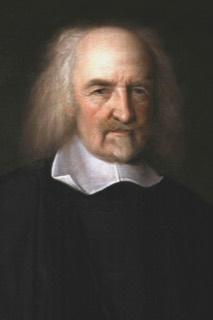
by Thomas Hobbes

Length: 207,843 words, about 831 pages, about 15 hours to read

Philosophy, Politics and society

Read Leviathan free, starting with its best pages and lines below. Listen to it free too, read aloud by your phone's own voice.

What it is

Hobbes explores a vision of the ideal state, in which people cede certain freedoms to a sovereign power in exchange for security and stability.

The best passages

Pages from the book itself, chosen to make you want to read on. Each opens in the reader at that exact spot.

Introduction

Nature, the art whereby God hath made and governs the world, is by the “art” of man, as in many other things, so in this also imitated, that it can make an artificial animal. For seeing life is but a motion of limbs, the beginning whereof is in some principal part within; why may we not say, that all “automata” (engines that move themselves by springs and wheels as doth a watch) have an artificial life? For what is the “heart,” but a “spring”; and the “nerves,” but so many “strings”; and the “joints,” but so many “wheels,” giving motion to the whole body, such as was intended by the artificer? “Art” goes yet further, imitating that rational and most excellent work of nature, “man.” For by art is created that great “Leviathan” called a “Commonwealth,” or “State,” in Latin Civitas, which is but an artificial man; though of greater stature and strength than the natural, for whose protection and defence it was intended; and in which the “sovereignty” is an artificial “soul,” as giving life and motion to the whole body; the “magistrates,” and other “officers” of judicature and execution, artificial “joints”; “reward” and “punishment,” by which fastened to the seat of the sovereignty every joint and member is moved to perform his duty, are the “nerves,” that do the same in the body natural; the “wealth” and “riches” of all the particular members, are the “strength”; salus populi, the “people’s safety,” its “business”; “counsellors,” by whom all things needful for it to know are suggested unto it, are the “memory”; “equity,” and “laws,” an artificial “reason” and “will”; “concord,” “health”; “sedition,” “sickness”; and “civil war,” “death.”
Keep reading from here

VI: Of the Interior Beginnings of Voluntary Motions; Commonly Called the Passions; and the Speeches by Which They Are Expressed

“Sudden glory,” is the passion which maketh those “grimaces” called “laughter”; and is caused either by some sudden act of their own, that pleaseth them; or by the apprehension of some deformed thing in another, by comparison whereof they suddenly applaud themselves. And it is incident most to them, that are conscious of the fewest abilities in themselves; who are forced to keep themselves in their own favour, by observing the imperfections of other men. And therefore much laughter at the defects of others, is a sign of pusillanimity. For of great minds, one of the proper works is, to help and free others from scorn; and compare themselves only with the most able.

On the contrary, “sudden dejection,” is the passion that causeth “weeping”; and is caused by such accidents, as suddenly take away some vehement hope, or some prop of their power: and they are most subject to it, that rely principally on helps external, such as are women and children. Therefore some weep for the loss of friends; others for their unkindness; others for the sudden stop made to their thoughts of revenge, by reconciliation. But in all cases, both laughter, and weeping, are sudden motions; custom taking them both away. For no man laughs at old jests; or weeps for an old calamity.

“Grief,” for the discovery of some defect of ability, is “shame,” or the passion that discovereth itself in “blushing”: and consisteth in the apprehension of something dishonourable; and in young

Keep reading from here

XIII: Of the Natural Condition of Mankind as Concerning Their Felicity and Misery

Hereby it is manifest, that during the time men live without a common power to keep them all in awe, they are in that condition which is called war; and such a war, as is of every man, against every man. For “war” consisteth not in battle only, or the act of fighting; but in a tract of time, wherein the will to contend by battle is sufficiently known: and therefore the notion of “time” is to be considered in the nature of war, as it is in the nature of weather. For as the nature of foul weather lieth not in a shower or two of rain, but in an inclination thereto of many days together; so the nature of war consisteth not in actual fighting, but in the known disposition thereto during all the time there is no assurance to the contrary. All other time is “peace.”

Whatsoever therefore is consequent to a time of war, where every man is enemy to every man, the same is consequent to the time wherein men live without other security than what their own strength and their own invention shall furnish them withal. In such condition there is no place for industry, because the fruit thereof is uncertain, and consequently no culture of the earth; no navigation, nor use of the commodities that may be imported by sea; no commodious building; no instruments of moving and removing such things as require much force; no knowledge of the face of the earth; no account of time;

Keep reading from here

XIII: Of the Natural Condition of Mankind as Concerning Their Felicity and Misery

It may seem strange to some man, that has not well weighed these things, that Nature should thus dissociate, and render men apt to invade and destroy one another; and he may therefore, not trusting to this inference, made from the passions, desire perhaps to have the same confirmed by experience. Let him therefore consider with himself, when taking a journey, he arms himself, and seeks to go well accompanied; when going to sleep, he locks his doors; when even in his house, he locks his chests; and this when he knows there be laws, and public officers, armed, to revenge all injuries shall be done him; what opinion he has of his fellow-subjects, when he rides armed; of his fellow-citizens, when he locks his doors; and of his children and servants, when he locks his chests. Does he not there as much accuse mankind by his actions as I do by my words? But neither of us accuse man’s nature in it. The desires and other passions of man are in themselves no sin. No more are the actions that proceed from those passions, till they know a law that forbids them; which till laws be made they cannot know, nor can any law be made till they have agreed upon the person that shall make it.

Keep reading from here

XXIX: Of Those Things That Weaken, or Tend to the Dissolution of a Commonwealth

Though nothing can be immortal which mortals make, yet if men had the use of reason they pretend to, their commonwealths might be secured, at least from perishing by internal diseases. For by the nature of their institution, they are designed to live as long as mankind, or as the laws of Nature or as justice itself, which gives them life. Therefore when they come to be dissolved, not by external violence, but intestine disorder, the fault is not in men, as they are the “matter”; but as they are the “makers,” and orderers of them. For men, as they become at last weary of irregular jostling and hewing one another, and desire with all their hearts to conform themselves into one firm and lasting edifice: so for want, both of the art of making fit laws, to square their actions by, and also of humility and patience, to suffer the rude and cumbersome points of their present greatness to be taken off, they cannot without the help of a very able architect, be compiled into any other than a crazy building, such as hardly lasting out their own time, must assuredly fall upon the heads of their posterity.

Keep reading from here

10 of the best lines

For what is the “heart,” but a “spring”; and the “nerves,” but so many “strings”; and the “joints,” but so many “wheels,” giving motion to the whole body, such as was intended by the artificer?

IntroductionKeep reading from here

For if all things were equal in all men, nothing would be prized.

VIII: Of the Virtues Commonly Called Intellectual, and Their Contrary DefectsKeep reading from here

To have done more hurt to a man, than he can or is willing to expiate, inclineth the doer to hate the sufferer.

XI: Of the Difference of MannersKeep reading from here

The question who is the better man, has no place in the condition of mere nature; where, as has been shown before, all men are equal.

XV: Of Other Laws of NatureKeep reading from here

For sometimes, as men’s manners are, justice cannot be had without money; and every man may think his own cause just, till it be heard and judged.

XXII: Of Systems Subject, Political, and PrivateKeep reading from here

For “rebellion” is but war renewed.

XXVIII: Of Punishments and RewardsKeep reading from here

For the greatest and most active part of mankind has never hitherto been well contented with the present.

XXX: Of the Office of the Sovereign RepresentativeKeep reading from here

For two men conspiring, one to seem lame, the other to cure him with a charm, will deceive many; but many conspiring, one to seem lame, another so to cure him, and all the rest to bear witness, will deceive many more.

XXXVII: Of Miracles, and Their UseKeep reading from here

For if God should require perfect innocence, there could no flesh be saved.

XLIII: Of What Is Necessary for a Man’s Reception Into the Kingdom of HeavenKeep reading from here

As if one should assign for cause of the good or evil acts of men, their ability to do them.

XLVI: Of Darkness from Vain Philosophy and Fabulous TraditionsKeep reading from here

All 134 Leviathan quotes, with the words around each

Reviews

No reviews yet. Be the first, in the app.

Write a review in Doomreader

Contents

All 53 parts
  1. Introduction
  2. Part I: Of Man
  3. I: Of Sense
  4. II: Of Imagination
  5. III: Of the Consequence or Train of Imaginations
  6. IV: Of Speech
  7. V: Of Reason and Science
  8. VI: Of the Interior Beginnings of Voluntary Motions; Commonly Called the Passions; and the Speeches by Which They Are Expressed
  9. VII: Of the Ends, or Resolutions of Discourse
  10. VIII: Of the Virtues Commonly Called Intellectual, and Their Contrary Defects
  11. IX: Of the Several Subjects of Knowledge
  12. X: Of Power, Worth, Dignity, Honour, and Worthiness
  13. XI: Of the Difference of Manners
  14. XII: Of Religion
  15. XIII: Of the Natural Condition of Mankind as Concerning Their Felicity and Misery
  16. XIV: Of the First and Second Natural Laws, and of Contracts
  17. XV: Of Other Laws of Nature
  18. XVI: Of Persons, Authors, and Things Personated
  19. Part II: Of Commonwealth
  20. XVII: Of the Causes, Generation, and Definition of a Commonwealth
  21. XVIII: Of the Rights of Sovereigns by Institution
  22. XIX: Of the Several Kinds of Commonwealth by Institution, and of Succession to the Sovereign Power
  23. XX: Of Dominion Paternal, and Despotical
  24. XXI: Of the Liberty of Subjects
  25. XXII: Of Systems Subject, Political, and Private
  26. XXIII: Of the Public Ministers of Sovereign Power
  27. XXIV: Of the Nutrition and Procreation of a Commonwealth
  28. XXV: Of Counsel
  29. XXVI: Of Civil Laws
  30. XXVII: Of Crimes, Excuses, and Extenuations
  31. XXVIII: Of Punishments and Rewards
  32. XXIX: Of Those Things That Weaken, or Tend to the Dissolution of a Commonwealth
  33. XXX: Of the Office of the Sovereign Representative
  34. XXXI: Of the Kingdom of God by Nature
  35. Part III: Of a Christian Commonwealth
  36. XXXII: Of the Principles of Christian Politics
  37. XXXIII: Of the Number, Antiquity, Scope, Authority, and Interpreters of the Books of Holy Scripture
  38. XXXIV: Of the Signification of Spirit, Angel, and Inspiration in the Books of Holy Scripture
  39. XXXV: Of the Signification in Scripture of Kingdom of God, of Holy, Sacred, and Sacrament
  40. XXXVI: Of the Word of God, and of Prophets
  41. XXXVII: Of Miracles, and Their Use
  42. XXXVIII: Of the Signification in Scripture of Eternal Life, Hell, Salvation, the World to Come, and Redemption
  43. XXXIX: Of the Signification in Scripture of the Word Church
  44. XL: Of the Rights of the Kingdom of God, in Abraham, Moses, the High Priests, and the Kings of Judah
  45. XLI: Of the Office of Our Blessed Saviour
  46. XLII: Of Power Ecclesiastical
  47. XLIII: Of What Is Necessary for a Man’s Reception Into the Kingdom of Heaven
  48. Part IV: Of the Kingdom of Darkness
  49. XLIV: Of Spiritual Darkness, from Misinterpretation of Scripture
  50. XLV: Of Demonology, and Other Relics of the Religion of the Gentiles
  51. XLVI: Of Darkness from Vain Philosophy and Fabulous Traditions
  52. XLVII: Of the Benefit That Proceedeth from Such Darkness, and to Whom It Accrueth
  53. A Review, and Conclusion

Listen to Leviathan free

Leviathan as a free audiobook: Doomreader reads any book aloud, free, in your phone's or computer's own voice. Open the book and tap listen, at the speed you like, hands free.

Want a more natural voice? The AI voices read with AI credits.

Listen free in Doomreader

Download Leviathan free

The whole book as an EPUB file, free and legal, from Standard Ebooks. It opens in any ebook app, or read it here in Doomreader with nothing to install.

Download the EPUB (1.5 MB)

More like Leviathan

About this edition

Text from Standard Ebooks. Standard Ebooks dedicate their edition to the public domain (CC0 1.0). Every passage and line on this page is the book's own words, checked against the text.