Doomreader

Howards End

by E. M. Forster

Length: 109,220 words, about 437 pages, about 8 hours to read

Novels

Read Howards End free, starting with its best pages and lines below. Listen to it free too, read aloud by your phone's own voice.

What it is

The lives of three families of different classes intertwine in Edwardian England.

The best passages

Pages from the book itself, chosen to make you want to read on. Each opens in the reader at that exact spot.

Chapter I

One may as well begin with Helen’s letters to her sister.

“Howards End,

“Tuesday.

“Dearest Meg,

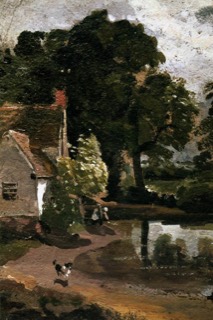
“It isn’t going to be what we expected. It is old and little, and altogether delightful⁠—red brick. We can scarcely pack in as it is, and the dear knows what will happen when Paul (younger son) arrives tomorrow. From hall you go right or left into dining-room or drawing-room. Hall itself is practically a room. You open another door in it, and there are the stairs going up in a sort of tunnel to the first floor. Three bedrooms in a row there, and three attics in a row above. That isn’t all the house really, but it’s all that one notices⁠—nine windows as you look up from the front garden.

“Then there’s a very big wych-elm⁠—to the left as you look up⁠—leaning a little over the house, and standing on the boundary between the garden and meadow. I quite love that tree already. Also ordinary elms, oaks⁠—no nastier than ordinary oaks⁠—pear-trees, apple-trees, and a vine. No silver birches, though. However, I must get on to my host and hostess. I only wanted to show that it isn’t the least what we expected. Why did we settle that their house would be all gables and wiggles, and their garden all gamboge-coloured paths? I believe simply because we associate them with expensive hotels⁠—Mrs. Wilcox trailing in beautiful dresses down long corridors, Mr. Wilcox bullying porters, etc. We females are that unjust.

“I shall be back Saturday; will let you know train later. They are as angry as I am that you did not come too; really Tibby is too tiresome, he starts a new mortal disease every month.

Keep reading from here

Chapter III

“Margaret could not come herself, on account of poor Tibby, so I am here to represent her and to have a good talk.”

“I’m sorry to be so dense,” said the young man, again drawing up outside a shop. “But I still haven’t quite understood.”

“Helen, Mr. Wilcox⁠—my niece and you.”

He pushed up his goggles and gazed at her, absolutely bewildered. Horror smote her to the heart, for even she began to suspect that they were at cross-purposes, and that she had commenced her mission by some hideous blunder.

“Miss Schlegel and myself?” he asked, compressing his lips.

“I trust there has been no misunderstanding,” quavered Mrs. Munt. “Her letter certainly read that way.”

“What way?”

“That you and she⁠—” She paused, then drooped her eyelids.

“I think I catch your meaning,” he said stickily. “What an extraordinary mistake!”

“Then you didn’t the least⁠—” she stammered, getting bloodred in the face, and wishing she had never been born.

“Scarcely, as I am already engaged to another lady.” There was a moment’s silence, and then he caught his breath and exploded with, “Oh, good God! Don’t tell me it’s some silliness of Paul’s.”

“But you are Paul.”

“I’m not.”

“Then why did you say so at the station?”

“I said nothing of the sort.”

“I beg your pardon, you did.”

“I beg your pardon, I did not. My name is Charles.”

Keep reading from here

Chapter III

“Paul, is there any truth in this?”

“I didn’t⁠—I don’t⁠—”

“Yes or no, man; plain question, plain answer. Did or didn’t Miss Schlegel⁠—”

“Charles, dear,” said a voice from the garden. “Charles, dear Charles, one doesn’t ask plain questions. There aren’t such things.”

They were all silent. It was Mrs. Wilcox.

She approached just as Helen’s letter had described her, trailing noiselessly over the lawn, and there was actually a wisp of hay in her hands. She seemed to belong not to the young people and their motor, but to the house, and to the tree that overshadowed it. One knew that she worshipped the past, and that the instinctive wisdom the past can alone bestow had descended upon her⁠—that wisdom to which we give the clumsy name of “aristocracy.” High born she might not be. But assuredly she cared about her ancestors, and let them help her. When she saw Charles angry, Paul frightened, and Mrs. Munt in tears, she heard her ancestors say, “Separate those human beings who will hurt each other most. The rest can wait.” So she did not ask questions. Still less did she pretend that nothing had happened, as a competent society hostess would have done. She said: “Miss Schlegel, would you take your aunt up to your room or to my room, whichever you think best. Paul, do find Evie, and tell her lunch for six, but I’m not sure whether we shall all be downstairs for it.” And when they had obeyed her, she turned to her elder son, who still stood in the throbbing, stinking car, and smiled at him with tenderness, and without saying a word, turned away from him towards her flowers.

Keep reading from here

Chapter VI

We are not concerned with the very poor. They are unthinkable and only to be approached by the statistician or the poet. This story deals with gentlefolk, or with those who are obliged to pretend that they are gentlefolk.

The boy, Leonard Bast, stood at the extreme verge of gentility. He was not in the abyss, but he could see it, and at times people whom he knew had dropped in, and counted no more. He knew that he was poor, and would admit it; he would have died sooner than confess any inferiority to the rich. This may be splendid of him. But he was inferior to most rich people, there is not the least doubt of it. He was not as courteous as the average rich man, nor as intelligent, nor as healthy, nor as lovable. His mind and his body had been alike underfed, because he was poor, and because he was modern they were always craving better food. Had he lived some centuries ago, in the brightly coloured civilisations of the past, he would have had a definite status, his rank and his income would have corresponded. But in his day the angel of Democracy had arisen, enshadowing the classes with leathern wings, and proclaiming, “All men are equal⁠—all men, that is to say, who possess umbrellas,” and so he was obliged to assert gentility, lest he slip into the abyss where nothing counts, and the statements of Democracy are inaudible.

Keep reading from here

Chapter XXIII

Now she thought of the map of Africa; of empires; of her father; of the two supreme nations, streams of whose life warmed her blood, but, mingling, had cooled her brain. She paced back into the hall, and as she did so the house reverberated.

“Is that you, Henry?” she called.

There was no answer, but the house reverberated again.

“Henry, have you got in?”

But it was the heart of the house beating, faintly at first, then loudly, martially. It dominated the rain.

It is the starved imagination, not the well-nourished, that is afraid. Margaret flung open the door to the stairs. A noise as of drums seemed to deafen her. A woman, an old woman, was descending, with figure erect, with face impassive, with lips that parted and said dryly:

“Oh! Well, I took you for Ruth Wilcox.”

Margaret stammered: “I⁠—Mrs. Wilcox⁠—I?”

“In fancy, of course⁠—in fancy. You had her way of walking. Good day.” And the old woman passed out into the rain.

Keep reading from here

10 of the best lines

The affections are more reticent than the passions, and their expression more subtle.

Chapter IIKeep reading from here

He believed in sudden conversion, a belief which may be right, but which is peculiarly attractive to a half-baked mind.

Chapter VIKeep reading from here

It is private life that holds out the mirror to infinity; personal intercourse, and that alone, that ever hints at a personality beyond our daily vision.

Chapter XKeep reading from here

Money’s educational. It’s far more educational than the things it buys.

Chapter XVKeep reading from here

Premonitions are not preparation.

Chapter XVIIIKeep reading from here

Hertfordshire is England at its quietest, with little emphasis of river and hill; it is England meditative.

Chapter XXIIIKeep reading from here

To have no illusions and yet to love⁠—what stronger surety can a woman find?

Chapter XXXIKeep reading from here

Reaction against the Wilcoxes had eaten into her life until she was scarcely sane.

Chapter XXXIVKeep reading from here

We know that there’s poetry. We know that there’s death. They can only take them on hearsay.

Chapter XXXVIIKeep reading from here

Death destroys a man, but the idea of death saves him⁠—that is the best account of it that has yet been given.

Chapter XLIKeep reading from here

All 90 Howards End quotes, with the words around each

Reviews

No reviews yet. Be the first, in the app.

Write a review in Doomreader

Contents

All 44 parts
  1. Chapter I
  2. Chapter II
  3. Chapter III
  4. Chapter IV
  5. Chapter V
  6. Chapter VI
  7. Chapter VII
  8. Chapter VIII
  9. Chapter IX
  10. Chapter X
  11. Chapter XI
  12. Chapter XII
  13. Chapter XIII
  14. Chapter XIV
  15. Chapter XV
  16. Chapter XVI
  17. Chapter XVII
  18. Chapter XVIII
  19. Chapter XIX
  20. Chapter XX
  21. Chapter XXI
  22. Chapter XXII
  23. Chapter XXIII
  24. Chapter XXIV
  25. Chapter XXV
  26. Chapter XXVI
  27. Chapter XXVII
  28. Chapter XXVIII
  29. Chapter XXIX
  30. Chapter XXX
  31. Chapter XXXI
  32. Chapter XXXII
  33. Chapter XXXIII
  34. Chapter XXXIV
  35. Chapter XXXV
  36. Chapter XXXVI
  37. Chapter XXXVII
  38. Chapter XXXVIII
  39. Chapter XXXIX
  40. Chapter XL
  41. Chapter XLI
  42. Chapter XLII
  43. Chapter XLIII
  44. Chapter XLIV

Listen to Howards End free

Howards End as a free audiobook: Doomreader reads any book aloud, free, in your phone's or computer's own voice. Open the book and tap listen, at the speed you like, hands free.

Want a more natural voice? The AI voices read with AI credits.

Listen free in Doomreader

Download Howards End free

The whole book as an EPUB file, free and legal, from Standard Ebooks. It opens in any ebook app, or read it here in Doomreader with nothing to install.

Download the EPUB (0.8 MB)

More by E. M. Forster

More like Howards End

About this edition

Text from Standard Ebooks. Standard Ebooks dedicate their edition to the public domain (CC0 1.0). Every passage and line on this page is the book's own words, checked against the text.