Doomreader

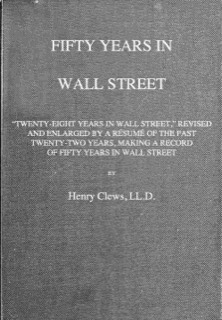
Fifty Years in Wall Street

by Henry Clews

Length: 348,105 words, about 1,392 pages, about 24 hours to read

Lives and letters, Money and investing, Founders and companies

Read Fifty Years in Wall Street free, starting with its best pages and lines below. Listen to it free too, read aloud by your phone's own voice.

The best passages

Pages from the book itself, chosen to make you want to read on. Each opens in the reader at that exact spot.

CHAPTER I. MY DEBUT IN WALL STREET.

My advent in Wall Street was on the heels of the panic of 1857. That panic was known as the “Western blizzard.” It was entitled to the name, as its destructive power and chilling effects had surpassed all other financial gales that had swept over Wall Street. The first serious result of its fatal force was the failure of the Ohio Life and Trust Company, a concern of gigantic dimensions in those days.

The Company had an office in Wall Street, and on the announcement of the collapse, business became completely paralyzed. This failure was immediately followed by the suspension of many large firms that had withstood the shock of all ordinary collisions and had successfully weathered many financial storms.

The panic was due in part to excessive importations of foreign goods, and also to the rapid construction of railroads, to a large extent on borrowed capital. There were other contributing causes. The crops were bad that year, and the country was unable to pay for its imports in produce, and coin was brought to the exporting point. In October, the New York City banks suspended payments, and their example was followed throughout the country. Bank credits had been unduly expanded everywhere, and the time had naturally arrived for contraction. It came with a bound, and financial disaster spread like a whirlwind, becoming general.

Keep reading from here

CHAPTER III. HOW TO MAKE MONEY IN WALL STREET.

One day, for instance, a man gave me an order to buy a thousand shares of Erie without limit. The order was executed at 94. I had no sooner bought it than the stock went down.

My customer returned in a short time and ordered the stock to be sold. It was then 92½.

In half an hour afterwards he returned again and ordered it bought back again, without any limit as before. It was bought back at 95.

After consulting with other friends for some time he ordered it sold again. The market by that time was 90.

He then came back the fifth time, and said: “I first saw one man who told me to buy, and then another who told me to sell. I understand one is called a ‘bull’ and the other a ‘bear.’ About these names I don’t know much, but I do know now that I am a — jackass.”

Keep reading from here

CHAPTER XIII. THE COMMODORE’S “CORNERS.”

The beginning of this story of the Hudson “corner” is somewhat romantic. The Commodore was sunning himself on a pile of logs on the Jersey side of the Hudson while his yacht lay in the stream, and he was in the mood for enjoying a long and well-earned vacation, attempting to lay aside for a time the toil and trouble of eking out a precarious existence in speculation. While basking in the noon-day sun and gazing with delight on the luxurious foliage that arose from the New Jersey bank of the river, he was aroused from his charming reverie by a messenger from Wall Street, who conveyed to him the important intelligence that a wicked and unregenerate clique of “bears” had conspired to sell Hudson stock “short,” and that it was declining with great rapidity under the repeated and unmerciful blows of their hammers.

The Commodore arose and shook off his lethargy, as a lion may be supposed to shake the dew from his mane prior to his preparation for a spring upon an unfortunate foe.

The Commodore hastened down to Wall Street and instructed his brokers to take all the sellers’ options offered in Hudson. Cash stock was then taken as quickly as possible until the market was bare. A brief calculation showed that the buyers had secured either as cash or contract stock all the Hudson stock in existence with the exception of a small number of shares which were not expected to come upon the market.

Keep reading from here

CHAPTER XIV. DANIEL DREW.

I remember being at a dinner party ostensibly given to the old gentleman when in the very zenith of his financial fame and prosperity. It was a kind of mutual admiration society, Drew being the king-pin of the social coterie. On account of his thirteen millions he was the centre of cringing admiration, and was by a number of the assemblage almost deified.

As is usual on such occasions, speechmaking was in order, the oratorical talent being called out by the toasts as they went the round of the board.

When it came my turn to speak, I followed suit, to some extent, in picking up the thread of the general glorification extended to the honored guest, to whom I paid marked deference.

“We are honored,” I said, “on this festive occasion, by a gentleman of vast wealth, one who can control more ready money than any man in America, and be it said to his honor, it has all been of his own creation. He is a true representative of American thrift and enterprise. His money and his genial disposition together combined make all men his friends, and I know of only one antagonistic spirit to the continued growth of this already marvellous fortune; but that one, in all probability, may yet work his ruin. I refer to our honored guest, Mr. Drew, and his one enemy which I have in mind is ‘Avarice.’”

Keep reading from here

CHAPTER XIV. DANIEL DREW.

He was wonderfully prolific in resources for the purpose of getting advantage of those who attempted to overreach him.

A good story, illustrative of this trait in his speculative character, is told of the time that he was so severely squeezed in Northwestern stock. He was greatly grieved at his ill luck, while the brokers and operators who had been prosperous at his expense were highly elated. They considered it a great thing to have caught the wily old Daniel napping. He was accordingly made the victim of much ribaldry and jesting for several days in Wall Street. Some of the young men carried the joke so far as to meet him and laugh significantly and irritatingly in his face. He seemed to take it all in good part, for he had a happy flow of animal spirits, but he had a terrible rod in pickle for these young men who were making him an object of ridicule. He watched for his opportunity, and one evening as several of them were enjoying themselves in an uptown club, Uncle Daniel walked in, sans ceremonie. He appeared to be looking after some man, and though invited to remain, seemed to be in a great hurry to get away, and was apparently excited and warm. He seemed to have something important on hand. He drew a big white handkerchief out of his pocket a few times and wiped the perspiration from his heated brow. When he was about to depart there came out of his pocket with the handkerchief a small slip of white paper which floated around apparently unseen by him, and alighted at the feet of one of the bystanders, who quickly set his foot upon it.

Keep reading from here

10 of the best lines

“Paint me as I am,” he said. “If you leave out a scar or a wrinkle, I shall not pay you a farthing.”

DEDICATION TO THE VETERANS OF WALL STREET,Keep reading from here

Daniel O’Connell said he could drive a coach and six through any act of Parliament.

CHAPTER XII. “CORNERS” AND THEIR EFFECT ON VALUES.Keep reading from here

While he continued to thrive it was a singular fact that the majority of his financial friends seemed to fall into a decline.

George I. Seney.Keep reading from here

The Tweed Ring supplied this long-felt want, and filled the aching void in the heart of the man who happened to get on the wrong side of the market.

CHAPTER XXXII. THE TWEED RING, AND THE COMMITTEE OF SEVENTY.Keep reading from here

Rich men in this country are apt to work too hard. They do not enjoy life as men of far less wealth do in Europe.

Gen. Samuel Thomas.Keep reading from here

It is probably the only instance on record where the death of a big operator saved a general smash.

CHAPTER LXII. BOOMS IN WALL STREET.Keep reading from here

Secrecy is only the defence of the weak.

CHAPTER LXXIV. NEEDED PUBLICITY AND REFORM IN CORPORATIONS.Keep reading from here

The East is, therefore, much more likely to borrow trouble than the West or the South, especially when it cannot borrow money.

CHAPTER LXXVIII. THE FINANCIAL SITUATION.[6]Keep reading from here

Therefore take my word for it that Wall Street is not as black as it is painted

CHAPTER LXXXIII. WALL STREET AS IT REALLY IS. A VINDICATION.Keep reading from here

Politicians are ever ready to show subserviency to Labor, merely for the purpose of gaining votes for themselves.

CHAPTER LXXXVI. THE FINANCIAL AND TRADE SITUATION AND PROSPECTS.[12]Keep reading from here

All 259 Fifty Years in Wall Street quotes, with the words around each

Reviews

No reviews yet. Be the first, in the app.

Write a review in Doomreader

Contents

All 172 parts
  1. ILLUSTRATIONS.
  2. DEDICATION TO THE VETERANS OF WALL STREET,
  3. INTRODUCTORY. MY PART IN MARKETING THE UNITED STATES CIVIL WAR LOANS.
  4. CHAPTER I. MY DEBUT IN WALL STREET.
  5. CHAPTER II. WALL STREET AS A CIVILIZER.
  6. CHAPTER III. HOW TO MAKE MONEY IN WALL STREET.
  7. CHAPTER IV. IMPORTANCE OF BUSINESS TRAINING.
  8. CHAPTER V. PERSONAL HONOR OF WALL STREET MEN.
  9. CHAPTER VI. WALL STREET DURING THE WAR.
  10. CHAPTER VII. MORE WAR REMINISCENCES—BRITISH AND NAPOLEONIC DESIGNS.
  11. CHAPTER VIII FOREIGN INTRIGUES AGAINST AMERICAN LIBERTY.
  12. CHAPTER IX. SECRETARY CHASE AND THE TREASURY.
  13. CHAPTER X. THE NATIONAL BANKS.
  14. CHAPTER XI. THE NEW YORK STOCK EXCHANGE.
  15. CHAPTER XII. “CORNERS” AND THEIR EFFECT ON VALUES.
  16. CHAPTER XIII. THE COMMODORE’S “CORNERS.”
  17. CHAPTER XIV. DANIEL DREW.
  18. CHAPTER XV. DREW AND VANDERBILT.
  19. CHAPTER XVI. DREW AND THE ERIE “CORNERS.”
  20. CHAPTER XVII. INTERESTING EPISODES IN DREW’S LIFE.
  21. CHAPTER XVIII. PANICS.—THEIR CAUSES.—HOW FAR PREVENTABLE.
  22. George I. Seney.
  23. John C. Eno.
  24. THE CLEARING-HOUSE AS A PREVENTER OF PANICS.
  25. CHAPTER XIX. OLD TIME PANICS.
  26. CHAPTER XX. THE TRUE STORY OF BLACK FRIDAY TOLD FOR THE FIRST TIME.
  27. CHAPTER XXI. CAUSES OF LOSS IN SPECULATION.
  28. CHAPTER XXII. VILLARD AND HIS SPECULATIONS.
  29. CHAPTER XXIII. FERDINAND WARD.
  30. CHAPTER XXIV. HENRY N. SMITH.
  31. CHAPTER XXV. KEENE’S CAREER.
  32. CHAPTER XXVI. OUR RAILROAD METHODS.
  33. CHAPTER XXVII. GEORGIA REPUDIATION BONDS.
  34. Georgia’s Outlawed Bonds.
  35. Georgia Bonds.
  36. How the Georgia Bonds were Negotiated.
  37. Georgia Securities and New York Savings Banks.
  38. The Attorney-General’s Decision.
  39. Georgia’s New Issue.
  40. SHALL REPUDIATION BE RECOGNIZED
  41. A REMINDER TO SENATOR EVARTS.
  42. ANOTHER STRONG PROTEST.
  43. CHAPTER XXVIII. ANDREW JOHNSON’S VAGARIES.
  44. CHAPTER XXIX. THE DIX CONVENTION.
  45. General Grant to General Dix.
  46. General Dix’s Reply.
  47. CHAPTER XXX. CONSEQUENCES OF THE UTICA (DIX’S) CONVENTION.
  48. CHAPTER XXXI. GRANT’S SECOND TERM.
  49. RESOLUTIONS.
  50. CIRCULAR
  51. CHAPTER XXXII. THE TWEED RING, AND THE COMMITTEE OF SEVENTY.
  52. CHAPTER XXXIII. HON. SAMUEL J. TILDEN.
  53. CHAPTER XXXIV. COMMODORE VANDERBILT. —HOW HIS MAMMOTH FORTUNE WAS ACCUMULATED.
  54. CHAPTER XXXV. WILLIAM H. VANDERBILT.
  55. CHAPTER XXXVI. “YOUNG CORNEEL.”
  56. CHAPTER XXXVII. THE YOUNG VANDERBILTS AND THEIR FORTUNES.
  57. CHAPTER XXXVIII. THE ROTHSCHILDS.
  58. CHAPTER XXXIX. TRAVERS.
  59. The Death of Travers.
  60. CHAPTER XL. CHARLES F. WOERISHOFFER.
  61. CHAPTER XLI. WOMEN AS SPECULATORS
  62. CHAPTER XLII. WESTERN MILLIONAIRES IN NEW YORK.
  63. Collis P. Huntington.
  64. Leland Stanford.
  65. Darius O. Mills.
  66. Charles Crocker.
  67. Mark Hopkins.
  68. W. S. O’Brien.
  69. James G. Fair.
  70. William Sharon.
  71. Wm. C. Ralston.
  72. John P. Jones.
  73. William H. Stewart.
  74. James Lick.
  75. John W. Shaw.
  76. CHAPTER XLIII. RAILROAD INVESTMENTS.
  77. CHAPTER XLIV. THE SILVER QUESTION.
  78. Questions.
  79. Replies.
  80. CHAPTER XLV. THE LABOR QUESTION.
  81. CHAPTER XLVI. AN IMPORTANT SYNOPSIS.
  82. CHAPTER XLVII. INTERNATIONAL SIGNIFICANCE OF THE BARTHOLDI STATUE.
  83. CHAPTER XLVIII LARGE FORTUNES AND THEIR DISPOSITION.
  84. Stephen Girard.
  85. Peter Cooper.
  86. CHAPTER XLIX. SOUTHERN AFFAIRS IN SPECULATION.
  87. CHAPTER L. WESTERN AND SOUTHERN FINANCIAL LEADERS.
  88. Calvin S. Brice.
  89. Gen. Samuel Thomas.
  90. Ancestry in England—Brains in America.
  91. CHAPTER LI. ARBITRATION.
  92. CHAPTER LII. NEW YORK AS A FINANCIAL CENTRE.
  93. CHAPTER LIII. EARTHQUAKE THEORIES AND WALL STREET AFFAIRS.
  94. CHAPTER LIV. AUGUST BELMONT.
  95. CHAPTER LV. THE SOCIALIST OBJECTIONS TO THE PRESENT ORDER OF SOCIETY EXAMINED.
  96. CHAPTER LVI. STOCK EXCHANGE CELEBRITIES.
  97. Washington E. Connor.
  98. A Future Financial Power.
  99. CHAPTER LVII. A LOOK INTO THE FUTURE.
  100. CHAPTER LVIII. JAY GOULD.
  101. JAY GOULD AND HIS SYSTEM.
  102. CHAPTER LIX. MEN OF MARK.
  103. Cyrus W. Field.
  104. Hon. Stephen V. White.
  105. Austin Corbin.
  106. Philip D. Armour.
  107. John A. Stewart.
  108. Anthony J. Drexel.
  109. The Jerome Brothers.
  110. Addison Cammack.
  111. Russell Sage.
  112. Chauncey M. Depew.
  113. James M. Brown.
  114. Stedman, the Poet and Financier.
  115. Moses Taylor.
  116. Anthony W. Morse.
  117. Former Giants of the Street.
  118. J. Pierpont Morgan.
  119. Thomas L. James.
  120. CHAPTER LX. JAMES B. AND JOHN H. CLEWS.
  121. CHAPTER LXI. A REMARKABLE CHAPTER OF HISTORY.
  122. CHAPTER LXII. BOOMS IN WALL STREET.
  123. CHAPTER LXIII. A GLIMPSE INTO THE FUTURE.
  124. CHAPTER LXIV. MY CHRISTMAS ADDRESS TO CUSTOMERS DEC. 24, 1906.
  125. CHAPTER LXV. EDWARD H. HARRIMAN.
  126. CHAPTER LXVI. THE UPS AND DOWNS OF WALL STREET.
  127. Illustrated by Personal Reminiscences of Its Leaders.
  128. CHAPTER LXVII. RECENT WALL STREET BOOMS.
  129. CHAPTER LXVIII. WALL STREET’S WILD SPECULATION, 1900-1904.
  130. CHAPTER LXIX. REVIEW OF THE PANIC YEAR, 1903.
  131. CHAPTER LXX. LEADING WALL STREET EVENTS UP TO THE FALL OF 1907.
  132. CHAPTER LXXI. THE GREAT CRISIS OF 1907.
  133. CHAPTER LXXII. THE CAUSES OF THE CRISIS OF 1907.[2]
  134. CHAPTER LXXIII. RECENT MEN OF MARK.
  135. Charles M. Schwab.
  136. Daniel Gray Reid.
  137. Thomas Fortune Ryan.
  138. John Warne Gates.
  139. August Belmont.
  140. William H. Moore.
  141. Anthony Nicholas Brady.
  142. Stuyvesant Fish.
  143. GOVERNOR HUGHES AND WALL STREET.
  144. CHAPTER LXXIV. NEEDED PUBLICITY AND REFORM IN CORPORATIONS.
  145. CHAPTER LXXV. THE MONETARY SITUATION AND ITS REMEDIES.[3]
  146. CHAPTER LXXVI. INDIVIDUALISM VERSUS SOCIALISM.[4]
  147. CHAPTER LXXVII. GREAT WEALTH AND SOCIAL UNREST.[5]
  148. CHAPTER LXXVIII. THE FINANCIAL SITUATION.[6]
  149. CHAPTER LXXIX. Table Showing Dates of Admission of the Members of the
  150. CHAPTER LXXX. ENGLAND AND RUSSIA IN OUR CIVIL WAR AND THE WAR BETWEEN RUSSIA AND JAPAN.[7]
  151. CHAPTER LXXXI. THE CRISIS OF 1907 AND ITS CAUSES. WAS PRESIDENT ROOSEVELT TO BLAME?[9]
  152. CHAPTER LXXXII. OUR GREAT AMERICAN PANICS FROM FIRST TO LAST.
  153. CHAPTER LXXXIII. WALL STREET AS IT REALLY IS. A VINDICATION.
  154. CHAPTER LXXXIV. THE FINANCIAL AND TRADE SITUATION, PAST, PRESENT
  155. FIRST.
  156. SECOND.
  157. THIRD.
  158. FOURTH.
  159. FIFTH.
  160. SIXTH.
  161. SEVENTH.
  162. EIGHTH.
  163. NINTH.
  164. TENTH.
  165. LASTLY.
  166. CHAPTER LXXXV. AMERICAN SOCIAL CONDITIONS.[11]
  167. CHAPTER LXXXVI. THE FINANCIAL AND TRADE SITUATION AND PROSPECTS.[12]
  168. CHAPTER LXXXVII. PEACE ASSURANCES FROM JAPAN.
  169. CHAPTER LXXXVIII. THE EMPEROR OF JAPAN.
  170. CHAPTER LXXXIX. THE NATIONAL CORPORATION PROBLEM.[13]
  171. CHAPTER XC. WHY I AM AN AMERICAN.
  172. CONCLUSION.

Listen to Fifty Years in Wall Street free

Fifty Years in Wall Street as a free audiobook: Doomreader reads any book aloud, free, in your phone's or computer's own voice. Open the book and tap listen, at the speed you like, hands free.

Want a more natural voice? The AI voices read with AI credits.

Listen free in Doomreader

Download Fifty Years in Wall Street free

The whole book as an EPUB file, free and legal, from Project Gutenberg. It opens in any ebook app, or read it here in Doomreader with nothing to install.

Download the EPUB (1.1 MB)

On a reading path

More like Fifty Years in Wall Street

About this edition

Text from Project Gutenberg. In the public domain in the USA. The Project Gutenberg License is kept inside the file. Every passage and line on this page is the book's own words, checked against the text.