Doomreader

Considerations on Representative Government

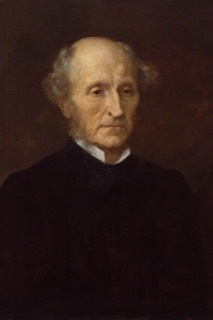
by John Stuart Mill

Length: 98,047 words, about 392 pages, about 7 hours to read

Politics and society

Read Considerations on Representative Government free, starting with its best pages and lines below. Listen to it free too, read aloud by your phone's own voice.

The best passages

Pages from the book itself, chosen to make you want to read on. Each opens in the reader at that exact spot.

Chapter I—To What Extent Forms of Government are a Matter of Choice.

All speculations concerning forms of government bear the impress, more or less exclusive, of two conflicting theories respecting political institutions; or, to speak more properly, conflicting conceptions of what political institutions are.

By some minds, government is conceived as strictly a practical art, giving rise to no questions but those of means and an end. Forms of government are assimilated to any other expedients for the attainment of human objects. They are regarded as wholly an affair of invention and contrivance. Being made by man, it is assumed that man has the choice either to make them or not, and how or on what pattern they shall be made. Government, according to this conception, is a problem, to be worked like any other question of business. The first step is to define the purposes which governments are required to promote. The next, is to inquire what form of government is best fitted to fulfill those purposes. Having satisfied ourselves on these two points, and ascertained the form of government which combines the greatest amount of good with the least of evil, what further remains is to obtain the concurrence of our countrymen, or those for whom the institutions are intended, in the opinion which we have privately arrived at. To find the best form of government; to persuade others that it is the best; and, having done so, to stir them up to insist on having it, is the order of ideas in the minds of those who adopt this view of political philosophy. They look upon a constitution in the same light (difference of scale being allowed for) as they would upon a steam plow, or a threshing machine.
Keep reading from here

Chapter III—That the ideally best Form of Government is Representative Government.

I am far from condemning, in cases of extreme exigency, the assumption of absolute power in the form of a temporary dictatorship. Free nations have, in times of old, conferred such power by their own choice, as a necessary medicine for diseases of the body politic which could not be got rid of by less violent means. But its acceptance, even for a time strictly limited, can only be excused, if, like Solon or Pittacus, the dictator employs the whole power he assumes in removing the obstacles which debar the nation from the enjoyment of freedom. A good despotism is an altogether false ideal, which practically (except as a means to some temporary purpose) becomes the most senseless and dangerous of chimeras. Evil for evil, a good despotism, in a country at all advanced in civilization, is more noxious than a bad one, for it is far more relaxing and enervating to the thoughts, feelings, and energies of the people. The despotism of Augustus prepared the Romans for Tiberius. If the whole tone of their character had not first been prostrated by nearly two generations of that mild slavery, they would probably have had spirit enough left to rebel against the more odious one.

Keep reading from here

Chapter III—That the ideally best Form of Government is Representative Government.

This question really depends upon a still more fundamental one, viz., which of two common types of character, for the general good of humanity, it is most desirable should predominate—the active or the passive type; that which struggles against evils, or that which endures them; that which bends to circumstances, or that which endeavours to make circumstances bend to itself.

The commonplaces of moralists and the general sympathies of mankind are in favor of the passive type. Energetic characters may be admired, but the acquiescent and submissive are those which most men personally prefer. The passiveness of our neighbors increases our sense of security, and plays into the hands of our wilfulness. Passive characters, if we do not happen to need their activity, seem an obstruction the less in our own path. A contented character is not a dangerous rival. Yet nothing is more certain than that improvement in human affairs is wholly the work of the uncontented characters; and, moreover, that it is much easier for an active mind to acquire the virtues of patience, than for a passive one to assume those of energy.

Keep reading from here

Chapter VII—Of True and False Democracy; Representation of All, and Representation of the Majority only.

That, while recognizing these evils, many should consider them as the necessary price paid for a free government, is in no way surprising; it was the opinion of all the friends of freedom up to a recent period. But the habit of passing them over as irremediable has become so inveterate, that many persons seem to have lost the capacity of looking at them as things which they would be glad to remedy if they could. From despairing of a cure, there is too often but one step to denying the disease; and from this follows dislike to having a remedy proposed, as if the proposer were creating a mischief instead of offering relief from one. People are so inured to the evils that they feel as if it were unreasonable, if not wrong, to complain of them. Yet, avoidable or not, he must be a purblind lover of liberty on whose mind they do not weigh; who would not rejoice at the discovery that they could be dispensed with. Now, nothing is more certain than that the virtual blotting out of the minority is no necessary or natural consequence of freedom; that, far from having any connection with democracy, it is diametrically opposed to the first principle of democracy, representation in proportion to numbers. It is an essential part of democracy that minorities should be adequately represented. No real democracy, nothing but a false show of democracy, is possible without it.

Keep reading from here

Chapter VIII—Of the Extension of the Suffrage.

In the preceding argument for universal but graduated suffrage, I have taken no account of difference of sex. I consider it to be as entirely irrelevant to political rights as difference in height or in the color of the hair. All human beings have the same interest in good government; the welfare of all is alike affected by it, and they have equal need of a voice in it to secure their share of its benefits. If there be any difference, women require it more than men, since, being physically weaker, they are more dependent on law and society for protection. Mankind have long since abandoned the only premises which will support the conclusion that women ought not to have votes. No one now holds that women should be in personal servitude; that they should have no thought, wish, or occupation but to be the domestic drudges of husbands, fathers, or brothers. It is allowed to unmarried, and wants but little of being conceded to married women to hold property, and have pecuniary and business interests in the same manner as men. It is considered suitable and proper that women should think, and write, and be teachers. As soon as these things are admitted, the political disqualification has no principle to rest on. The whole mode of thought of the modern world is, with increasing emphasis, pronouncing against the claim of society to decide for individuals what they are and are not fit for, and what they shall and shall not be allowed to attempt. If the principles of modern politics and political economy are good for any thing, it is for proving that these points can only be rightly judged of by the individuals themselves; and that, under complete freedom of

Keep reading from here

10 of the best lines

Men did not wake on a summer morning and find them sprung up.

Chapter I—To What Extent Forms of Government are a Matter of Choice.Keep reading from here

Let a person have nothing to do for his country, and he will not care for it.

Chapter III—That the ideally best Form of Government is Representative Government.Keep reading from here

The people who think it a shame when any thing goes wrong—who rush to the conclusion that the evil could and ought to have been prevented, are those who, in the long run, do most to make the world better.

Chapter III—That the ideally best Form of Government is Representative Government.Keep reading from here

As Coleridge observes, the man makes the motive, not the motive the man.

Chapter VI—Of the Infirmities and Dangers to which Representative Government is Liable.Keep reading from here

Every one has a right to feel insulted by being made a nobody, and stamped as of no account at all.

Chapter VIII—Of the Extension of the Suffrage.Keep reading from here

When the voters are slaves, any thing may be tolerated which enables them to throw off the yoke.

Chapter X—Of the Mode of Voting.Keep reading from here

Democracy is not favorable to the reverential spirit.

Chapter XII—Ought Pledges to be Required from Members of Parliament?Keep reading from here

A government which attempts to do every thing is aptly compared by M. Charles de Rémusat to a schoolmaster who does all the pupils' tasks for them; he may be very popular with the pupils, but he will teach them little.

Chapter XV—Of Local Representative Bodies.Keep reading from here

To govern a country under responsibility to the people of that country, and to govern one country under responsibility to the people of another, are two very different things.

Chapter XVIII—Of the Government of Dependencies by a Free State.Keep reading from here

Even with a sincere intention of preferring the best candidate, it will not do to rely on chance for supplying fit persons. The system must be calculated to form them.

Chapter XVIII—Of the Government of Dependencies by a Free State.Keep reading from here

All 77 Considerations on Representative Government quotes, with the words around each

Reviews

No reviews yet. Be the first, in the app.

Write a review in Doomreader

Contents

  1. Preface
  2. Chapter I—To What Extent Forms of Government are a Matter of Choice.
  3. Chapter II—The Criterion of a Good Form of Government.
  4. Chapter III—That the ideally best Form of Government is Representative Government.
  5. Chapter IV—Under what Social Conditions Representative Government is Inapplicable.
  6. Chapter V—Of the Proper Functions of Representative Bodies.
  7. Chapter VI—Of the Infirmities and Dangers to which Representative Government is Liable.
  8. Chapter VII—Of True and False Democracy; Representation of All, and Representation of the Majority only.
  9. Chapter VIII—Of the Extension of the Suffrage.
  10. Chapter IX—Should there be Two Stages of Election?
  11. Chapter X—Of the Mode of Voting.
  12. Chapter XI—Of the Duration of Parliaments.
  13. Chapter XII—Ought Pledges to be Required from Members of Parliament?
  14. Chapter XIII—Of a Second Chamber.
  15. Chapter XIV—Of the Executive in a Representative Government.
  16. Chapter XV—Of Local Representative Bodies.
  17. Chapter XVI—Of Nationality, as connected with Representative Government.
  18. Chapter XVII—Of Federal Representative Governments.
  19. Chapter XVIII—Of the Government of Dependencies by a Free State.
  20. Footnotes:

Listen to Considerations on Representative Government free

Considerations on Representative Government as a free audiobook: Doomreader reads any book aloud, free, in your phone's or computer's own voice. Open the book and tap listen, at the speed you like, hands free.

Want a more natural voice? The AI voices read with AI credits.

Listen free in Doomreader

Download Considerations on Representative Government free

The whole book as an EPUB file, free and legal, from Project Gutenberg. It opens in any ebook app, or read it here in Doomreader with nothing to install.

Download the EPUB (0.3 MB)

More by John Stuart Mill

More like Considerations on Representative Government

About this edition

Text from Project Gutenberg. In the public domain in the USA. The Project Gutenberg License is kept inside the file. Every passage and line on this page is the book's own words, checked against the text.