Doomreader

Basil

by Wilkie Collins

Length: 115,926 words, about 464 pages, about 8 hours to read

Novels

Read Basil free, starting with its best pages and lines below. Listen to it free too, read aloud by your phone's own voice.

What it is

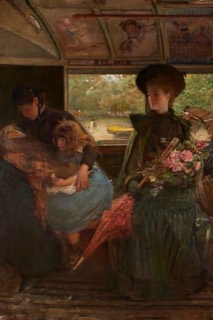
An aristocratic young man falls in love at first sight with a lower-class girl on an omnibus, with disastrous consequences.

The best passages

Pages from the book itself, chosen to make you want to read on. Each opens in the reader at that exact spot.

Chapter I

What am I now about to write?

The history of little more than the events of one year, out of the twenty-four years of my life.

Why do I undertake such an employment as this?

Perhaps, because I think that my narrative may do good; because I hope that, one day, it may be put to some warning use. I am now about to relate the story of an error, innocent in its beginning, guilty in its progress, fatal in its results; and I would fain hope that my plain and true record will show that this error was not committed altogether without excuse. When these pages are found after my death, they will perhaps be calmly read and gently judged, as relics solemnized by the atoning shadows of the grave. Then, the hard sentence against me may be repented of; the children of the next generation of our house may be taught to speak charitably of my memory, and may often, of their own accord, think of me kindly in the thoughtful watches of the night.

Prompted by these motives, and by others which I feel, but cannot analyse, I now begin my self-imposed occupation. Hidden amid the far hills of the far West of England, surrounded only by the few simple inhabitants of a fishing hamlet on the Cornish coast, there is little fear that my attention will be distracted from my task; and as little chance that any indolence on my part will delay its speedy accomplishment.
Keep reading from here

Chapter VII

Among the workings of the hidden life within us which we may experience but cannot explain, are there any more remarkable than those mysterious moral influences constantly exercised, either for attraction or repulsion, by one human being over another? In the simplest, as in the most important affairs of life, how startling, how irresistible is their power! How often we feel and know, either pleasurably or painfully, that another is looking on us, before we have ascertained the fact with our own eyes! How often we prophesy truly to ourselves the approach of a friend or enemy, just before either have really appeared! How strangely and abruptly we become convinced, at a first introduction, that we shall secretly love this person and loathe that, before experience has guided us with a single fact in relation to their characters!

I have said that the two additional passengers who entered the vehicle in which I was riding, were, one of them, an elderly lady; the other, a young girl. As soon as the latter had seated herself nearly opposite to me, by her companion’s side, I felt her influence on me directly⁠—an influence that I cannot describe⁠—an influence which I had never experienced in my life before, which I shall never experience again.

I had helped to hand her in, as she passed me; merely touching her arm for a moment. But how the sense of that touch was prolonged! I felt it thrilling through me⁠—thrilling in every nerve, in every pulsation of my fast-throbbing heart.

Had I the same influence over her? Or was it I that received, and she that conferred, only? I was yet destined to discover; but not then⁠—not for a long, long time.

Keep reading from here

Chapter VII

My last inquiry addressed to the boy was the most important of all. Did he know what Mr. Sherwin’s profession or employment was?

His answer startled me into perfect silence. Mr. Sherwin kept a large linen-draper’s shop in one of the great London thoroughfares! The boy mentioned the number, and the side of the way on which the house stood⁠—then asked me if I wanted to know anything more. I could only tell him by a sign that he might leave me, and that I had heard enough.

Enough? If he had spoken the truth, I had heard too much.

A linen-draper’s shop⁠—a linen-draper’s daughter! Was I still in love?⁠—I thought of my father; I thought of the name I bore; and this time, though I might have answered the question, I dared not.

Keep reading from here

Chapter II

The first change that passed over the calm uniformity of the life at North Villa, came in this manner:

One evening, on entering the drawing-room, I missed Mrs. Sherwin; and found to my great disappointment that her husband was apparently settled there for the evening. He looked a little flurried, and was more restless than usual. His first words, as we met, informed me of an event in which he appeared to take the deepest interest.

“News, my dear sir!” he said. “Mr. Mannion has come back⁠—at least two days before I expected him!”

At first, I felt inclined to ask who Mr. Mannion was, and what consequence it could possibly be to me that he had come back. But immediately afterwards, I remembered that this Mr. Mannion’s name had been mentioned during my first conversation with Mr. Sherwin; and then I recalled to mind the description I had heard of him, as “confidential clerk;” as forty years of age; and as an educated man, who had made his information of some use to Margaret in keeping up the knowledge she had acquired at school. I knew no more than this about him, and I felt no curiosity to discover more from Mr. Sherwin.

Margaret and I sat down as usual with our books about us.

There had been something a little hurried and abrupt in her manner of receiving me, when I came in. When we began to read, her attention wandered incessantly; she looked round several times towards the door. Mr. Sherwin walked about the room without intermission, except when he once paused on his restless course, to tell me that Mr. Mannion was coming that evening; and that he hoped I

Keep reading from here

Chapter VII

I had approached close enough to hear the notes of the harp and pianoforte still sounding as gaily as ever, when the house-door was suddenly flung open for the departure of a lady and gentleman. The light from the hall-lamps fell on their faces; and showed me Margaret and Mr. Mannion.

Going home already! An hour and a half before it was time to return! Why?

There could be but one reason. Margaret was thinking of me, and of what I should feel if I called at North Villa, and had to wait for her till past midnight. I ran forward to speak to them, as they descended the steps; but exactly at the same moment, my voice was overpowered, and my further progress barred, by a scuffle on the pavement among the people who stood between us. One man said that his pocket had been picked; others roared to him that they had caught the thief. There was a fight⁠—the police came up⁠—I was surrounded on all sides by a shouting, struggling mob that seemed to have gathered in an instant.

Before I could force myself out of the crowd, and escape into the road, Margaret and Mr. Mannion had hurried into a cab. I just saw the vehicle driving off rapidly, as I got free. An empty cab was standing near me⁠—I jumped into it directly⁠—and told the man to overtake them. After having waited my time so patiently, to let a mere accident stop me from going home with them, as I had resolved, was not to be thought of for a moment.

Keep reading from here

10 of the best lines

We can neither know nor judge ourselves; others may judge, but cannot know us: God alone judges and knows too.

Chapter IIKeep reading from here

The very strength of her emotions was in their silence and their secrecy.

Chapter VKeep reading from here

The gay words came fainting from my heart, and fell dead on my lips.

Chapter VIIKeep reading from here

Composition was an instinct now, an art no longer.

Chapter IXKeep reading from here

To study the appearance of a man’s dwelling-room, is very often nearly equivalent to studying his own character.

Chapter IIIKeep reading from here

Home seemed home no longer, except in name.

Chapter VKeep reading from here

The great misery of the past, shut out from me the present and the future alike⁠—every active power of my mind seemed to be destroyed hopelessly and forever.

Chapter IIKeep reading from here

Some men can talk and smoke in equal proportions⁠—I never could.

Chapter VIKeep reading from here

They began to recall to memory old Cornish legends of solitary, secret people who had lived, years and years ago, in certain parts of the county⁠—coming, none knew whence; existing, none knew by what means; dying and disappearing, none knew when.

JournalKeep reading from here

My brain felt turned to fire; my heart to ice.

JournalKeep reading from here

All 46 Basil quotes, with the words around each

Reviews

No reviews yet. Be the first, in the app.

Write a review in Doomreader

Contents

All 36 parts
  1. Letter of Dedication
  2. Part I
  3. Chapter I
  4. Chapter II
  5. Chapter III
  6. Chapter IV
  7. Chapter V
  8. Chapter VI
  9. Chapter VII
  10. Chapter VIII
  11. Chapter IX
  12. Chapter X
  13. Chapter XI
  14. Chapter XII
  15. Part II
  16. Chapter I
  17. Chapter II
  18. Chapter III
  19. Chapter IV
  20. Chapter V
  21. Chapter VI
  22. Chapter VII
  23. Part III
  24. Chapter I
  25. Chapter II
  26. Chapter III
  27. Chapter IV
  28. Chapter V
  29. Chapter VI
  30. Chapter VII
  31. Chapter VIII
  32. Journal
  33. Letters in Conclusion
  34. Letter I
  35. Letter II
  36. Letter III

Listen to Basil free

Basil as a free audiobook: Doomreader reads any book aloud, free, in your phone's or computer's own voice. Open the book and tap listen, at the speed you like, hands free.

Want a more natural voice? The AI voices read with AI credits.

Listen free in Doomreader

Download Basil free

The whole book as an EPUB file, free and legal, from Standard Ebooks. It opens in any ebook app, or read it here in Doomreader with nothing to install.

Download the EPUB (0.9 MB)

More by Wilkie Collins

More like Basil

About this edition

Text from Standard Ebooks. Standard Ebooks dedicate their edition to the public domain (CC0 1.0). Every passage and line on this page is the book's own words, checked against the text.