Doomreader

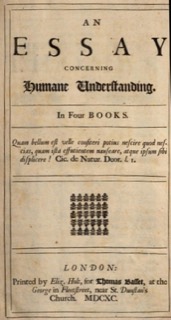
An Essay Concerning Human Understanding, Volume 1

by John Locke

Length: 152,178 words, about 609 pages, about 11 hours to read

Philosophy

Read An Essay Concerning Human Understanding, Volume 1 free, starting with its best pages and lines below. Listen to it free too, read aloud by your phone's own voice.

The best passages

Pages from the book itself, chosen to make you want to read on. Each opens in the reader at that exact spot.

CHAPTER I. INTRODUCTION.

Since it is the UNDERSTANDING that sets man above the rest of sensible beings, and gives him all the advantage and dominion which he has over them; it is certainly a subject, even for its nobleness, worth our labour to inquire into. The understanding, like the eye, whilst it makes us see and perceive all other things, takes no notice of itself; and it requires and art and pains to set it at a distance and make it its own object. But whatever be the difficulties that lie in the way of this inquiry; whatever it be that keeps us so much in the dark to ourselves; sure I am that all the light we can let in upon our minds, all the acquaintance we can make with our own understandings, will not only be very pleasant, but bring us great advantage, in directing our thoughts in the search of other things.

Keep reading from here

CHAPTER I. INTRODUCTION.

When we know our own strength, we shall the better know what to undertake with hopes of success; and when we have well surveyed the POWERS of our own minds, and made some estimate what we may expect from them, we shall not be inclined either to sit still, and not set our thoughts on work at all, in despair of knowing anything; nor on the other side, question everything, and disclaim all knowledge, because some things are not to be understood. It is of great use to the sailor to know the length of his line, though he cannot with it fathom all the depths of the ocean. It is well he knows that it is long enough to reach the bottom, at such places as are necessary to direct his voyage, and caution him against running upon shoals that may ruin him. Our business here is not to know all things, but those which concern our conduct. If we can find out those measures, whereby a rational creature, put in that state in which man is in this world, may and ought to govern his opinions, and actions depending thereon, we need not to be troubled that some other things escape our knowledge.

7. Occasion of this Essay.

This was that which gave the first rise to this Essay concerning the understanding.

Keep reading from here

CHAPTER III. NO INNATE PRACTICAL PRINCIPLES

Whether there be any such moral principles, wherein all men do agree, I appeal to any who have been but moderately conversant in the history of mankind, and looked abroad beyond the smoke of their own chimneys. Where is that practical truth that is universally received, without doubt or question, as it must be if innate? JUSTICE, and keeping of contracts, is that which most men seem to agree in. This is a principle which is thought to extend itself to the dens of thieves, and the confederacies of the greatest villains; and they who have gone furthest towards the putting off of humanity itself, keep faith and rules of justice one with another. I grant that outlaws themselves do this one amongst another: but it is without receiving these as the innate laws of nature. They practise them as rules of convenience within their own communities: but it is impossible to conceive that he embraces justice as a practical principle who acts fairly with his fellow-highwayman, and at the same time plunders or kills the next honest man he meets with. Justice and truth are the common ties of society; and therefore even outlaws and robbers, who break with all the world besides, must keep faith and rules of equity amongst themselves; or else they cannot hold together. But will any one say, that those that live by fraud or rapine have innate principles of truth and justice which they allow and assent to?

3. Objection: though Men deny them in their Practice, yet they admit them in their Thoughts answered.

Keep reading from here

CHAPTER I. OF IDEAS IN GENERAL, AND THEIR ORIGINAL.

2. All Ideas come from Sensation or Reflection.

Let us then suppose the mind to be, as we say, white paper, void of all characters, without any ideas:—How comes it to be furnished? Whence comes it by that vast store which the busy and boundless fancy of man has painted on it with an almost endless variety? Whence has it all the MATERIALS of reason and knowledge? To this I answer, in one word, from EXPERIENCE. In that all our knowledge is founded; and from that it ultimately derives itself. Our observation employed either, about external sensible objects, or about the internal operations of our minds perceived and reflected on by ourselves, is that which supplies our understandings with all the MATERIALS of thinking. These two are the fountains of knowledge, from whence all the ideas we have, or can naturally have, do spring.

3. The Objects of Sensation one Source of Ideas

Keep reading from here

CHAPTER XXI. OF POWER.

Again: suppose a man be carried, whilst fast asleep, into a room where is a person he longs to see and speak with; and be there locked fast in, beyond his power to get out: he awakes, and is glad to find himself in so desirable company, which he stays willingly in, i. e. prefers his stay to going away. I ask, is not this stay voluntary? I think nobody will doubt it: and yet, being locked fast in, it is evident he is not at liberty not to stay, he has not freedom to be gone. So that liberty is not an idea belonging to volition, or preferring; but to the person having the power of doing, or forbearing to do, according as the mind shall choose or direct. Our idea of liberty reaches as far as that power, and no farther. For wherever restraint comes to check that power, or compulsion takes away that indifferency of ability to act, or to forbear acting, there liberty, and our notion of it, presently ceases.

Keep reading from here

10 of the best lines

The understanding, like the eye, whilst it makes us see and perceive all other things, takes no notice of itself; and it requires and art and pains to set it at a distance and make it its own object.

CHAPTER I. INTRODUCTION.Keep reading from here

I answer, first, I have always thought the actions of men the best interpreters of their thoughts.

CHAPTER III. NO INNATE PRACTICAL PRINCIPLESKeep reading from here

What he believes only, and takes upon trust, are but shreds; which, however well in the whole piece, make no considerable addition to his stock who gathers them.

CHAPTER IV. OTHER CONSIDERATIONS CONCERNING INNATE PRINCIPLES, BOTH SPECULATIVE AND PRACTICAL.Keep reading from here

This is something beyond philosophy; and it cannot be less than revelation, that discovers to another thoughts in my mind, when I can find none there myself.

CHAPTER I. OF IDEAS IN GENERAL, AND THEIR ORIGINAL.Keep reading from here

And thus one may truly be said to see darkness.

CHAPTER VIII. SOME FURTHER CONSIDERATIONS CONCERNING OUR SIMPLE IDEAS OF SENSATION.Keep reading from here

The mind, without looking any further, rests satisfied with the agreeableness of the picture and the gaiety of the fancy.

CHAPTER XI. OF DISCERNING, AND OTHER OPERATIONS OF THE MIND.Keep reading from here

So much space as the mind takes a view of in its contemplation of greatness, is a clear picture, and positive in the understanding: but infinite is still greater.

CHAPTER XVII. OF INFINITY.Keep reading from here

Life itself, and all its enjoyments, is a burden cannot be borne under the lasting and unremoved pressure of such an uneasiness.

CHAPTER XXI. OF POWER.Keep reading from here

Judging is, as it were, balancing an account, and determining on which side the odds lie.

CHAPTER XXI. OF POWER.Keep reading from here

Blue and yellow, bitter or sweet, can never be false ideas: these perceptions in the mind are just such as they are there, answering the powers appointed by God to produce them; and so are truly what they are, and are intended to be.

CHAPTER XXXII. OF TRUE AND FALSE IDEAS.Keep reading from here

All 99 An Essay Concerning Human Understanding, Volume 1 quotes, with the words around each

Reviews

No reviews yet. Be the first, in the app.

Write a review in Doomreader

Contents

All 47 parts
  1. An Essay Concerning Humane Understanding
  2. Chapter MDCXC
  3. MY LORD,
  4. MY LORD,
  5. THE EPISTLE TO THE READER
  6. READER,
  7. ESSAY CONCERNING HUMANE UNDERSTANDING.
  8. BOOK I NEITHER PRINCIPLES NOR IDEAS ARE INNATE
  9. CHAPTER I. INTRODUCTION.
  10. CHAPTER II. NO INNATE SPECULATIVE PRINCIPLES.
  11. CHAPTER III. NO INNATE PRACTICAL PRINCIPLES
  12. CHAPTER IV. OTHER CONSIDERATIONS CONCERNING INNATE PRINCIPLES, BOTH SPECULATIVE AND PRACTICAL.
  13. BOOK II OF IDEAS
  14. CHAPTER I. OF IDEAS IN GENERAL, AND THEIR ORIGINAL.
  15. CHAPTER II. OF SIMPLE IDEAS.
  16. CHAPTER III. OF SIMPLE IDEAS OF SENSE.
  17. CHAPTER IV. IDEA OF SOLIDITY.
  18. CHAPTER V. OF SIMPLE IDEAS OF DIVERS SENSES.
  19. CHAPTER VI. OF SIMPLE IDEAS OF REFLECTION.
  20. CHAPTER VII. OF SIMPLE IDEAS OF BOTH SENSATION AND REFLECTION.
  21. CHAPTER VIII. SOME FURTHER CONSIDERATIONS CONCERNING OUR SIMPLE IDEAS OF SENSATION.
  22. CHAPTER IX. OF PERCEPTION.
  23. CHAPTER X. OF RETENTION.
  24. CHAPTER XI. OF DISCERNING, AND OTHER OPERATIONS OF THE MIND.
  25. CHAPTER XII. OF COMPLEX IDEAS.
  26. CHAPTER XIII. COMPLEX IDEAS OF SIMPLE MODES:—AND FIRST, OF THE SIMPLE MODES OF IDEA OF SPACE.
  27. CHAPTER XIV. IDEA OF DURATION AND ITS SIMPLE MODES.
  28. CHAPTER XV. IDEAS OF DURATION AND EXPANSION, CONSIDERED TOGETHER.
  29. CHAPTER XVI. IDEA OF NUMBER.
  30. CHAPTER XVII. OF INFINITY.
  31. CHAPTER XVIII. OTHER SIMPLE MODES.
  32. CHAPTER XIX. OF THE MODES OF THINKING.
  33. CHAPTER XX. OF MODES OF PLEASURE AND PAIN.
  34. CHAPTER XXI. OF POWER.
  35. CHAPTER XXII. OF MIXED MODES.
  36. CHAPTER XXIII. OF OUR COMPLEX IDEAS OF SUBSTANCES.
  37. CHAPTER XXIV. OF COLLECTIVE IDEAS OF SUBSTANCES.
  38. CHAPTER XXV. OF RELATION.
  39. CHAPTER XXVI. OF CAUSE AND EFFECT, AND OTHER RELATIONS.
  40. CHAPTER XXVII. OF IDENTITY AND DIVERSITY.
  41. CHAPTER XXVIII. OF OTHER RELATIONS.
  42. CHAPTER XXIX. OF CLEAR AND OBSCURE, DISTINCT AND CONFUSED IDEAS.
  43. CHAPTER XXX. OF REAL AND FANTASTICAL IDEAS.
  44. CHAPTER XXXI. OF ADEQUATE AND INADEQUATE IDEAS.
  45. CHAPTER XXXII. OF TRUE AND FALSE IDEAS.
  46. CHAPTER XXXIII. OF THE ASSOCIATION OF IDEAS.
  47. END OF VOLUME I

Listen to An Essay Concerning Human Understanding, Volume 1 free

An Essay Concerning Human Understanding, Volume 1 as a free audiobook: Doomreader reads any book aloud, free, in your phone's or computer's own voice. Open the book and tap listen, at the speed you like, hands free.

Want a more natural voice? The AI voices read with AI credits.

Listen free in Doomreader

Download An Essay Concerning Human Understanding, Volume 1 free

The whole book as an EPUB file, free and legal, from Project Gutenberg. It opens in any ebook app, or read it here in Doomreader with nothing to install.

Download the EPUB (0.5 MB)

More by John Locke

More like An Essay Concerning Human Understanding, Volume 1

About this edition

Text from Project Gutenberg. In the public domain in the USA. The Project Gutenberg License is kept inside the file. Every passage and line on this page is the book's own words, checked against the text.