Doomreader

Reading path

Philosophy 101

The big questions in the order they were asked, each book readable on its own.

8 books, in the order to read them, all free.

  1. Step 1

    Dialogues

    by Plato

    Socrates starts asking.

    Charmides

    Yesterday evening I returned from the army at Potidaea, and having been a good while away, I thought that I should like to go and look at my old haunts. So I went into the palaestra of Taureas, which is over against the temple adjoining the porch of the King Archon, and there I found a number of persons, most of whom I knew, but not all. My visit was unexpected, and no sooner did they see me entering than they saluted me from afar on all sides; and Chaerephon, who is a kind of madman, started up and ran to me, seizing my hand, and saying, How did you escape, Socrates?⁠—(I should explain that an engagement had taken place at Potidaea not long before we came away, of which the news had only just reached Athens.)
    Keep reading from here
  2. Step 2

    Nicomachean Ethics

    by Aristotle

    What a good life is.

    Chapter I

    Every art and every kind of inquiry, and likewise every act and purpose, seems to aim at some good: and so it has been well said that the good is that at which everything aims.

    But a difference is observable among these aims or ends. What is aimed at is sometimes the exercise of a faculty, sometimes a certain result beyond that exercise. And where there is an end beyond the act, there the result is better than the exercise of the faculty.

    Now since there are many kinds of actions and many arts and sciences, it follows that there are many ends also; e.g. health is the end of medicine, ships of shipbuilding, victory of the art of war, and wealth of economy.

    Keep reading from here
  3. Step 3

    The Prince

    by Niccolò Machiavelli

    Power without illusions.

    I: How Many Kinds of Principalities There Are, and by What Means They Are Acquired

    All states, all powers, that have held and hold rule over men have been and are either republics or principalities.

    Principalities are either hereditary, in which the family has been long established; or they are new.

    The new are either entirely new, as was Milan to Francesco Sforza, or they are, as it were, members annexed to the hereditary state of the prince who has acquired them, as was the kingdom of Naples to that of the King of Spain.

    Such dominions thus acquired are either accustomed to live under a prince, or to live in freedom; and are acquired either by the arms of the prince himself, or of others, or else by fortune or by ability.

    Keep reading from here
  4. Step 4

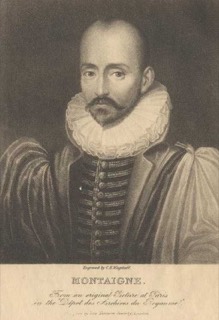
    Essays

    by Michel de Montaigne

    Thinking about yourself.

    XVI.——To the Governor of Guienne.

    READER, thou hast here an honest book; it doth at the outset forewarn thee that, in contriving the same, I have proposed to myself no other than a domestic and private end: I have had no consideration at all either to thy service or to my glory. My powers are not capable of any such design. I have dedicated it to the particular commodity of my kinsfolk and friends, so that, having lost me (which they must do shortly), they may therein recover some traits of my conditions and humours, and by that means preserve more whole, and more life-like, the knowledge they had of me. Had my intention been to seek the world’s favour, I should surely have adorned myself with borrowed beauties:

    Keep reading from here
  5. Step 5

    Pensées

    by Blaise Pascal

    Faith, doubt and the wager.

    Chapter 1

    The difference between the mathematical and the intuitive mind.[1]—In the one the principles are palpable, but removed from ordinary use; so that for want of habit it is difficult to turn one's mind in that direction: but if one turns it thither ever so little, one sees the principles fully, and one must have a quite inaccurate mind who reasons wrongly from principles so plain that it is almost impossible they should escape notice.

    Keep reading from here
  6. Step 6

    Candide

    by Voltaire

    Optimism put on trial.

    I: How Candide Was Brought Up in a Magnificent Castle, and How He Was Expelled Thence

    In a castle of Westphalia, belonging to the Baron of Thunder-ten-Tronckh, lived a youth, whom nature had endowed with the most gentle manners. His countenance was a true picture of his soul. He combined a true judgment with simplicity of spirit, which was the reason, I apprehend, of his being called Candide. The old servants of the family suspected him to have been the son of the Baron’s sister, by a good, honest gentleman of the neighborhood, whom that young lady would never marry because he had been able to prove only seventy-one quarterings, the rest of his genealogical tree having been lost through the injuries of time.

    Keep reading from here
  7. Step 7

    Beyond Good and Evil

    by Friedrich Nietzsche

    Everything questioned again.

    Chapter 1

    The Will to Truth, which is to tempt us to many a hazardous enterprise, the famous Truthfulness of which all philosophers have hitherto spoken with respect, what questions has this Will to Truth not laid before us! What strange, perplexing, questionable questions! It is already a long story; yet it seems as if it were hardly commenced. Is it any wonder if we at last grow distrustful, lose patience, and turn impatiently away? That this Sphinx teaches us at last to ask questions ourselves? Who is it really that puts questions to us here? What really is this “Will to Truth” in us?

    Keep reading from here
  8. Step 8

    The Problems of Philosophy

    by Bertrand Russell

    A clear map of where it all landed.

    I: Appearance and Reality

    Is there any knowledge in the world which is so certain that no reasonable man could doubt it? This question, which at first sight might not seem difficult, is really one of the most difficult that can be asked. When we have realized the obstacles in the way of a straightforward and confident answer, we shall be well launched on the study of philosophy⁠—for philosophy is merely the attempt to answer such ultimate questions, not carelessly and dogmatically, as we do in ordinary life and even in the sciences, but critically, after exploring all that makes such questions puzzling, and after realizing all the vagueness and confusion that underlie our ordinary ideas.

    Keep reading from here

The longer list

This path is the short way in. Philosophy books for beginners, in the order to read them ranks 12 books, with a line on why each is there.