Doomreader

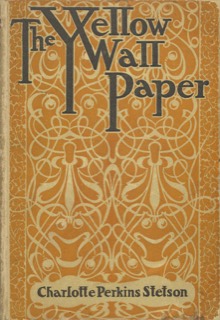
Women and Economics

by Charlotte Perkins Gilman

Length: 73,135 words, about 293 pages, about 5 hours to read

Philosophy, Politics and society, Economics

Read Women and Economics free, starting with its best pages and lines below. Listen to it free too, read aloud by your phone's own voice.

What it is

Gilman explores the transformation of the role of women in society and the necessity for women to achieve economic independence.

The best passages

Pages from the book itself, chosen to make you want to read on. Each opens in the reader at that exact spot.

Chapter I

In view of these facts, attention is now called to a certain marked and peculiar economic condition affecting the human race, and unparalleled in the organic world. We are the only animal species in which the female depends on the male for food, the only animal species in which the sex-relation is also an economic relation. With us an entire sex lives in a relation of economic dependence upon the other sex, and the economic relation is combined with the sex-relation. The economic status of the human female is relative to the sex-relation.

It is commonly assumed that this condition also obtains among other animals, but such is not the case. There are many birds among which, during the nesting season, the male helps the female feed the young, and partially feeds her; and, with certain of the higher carnivora, the male helps the female feed the young, and partially feeds her. In no case does she depend on him absolutely, even during this season, save in that of the hornbill, where the female, sitting on her nest in a hollow tree, is walled in with clay by the male, so that only her beak projects; and then he feeds her while the eggs are developing. But even the female hornbill does not expect to be fed at any other time. The female bee and ant are economically dependent, but not on the male. The workers are females, too, specialized to economic functions solely.
Keep reading from here

Chapter IV

To the young man confronting life the world lies wide. Such powers as he has he may use, must use. If he chooses wrong at first, he may choose again, and yet again. Not effective or successful in one channel, he may do better in another. The growing, varied needs of all mankind call on him for the varied service in which he finds his growth. What he wants to be, he may strive to be. What he wants to get, he may strive to get. Wealth, power, social distinction, fame⁠—what he wants he can try for.

To the young woman confronting life there is the same world beyond, there are the same human energies and human desires and ambition within. But all that she may wish to have, all that she may wish to do, must come through a single channel and a single choice. Wealth, power, social distinction, fame⁠—not only these, but home and happiness, reputation, ease and pleasure, her bread and butter⁠—all, must come to her through a small gold ring. This is a heavy pressure. It has accumulated behind her through heredity, and continued about her through environment. It has been subtly trained into her through education, till she herself has come to think it a right condition, and pours its influence upon her daughter with increasing impetus. Is it any wonder that women are oversexed? But for the constant inheritance from the more human male, we should have been queen bees, indeed, long before this.

Keep reading from here

Chapter V

A concrete instance, familiar as the day, and unbelievable in its ill effects, is the attitude of the mother toward her children in regard to the sex-relation. With very few exceptions, the mother gives her daughter no warning or prevision of what life holds for her, and so lets innocence and ignorance go on perpetuating sickness and sin and pain through ceaseless generations. A normal motherhood wisely and effectively guards its young from evil. An abnormal motherhood, overanxious and under-wise, hovers the child to its harm, and turns it out defenceless to the worst of evils. This is known to millions and millions personally. Only very lately have we thought to consider it generally. And not yet do we see that it is not the fault of the individual mother, but of her economic status. Because of our abnormal sex-development, the whole field has become something of an offence⁠—a thing to be hidden and ignored, passed over without remark or explanation. Hence this amazing paradox of mothers ashamed of motherhood, unable to explain it, and⁠—measure this well⁠—lying to their children about the primal truths of life⁠—mothers lying to their own children about motherhood!

The pressure under which this is done is an economic one. The girl must marry: else how live? The prospective husband prefers the girl to know nothing. He is the market, the demand. She is the supply. And with the best intentions the mother serves her child’s economic advantage by preparing her for the market. This is an excellent instance. It is common. It is most evil. It is plainly traceable to our sexuo-economic relation.

Keep reading from here

Chapter V

Not at all! Marriage is the woman’s proper sphere, her divinely ordered place, her natural end. It is what she is born for, what she is trained for, what she is exhibited for. It is, moreover, her means of honorable livelihood and advancement. But⁠—she must not even look as if she wanted it! She must not turn her hand over to get it. She must sit passive as the seasons go by, and her “chances” lessen with each year. Think of the strain on a highly sensitive nervous organism to have so much hang on one thing, to see the possibility of attaining it grow less and less yearly, and to be forbidden to take any step toward securing it! This she must bear with dignity and grace to the end.

To what end? To the end that, if she does not succeed in being chosen, she becomes a thing of mild popular contempt, a human being with no further place in life save as an attachée, a dependant upon more fortunate relatives, an old maid. The open derision and scorn with which unmarried women used to be treated is lessening each year in proportion to their advance in economic independence. But it is not very long since the popular proverb, “Old maids lead apes in hell,” was in common use; since unwelcome lovers urged their suit with the awful argument that they might be the last askers; since the hapless lady in the wood prayed for a husband, and, when the owl answered, “Who? who?” cried, “Anybody, good Lord!”

Keep reading from here

Chapter IX

An extraterrestrial sociologist, studying human life and hearing for the first time of our so-called “maternal sacrifice” as a means of benefiting the species, might be touched and impressed by the idea. “How beautiful!” he would say. “How exquisitely pathetic and tender! One-half of humanity surrendering all other human interests and activities to concentrate its time, strength, and devotion upon the functions of maternity! To bear and rear the majestic race to which they can never fully belong! To live vicariously forever, through their sons, the daughters being only another vicarious link! What a supreme and magnificent martyrdom!” And he would direct his researches toward discovering what system was used to develop and perfect this sublime consecration of half the race to the perpetuation of the other half. He would view with intense and pathetic interest the endless procession of girls, born human as their brothers were, but marked down at once as “female⁠—abortive type⁠—only use to produce males.” He would expect to see this “sex sacrificed to reproductive necessities,” yet gifted with human consciousness and intelligence, rise grandly to the occasion, and strive to fit itself in every way for its high office. He would expect to find society commiserating the sacrifice, and honoring above all the glorious creature whose life was to be sunk utterly in the lives of others, and using every force properly to rear and fully to fit these functionaries for their noble office. Alas for the extraterrestrial sociologist and his natural expectations! After exhaustive study, finding nothing of these things, he would return to Mars or Saturn or wherever he came from, marvelling within himself at the vastness of the human paradox.

Keep reading from here

10 of the best lines

We are the only animal species in which the female depends on the male for food, the only animal species in which the sex-relation is also an economic relation.

Chapter IKeep reading from here

Wealth, power, social distinction, fame⁠—not only these, but home and happiness, reputation, ease and pleasure, her bread and butter⁠—all, must come to her through a small gold ring.

Chapter IVKeep reading from here

Our difficulty about wealth is not in getting it out of the earth, but in getting it away from one another.

Chapter VIKeep reading from here

If today’s prodigal has a father, he is merely engaged in paying for the veal.

Chapter IXKeep reading from here

Maternal love is an enormous force, but force needs direction.

Chapter IXKeep reading from here

A noble home life is the product of a noble social life.

Chapter XKeep reading from here

As cooking becomes dissociated from the home, we shall gradually cease to attach emotions to it; and we shall learn to judge it impersonally upon a scientific and artistic basis.

Chapter XIIKeep reading from here

We are so unbrokenly accustomed to the old methods of motherhood, so convinced that all its processes are inter-relative and indispensable, and that to alter one of them is to endanger the whole relation, that we cannot conceive of any desirable change.

Chapter XIIIKeep reading from here

The mother as a social servant instead of a home servant will not lack in true mother duty.

Chapter XIIIKeep reading from here

Our one great blunder in studying these things lies in our failure to appreciate the organic necessity of such moral qualities in human life.

Chapter XVKeep reading from here

All 45 Women and Economics quotes, with the words around each

Reviews

No reviews yet. Be the first, in the app.

Write a review in Doomreader

Contents

  1. Proem
  2. Preface
  3. Chapter I
  4. Chapter II
  5. Chapter III
  6. Chapter IV
  7. Chapter V
  8. Chapter VI
  9. Chapter VII
  10. Chapter VIII
  11. Chapter IX
  12. Chapter X
  13. Chapter XI
  14. Chapter XII
  15. Chapter XIII
  16. Chapter XIV
  17. Chapter XV

Listen to Women and Economics free

Women and Economics as a free audiobook: Doomreader reads any book aloud, free, in your phone's or computer's own voice. Open the book and tap listen, at the speed you like, hands free.

Want a more natural voice? The AI voices read with AI credits.

Listen free in Doomreader

Download Women and Economics free

The whole book as an EPUB file, free and legal, from Standard Ebooks. It opens in any ebook app, or read it here in Doomreader with nothing to install.

Download the EPUB (0.6 MB)

More by Charlotte Perkins Gilman

More like Women and Economics

About this edition

Text from Standard Ebooks. Standard Ebooks dedicate their edition to the public domain (CC0 1.0). Every passage and line on this page is the book's own words, checked against the text.