Doomreader

What Is Property?

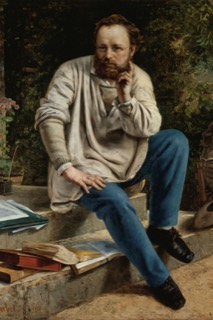
by Pierre-Joseph Proudhon

Length: 153,211 words, about 613 pages, about 11 hours to read

Philosophy, Politics and society, Economics

Read What Is Property? free, starting with its best pages and lines below. Listen to it free too, read aloud by your phone's own voice.

What it is

Proudhon outlines the anarchist economic theory of mutualism.

The best passages

Pages from the book itself, chosen to make you want to read on. Each opens in the reader at that exact spot.

Chapter I

Method pursued in this work.⁠—The idea of a revolution.

If I were asked to answer the following question: What is slavery? and I should answer in one word, It is murder, my meaning would be understood at once. No extended argument would be required to show that the power to take from a man his thought, his will, his personality, is a power of life and death; and that to enslave a man is to kill him. Why, then, to this other question: What is property? may I not likewise answer, It is robbery, without the certainty of being misunderstood; the second proposition being no other than a transformation of the first?

I undertake to discuss the vital principle of our government and our institutions, property: I am in my right. I may be mistaken in the conclusion which shall result from my investigations: I am in my right. I think best to place the last thought of my book first: still am I in my right.

Such an author teaches that property is a civil right, born of occupation and sanctioned by law; another maintains that it is a natural right, originating in labor⁠—and both of these doctrines, totally opposed as they may seem, are encouraged and applauded. I contend that neither labor, nor occupation, nor law, can create property; that it is an effect without a cause: am I censurable?

But murmurs arise!

Property is robbery! That is the war-cry of ’93! That is the signal of revolutions!

Reader, calm yourself: I am no agent of discord, no firebrand of sedition. I anticipate history by a few days; I disclose a truth whose development we may try in vain to arrest; I write the preamble of our future constitution.
Keep reading from here

Chapter I

One day I asked myself: Why is there so much sorrow and misery in society? Must man always be wretched? And not satisfied with the explanations given by the reformers⁠—these attributing the general distress to governmental cowardice and incapacity, those to conspirators and émeutes, still others to ignorance and general corruption⁠—and weary of the interminable quarrels of the tribune and the press, I sought to fathom the matter myself. I have consulted the masters of science; I have read a hundred volumes of philosophy, law, political economy, and history: would to God that I had lived in a century in which so much reading had been useless! I have made every effort to obtain exact information, comparing doctrines, replying to objections, continually constructing equations and reductions from arguments, and weighing thousands of syllogisms in the scales of the most rigorous logic. In this laborious work, I have collected many interesting facts which I shall share with my friends and the public as soon as I have leisure. But I must say that I recognized at once that we had never understood the meaning of these words, so common and yet so sacred: Justice, equity, liberty; that concerning each of these principles our ideas have been utterly obscure; and, in fact, that this ignorance was the sole cause, both of the poverty that devours us, and of all the calamities that have ever afflicted the human race.

My mind was frightened by this strange result: I doubted my reason. What! said I, that which eye has not seen, nor ear heard, nor insight penetrated, you have discovered!

Keep reading from here

Chapter I

Eighteen hundred years ago, the world, under the rule of the Caesars, exhausted itself in slavery, superstition, and voluptuousness. The people⁠—intoxicated and, as it were, stupefied by their long-continued orgies⁠—had lost the very notion of right and duty: war and dissipation by turns swept them away; usury and the labor of machines (that is of slaves), by depriving them of the means of subsistence, hindered them from continuing the species. Barbarism sprang up again, in a hideous form, from this mass of corruption, and spread like a devouring leprosy over the depopulated provinces. The wise foresaw the downfall of the empire, but could devise no remedy. What could they think indeed? To save this old society it would have been necessary to change the objects of public esteem and veneration, and to abolish the rights affirmed by a justice purely secular; they said: “Rome has conquered through her politics and her gods; any change in theology and public opinion would be folly and sacrilege. Rome, merciful toward conquered nations, though binding them in chains, spared their lives; slaves are the most fertile source of her wealth; freedom of the nations would be the negation of her rights and the ruin of her finances. Rome, in fact, enveloped in the pleasures and gorged with the spoils of the universe, is kept alive by victory and government; her luxury and her pleasures are the price of her conquests: she can neither abdicate nor dispossess herself.” Thus Rome had the facts and the law on her side. Her pretensions were justified by universal custom and the law of nations.

Keep reading from here

Chapter III

Reader, were you ever present at the examination of a criminal? Have you watched his tricks, his turns, his evasions, his distinctions, his equivocations? Beaten, all his assertions overthrown, pursued like a fallow deer by the inexorable judge, tracked from hypothesis to hypothesis⁠—he makes a statement, he corrects it, retracts it, contradicts it, he exhausts all the tricks of dialectics, more subtle, more ingenious a thousand times than he who invented the seventy-two forms of the syllogism. So acts the proprietor when called upon to defend his right. At first he refuses to reply, he exclaims, he threatens, he defies; then, forced to accept the discussion, he arms himself with chicanery, he surrounds himself with formidable artillery⁠—crossing his fire, opposing one by one and all together occupation, possession, limitation, covenants, immemorial custom, and universal consent. Conquered on this ground, the proprietor, like a wounded boar, turns on his pursuers. “I have done more than occupy,” he cries with terrible emotion; “I have labored, produced, improved, transformed, created. This house, these fields, these trees are the work of my hands; I changed these brambles into a vineyard, and this bush into a fig-tree; and today I reap the harvest of my labors. I have enriched the soil with my sweat; I have paid those men who, had they not had the work which I gave them, would have died of hunger.

Keep reading from here

§ 2

What is to be the form of government in the future? hear some of my younger readers reply: “Why, how can you ask such a question? You are a republican.” “A republican! Yes; but that word specifies nothing. Res publica; that is, the public thing. Now, whoever is interested in public affairs⁠—no matter under what form of government⁠—may call himself a republican. Even kings are republicans.”⁠—“Well! you are a democrat?”⁠—“No.”⁠—“What! you would have a monarchy.”⁠—“No.”⁠—“A constitutionalist?”⁠—“God forbid!”⁠—“You are then an aristocrat?”⁠—“Not at all.”⁠—“You want a mixed government?”⁠—“Still less.”⁠—“What are you, then?”⁠—“I am an anarchist.”

“Oh! I understand you; you speak satirically. This is a hit at the government.”⁠—“By no means. I have just given you my serious and well-considered profession of faith. Although a firm friend of order, I am (in the full force of the term) an anarchist. Listen to me.”

In all species of sociable animals, “the weakness of the young is the principle of their obedience to the old, who are strong;

Keep reading from here

10 of the best lines

If I were asked to answer the following question: What is slavery? and I should answer in one word, It is murder, my meaning would be understood at once.

Chapter IKeep reading from here

It is as impossible to associate two proprietors as to join two magnets by their opposite poles.

§ 1: Property as a Natural RightKeep reading from here

Who made the land? God. Then, proprietor, retire!

§ 1: The Land Cannot Be AppropriatedKeep reading from here

Property makes of a poet either a Croesus or a beggar; only equality knows how to honor and to praise him.

§ 7: That Inequality of Powers Is the Necessary Condition of Equality of FortunesKeep reading from here

The proprietor, if they are right, is like Perrin-Dandin who, when summoned by two travellers to settle a dispute about an oyster, opened it, gobbled it, and said to them:⁠—

First PropositionKeep reading from here

Talent is a creation of society rather than a gift of Nature; it is an accumulated capital, of which the receiver is only the guardian.

Fifth PropositionKeep reading from here

The joys of self-sacrifice are ineffable.

§ 3Keep reading from here

The government of man by man (under whatever name it be disguised) is oppression.

§ 3Keep reading from here

We pay toll to the prostitute; we do not endow her.

Second Memoir: A Letter to M. BlanquiKeep reading from here

Property is like the dragon which Hercules killed: to destroy it, it must be taken, not by the head, but by the tail⁠—that is, by profit and interest.

Second Memoir: A Letter to M. BlanquiKeep reading from here

All 90 What Is Property? quotes, with the words around each

Reviews

No reviews yet. Be the first, in the app.

Write a review in Doomreader

Contents

All 39 parts
  1. P. J. Proudhon
  2. Preface
  3. First Memoir
  4. Chapter I
  5. Chapter II
  6. § 1: Property as a Natural Right
  7. § 2: Occupation, as the Title to Property
  8. § 3: Civil Law as the Foundation and Sanction of Property
  9. Chapter III
  10. § 1: The Land Cannot Be Appropriated
  11. § 2: Universal Consent No Justification of Property
  12. § 3: Prescription Gives No Title to Property
  13. § 4: Labor
  14. § 5: That Labor Leads to Equality of Property
  15. § 6: That in Society All Wages Are Equal
  16. § 7: That Inequality of Powers Is the Necessary Condition of Equality of Fortunes
  17. § 8: That, from the Standpoint of Justice, Labor Destroys Property
  18. Chapter IV
  19. Demonstration
  20. First Proposition
  21. Second Proposition
  22. Third Proposition
  23. Fourth Proposition
  24. Fifth Proposition
  25. Sixth Proposition
  26. Seventh Proposition
  27. Eighth Proposition
  28. Ninth Proposition
  29. Tenth Proposition
  30. Chapter V
  31. Part I
  32. § 1
  33. § 2
  34. § 3
  35. Part II
  36. § 1
  37. § 2
  38. § 3
  39. Second Memoir: A Letter to M. Blanqui

Listen to What Is Property? free

What Is Property? as a free audiobook: Doomreader reads any book aloud, free, in your phone's or computer's own voice. Open the book and tap listen, at the speed you like, hands free.

Want a more natural voice? The AI voices read with AI credits.

Listen free in Doomreader

Download What Is Property? free

The whole book as an EPUB file, free and legal, from Standard Ebooks. It opens in any ebook app, or read it here in Doomreader with nothing to install.

Download the EPUB (0.8 MB)

More like What Is Property?

About this edition

Text from Standard Ebooks. Standard Ebooks dedicate their edition to the public domain (CC0 1.0). Every passage and line on this page is the book's own words, checked against the text.