Doomreader

To Cuba and Back

by Richard Henry Dana Jr.

Length: 52,717 words, about 211 pages, about 4 hours to read

History and travel

Read To Cuba and Back free, starting with its best pages and lines below. Listen to it free too, read aloud by your phone's own voice.

What it is

A captivating travel memoir recounting an 1859 journey to Cuba, offering vivid descriptions of the island’s culture, landscapes, and people.

The best passages

Pages from the book itself, chosen to make you want to read on. Each opens in the reader at that exact spot.

Chapter I

Departure from New York⁠—Steamship Cahawba⁠—First day.

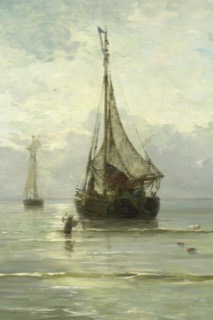
Saturday, the twelfth day of February, 1859, is a dull, dark day in New York, with visitations of snow squalls, as the United States Mail Steamer Cahawba swings at her pier, at the foot of Robinson Street⁠—a pier crowded with drays and drivers, and a street of mud, snow and ice, and poor habitations. The steamer is to sail at one p.m.; and, by half-past twelve, her decks are full, and the mud and snow of the pier are well trodden by men and horses. Coaches drive down furiously, and nervous passengers put their heads out to see if the steamer is off before her time; and on the decks, and in the gangways, inexperienced passengers run against everybody, and mistake the engineer for the steward, and come up the same stairs they go down, without knowing it. In the dreary snow, the newspaper vendors cry the papers, and the book vendors thrust yellow covers into your face⁠—“Reading for the voyage, sir⁠—five hundred pages, close print!” And that being rejected, they reverse the process of the Sibyl⁠—with “Here’s another, sir, one thousand pages, double columns.” The great beam of the engine moves slowly up and down, and the black hull sways at its fasts. A motley group are the passengers. Shivering Cubans, exotics that have taken slight root in the hothouses of the Fifth Avenue, are to brave a few days of sleet and
Keep reading from here

Chapter III

We coast the northern shore of Cuba, from Matanzas westward. There is no waste of sand and low flats, as in most of our southern states; but the fertile, undulating land comes to the sea, and rises into high hills as it recedes. “There is the Morro! and right ahead!” “Why, there is the city too! Is the city on the sea? We thought it was on a harbor or bay.” There, indeed, is the Morro, a stately hill of tawny rock, rising perpendicularly from the sea, and jutting into it, with walls and parapets and towers on its top, and flags and signals flying, and the tall lighthouse just in front of its outer wall. It is not very high, yet commands the sea about it. And there is the city, on the sea coast, indeed⁠—the houses running down to the coral edge of the ocean. Where is the harbor, and where the shipping? Ah, there they are! We open an entrance, narrow and deep, between the beetling Morro and the Punta; and through the entrance, we see the spreading harbor and the innumerable masts. But the darkness is gathering, the sunset gun has been fired, we can just catch the dying notes of trumpets from the fortifications, and the Morro Lighthouse throws its gleam over the still sea. The little lights emerge and twinkle from the city. We are too late to enter the port, and slowly and reluctantly the ship turns her head off to seaward. The engine breathes heavily, and throws its one arm leisurely up and down; we rise and fall on the moonlit sea; the stars are near to us, or we are raised nearer to them;

Keep reading from here

Chapter V

To a person unaccustomed to the tropics or the south of Europe, I know of nothing more discouraging than the arrival at the inn or hotel. It is nobody’s business to attend to you. The landlord is strangely indifferent, and if there is a way to get a thing done, you have not learned it, and there is no one to teach you. Le Grand is a Frenchman. His house is a restaurant, with rooms for lodgers. The restaurant is paramount. The lodging is secondary, and is left to servants. Monsieur does not condescend to show a room, even to families; and the servants, who are whites, but mere lads, have all the interior in their charge, and there are no women employed about the chambers. Antonio, a swarthy Spanish lad, in shirt sleeves, looking very much as if he never washed, has my part of the house in charge, and shows me my room. It has but one window, a door opening upon the veranda, and a brick floor, and is very bare of furniture, and the furniture has long ceased to be strong. A small stand barely holds up a basin and ewer which have not been washed since Antonio was washed, and the bedstead, covered by a canvas sacking, without mattress or bed, looks as if it would hardly bear the weight of a man. It is plain there is a good deal to be learned here. Antonio is communicative, on a suggestion of several days’ stay and good pay.

Keep reading from here

Chapter XVIII

As we walked through the passageways, we came upon the little private chapel of the Sisters. Here was a scene I can never forget. It was an hour assigned for prayer. All who could leave the sick wards⁠—not more than twelve or fourteen⁠—were kneeling in that perfectly still, secluded, darkened room, in a double row, all facing to the altar, on which burned one taper, showing the presence of the Sacrament, and all in silent prayer.⁠—That double row of silent, kneeling women, unconscious of the presence of anyone, in their snow-white, close caps and long capes, and coarse, clean, blue gowns⁠—heroines, if the world ever had heroines, their angels beholding the face of their Father in heaven, as they knelt on earth!

It was affecting and yet almost amusing⁠—it would have been amusing anywhere else⁠—that these simple creatures, not knowing the ways of the world, and desirous to have soft music fill their room, as they knelt at silent prayer, and not having (for their duties preclude it) any skill in the practice of music, had a large music box wound and placed on a stand, in the rear, giving out its liquid tones, just loud enough to pervade the air, without forcing attention. The effect was beautiful; and yet the tunes were not all, nor chiefly, religious. They were such as any music box would give. But what do these poor creatures know of what the world marches to, or dances to, or makes love by? To them it was all music, and pure and holy! Minute after minute we stood, waiting for, but not desiring, an end of these delightful sounds, and a dissolving of this spell of silent adoration.

Keep reading from here

10 of the best lines

The great beam of the engine moves slowly up and down, and the black hull sways at its fasts.

Chapter IKeep reading from here

Then Antonio has so many rooms dependent on him, that every door is a Scylla, and every window a Charybdis, as he passes.

Chapter VKeep reading from here

Thorough in education, perfect in discipline, absolute in obedience⁠—as yielding, as indestructible, as all-pervading as water or as air!

Chapter IXKeep reading from here

It seems to be conscious of its want of usefulness for food or shade, yet has a dignity of its own, a pride of unmixed blood and royal descent⁠—the hidalgo of the soil.

Chapter XIKeep reading from here

These move by them, as the great Gulf Stream drifts by their shores.

Chapter XVIKeep reading from here

It is always observable that the physical and the exact sciences are the last to suffer under despotisms.

Chapter XIXKeep reading from here

Work your slaves, torture your bulls, fight your gamecocks, crown your dancers and singers⁠—and leave the weightier matters of judgment and justice, of fame by sea and land, of letters and arts and sciences, of private right and public honor, the present and future of your race and of your native land, to the care of others

Chapter XXKeep reading from here

So that, since 1825, Cuba has been not only under martial law, but in a state of siege.

Political ConditionKeep reading from here

All Cuba has but one neck⁠—the worst wish of the tyrant.

Material Resources—EducationKeep reading from here

The sky fades, the ship rises and falls in the heave of the sea, the lantern of the Morro gleams over the water, and the dim shores of Cuba are hidden from our sight.

Chapter XXIVKeep reading from here

All 36 To Cuba and Back quotes, with the words around each

Reviews

No reviews yet. Be the first, in the app.

Write a review in Doomreader

Contents

All 29 parts
  1. Chapter I
  2. Chapter II
  3. Chapter III
  4. Chapter IV
  5. Chapter V
  6. Chapter VI
  7. Chapter VII
  8. Chapter VIII
  9. Chapter IX
  10. Chapter X
  11. Chapter XI
  12. Chapter XII
  13. Chapter XIII
  14. Chapter XIV
  15. Chapter XV
  16. Chapter XVI
  17. Chapter XVII
  18. Chapter XVIII
  19. Chapter XIX
  20. Chapter XX
  21. Chapter XXI
  22. Chapter XXII
  23. Chapter XXIII
  24. Political Condition
  25. Religion
  26. Slavery
  27. Material Resources—Education
  28. Chapter XXIV
  29. Chapter XXV

Listen to To Cuba and Back free

To Cuba and Back as a free audiobook: Doomreader reads any book aloud, free, in your phone's or computer's own voice. Open the book and tap listen, at the speed you like, hands free.

Want a more natural voice? The AI voices read with AI credits.

Listen free in Doomreader

Download To Cuba and Back free

The whole book as an EPUB file, free and legal, from Standard Ebooks. It opens in any ebook app, or read it here in Doomreader with nothing to install.

Download the EPUB (0.8 MB)

More by Richard Henry Dana Jr.

More like To Cuba and Back

About this edition

Text from Standard Ebooks. Standard Ebooks dedicate their edition to the public domain (CC0 1.0). Every passage and line on this page is the book's own words, checked against the text.