Doomreader

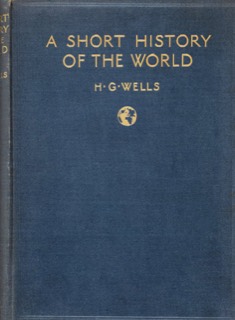
The World Set Free

by H. G. Wells

Length: 65,683 words, about 263 pages, about 5 hours to read

Science fiction

Read The World Set Free free, starting with its best pages and lines below. Listen to it free too, read aloud by your phone's own voice.

What it is

Facing the devastation of a nuclear world war, humanity unites under a world government.

The best passages

Pages from the book itself, chosen to make you want to read on. Each opens in the reader at that exact spot.

§ I

The history of mankind is the history of the attainment of external power. Man is the tool-using, fire-making animal. From the outset of his terrestrial career we find him supplementing the natural strength and bodily weapons of a beast by the heat of burning and the rough implement of stone. So he passed beyond the ape. From that he expands. Presently he added to himself the power of the horse and the ox, he borrowed the carrying strength of water and the driving force of the wind, he quickened his fire by blowing, and his simple tools, pointed first with copper and then with iron, increased and varied and became more elaborate and efficient. He sheltered his heat in houses and made his way easier by paths and roads. He complicated his social relationships and increased his efficiency by the division of labour. He began to store up knowledge. Contrivance followed contrivance, each making it possible for a man to do more. Always down the lengthening record, save for a setback ever and again, he is doing more.⁠ ⁠…

A quarter of a million years ago the utmost man was a savage, a being scarcely articulate, sheltering in holes in the rocks, armed with a
Keep reading from here

§ VIII

He went through the streets with a rapt face, like a saint who sees visions. He had arms disproportionately long, and ridiculous big feet.

He must get alone, get somewhere high out of all this crowding of commonness, of everyday life.

He made his way to the top of Arthur’s Seat, and there he sat for a long time in the golden evening sunshine, still, except that ever and again he whispered to himself some precious phrase that had stuck in his mind.

“If,” he whispered, “if only we could pick that lock.⁠ ⁠…”

The sun was sinking over the distant hills. Already it was shorn of its beams, a globe of ruddy gold, hanging over the great banks of cloud that would presently engulf it.

“Eh!” said the youngster. “Eh!”

He seemed to wake up at last out of his entrancement, and the red sun was there before his eyes. He stared at it, at first without intelligence, and then with a gathering recognition. Into his mind came a strange echo of that ancestral fancy, that fancy of a Stone Age savage, dead and scattered bones among the drift two hundred thousand years ago.

“Ye auld thing,” he said, and his eyes were shining, and he made a kind of grabbing gesture with his hand; “ye auld red thing.⁠ ⁠… We’ll have ye yet.”

Keep reading from here

§ II

She roused herself with a start. She became aware that the night outside was no longer still. That there was an excitement down below on the bridge and a running in the street and a flickering of searchlights among the clouds from some high place away beyond the Trocadero. And then the excitement came surging up past her and invaded the hall within.

One of the sentinels from the terrace stood at the upper end of the room, gesticulating and shouting something.

And all the world had changed. A kind of throbbing. She couldn’t understand. It was as if all the water-pipes and concealed machinery and cables of the ways beneath, were beating⁠—as pulses beat. And about her blew something like a wind⁠—a wind that was dismay.

Her eyes went to the face of the Marshal as a frightened child might look towards its mother.

He was still serene. He was frowning slightly, she thought, but that was natural enough, for the Earl of Delhi, with one hand gauntly gesticulating, had taken him by the arm and was all too manifestly disposed to drag him towards the great door that opened on the terrace. And Viard was hurrying towards the huge windows and doing so in the strangest of attitudes, bent forward and with eyes upturned.

Something up there?

And then it was as if thunder broke overhead.

The sound struck her like a blow. She crouched together against the masonry and looked up.

Keep reading from here

§ II

The king’s freedom from the trammels of etiquette was very complete. In theory⁠—and he abounded in theory⁠—his manners were purely democratic. It was by sheer habit and inadvertency that he permitted Firmin, who had discovered a rucksack in a small shop in the town below, to carry both bottles of beer. The king had never, as a matter of fact, carried anything for himself in his life, and he had never noted that he did not do so.

“We will have nobody with us,” he said, “at all. We will be perfectly simple.”

So Firmin carried the beer.

As they walked up⁠—it was the king made the pace rather than Firmin⁠—they talked of the conference before them, and Firmin, with a certain want of assurance that would have surprised him in himself in the days of his Professorship, sought to define the policy of his companion. “In its broader form, sir,” said Firmin; “I admit a certain plausibility in this project of Leblanc’s, but I feel that although it may be advisable to set up some sort of general control for International affairs⁠—a sort of Hague Court with extended powers⁠—that is no reason whatever for losing sight of the principles of national and imperial autonomy.”

“Firmin,” said the king, “I am going to set my brother kings a good example.”

Firmin intimated a curiosity that veiled a dread.

“By chucking all that nonsense,” said the king.

He quickened his pace as Firmin, who was already a little out of breath, betrayed a disposition to reply.

Keep reading from here

§ III

There was, for example, that “man-milliner” who came out from a field beside the road that rises up eastward out of Epernay, and asked how things were going in Paris. He was, says Barnet, a round-faced man dressed very neatly in black⁠—so neatly that it was amazing to discover he was living close at hand in a tent made of carpets⁠—and he had “an urbane but insistent manner,” a carefully trimmed moustache and beard, expressive eyebrows, and hair very neatly brushed.

“No one goes into Paris,” said Barnet.

“But, Monsieur, that is very unenterprising,” the man by the wayside submitted.

“The danger is too great. The radiations eat into people’s skins.”

The eyebrows protested. “But is nothing to be done?”

“Nothing can be done.”

“But, Monsieur, it is extraordinarily inconvenient, this living in exile and waiting. My wife and my little boy suffer extremely. There is a lack of amenity. And the season advances. I say nothing of the expense and difficulty in obtaining provisions.⁠ ⁠… When does Monsieur think that something will be done to render Paris⁠—possible?”

Barnet considered his interlocutor.

“I’m told,” said Barnet, “that Paris is not likely to be possible again for several generations.”

“Oh! but this is preposterous! Consider, Monsieur! What are people like ourselves to do in the meanwhile? I am a costumier. All my connections and interests, above all my style, demand Paris.⁠ ⁠…”

Keep reading from here

10 of the best lines

The history of mankind is the history of the attainment of external power.

§ IKeep reading from here

I see the desert continents transformed, the poles no longer wildernesses of ice, the whole world once more Eden. I see the power of man reach out among the stars.

§ VIIIKeep reading from here

Men who think in lifetimes are of no use to statesmanship.

§ VIIIKeep reading from here

I saw how little and feeble is the life of man, a thing of chances, preposterously unable to find the will to realise even the most timid of its dreams.

§ VIIIKeep reading from here

It was like giving a doll to a woman who ought to have a child.

§ IIKeep reading from here

Human beings are foolish enough no doubt, but few have stopped to haggle in a fire-escape.

§ VKeep reading from here

There is no natural life of man. He is and always has been a sheath of varied and even incompatible possibilities, a palimpsest of inherited dispositions.

§ IXKeep reading from here

It is true, is it not, that every man is something of a cripple and something of a beast?

§ IIKeep reading from here

Childhood is promise. He was survival.

§ IVKeep reading from here

I tell you that so far it has only done so in order to lock us all up again in a solitude of two.

§ VIIKeep reading from here

All 62 The World Set Free quotes, with the words around each

Reviews

No reviews yet. Be the first, in the app.

Write a review in Doomreader

Contents

All 62 parts
  1. Preface
  2. Prelude
  3. § I
  4. § II
  5. § III
  6. § IV
  7. § V
  8. § VI
  9. § VII
  10. § VIII
  11. I: The New Source of Energy
  12. § I
  13. § II
  14. § III
  15. § IV
  16. § V
  17. § VI
  18. § VII
  19. § VIII
  20. II: The Last War
  21. § I
  22. § II
  23. § III
  24. § IV
  25. § V
  26. § VI
  27. § VII
  28. § VIII
  29. § IX
  30. § X
  31. III: The Ending of War
  32. § I
  33. § II
  34. § III
  35. § IV
  36. § V
  37. § VI
  38. § VII
  39. § VIII
  40. IV: The New Phase
  41. § I
  42. § II
  43. § III
  44. § IV
  45. § V
  46. § VI
  47. § VII
  48. § VIII
  49. § IX
  50. § X
  51. § XI
  52. V: The Last Days of Marcus Karenin
  53. § I
  54. § II
  55. § III
  56. § IV
  57. § V
  58. § VI
  59. § VII
  60. § VIII
  61. § IX
  62. § X

Listen to The World Set Free free

The World Set Free as a free audiobook: Doomreader reads any book aloud, free, in your phone's or computer's own voice. Open the book and tap listen, at the speed you like, hands free.

Want a more natural voice? The AI voices read with AI credits.

Listen free in Doomreader

Download The World Set Free free

The whole book as an EPUB file, free and legal, from Standard Ebooks. It opens in any ebook app, or read it here in Doomreader with nothing to install.

Download the EPUB (0.3 MB)

More by H. G. Wells

More like The World Set Free

About this edition

Text from Standard Ebooks. Standard Ebooks dedicate their edition to the public domain (CC0 1.0). Every passage and line on this page is the book's own words, checked against the text.