Doomreader

The Social Contract

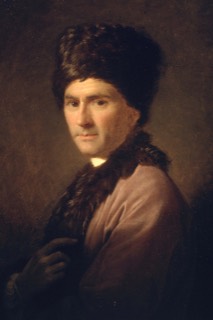
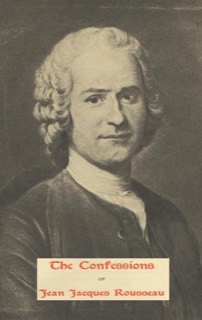
by Jean-Jacques Rousseau

Length: 60,698 words, about 243 pages, about 4 hours to read

Philosophy, Politics and society

Read The Social Contract free, starting with its best pages and lines below. Listen to it free too, read aloud by your phone's own voice.

What it is

Rousseau explores the political philosophy of authority originating from the consent of the people.

The best passages

Pages from the book itself, chosen to make you want to read on. Each opens in the reader at that exact spot.

Book I

I mean to inquire if, in the civil order, there can be any sure and legitimate rule of administration, men being taken as they are and laws as they might be. In this inquiry I shall endeavour always to unite what right sanctions with what is prescribed by interest, in order that justice and utility may in no case be divided.

I enter upon my task without proving the importance of the subject. I shall be asked if I am a prince or a legislator, to write on politics. I answer that I am neither, and that is why I do so. If I were a prince or a legislator, I should not waste time in saying what wants doing; I should do it, or hold my peace.

As I was born a citizen of a free State, and a member of the Sovereign, I feel that, however feeble the influence my voice can have on public affairs, the right of voting on them makes it my duty to study them: and I am happy, when I reflect upon governments, to find my inquiries always furnish me with new reasons for loving that of my own country.
Keep reading from here

II: The First Societies

Aristotle was right; but he took the effect for the cause. Nothing can be more certain than that every man born in slavery is born for slavery. Slaves lose everything in their chains, even the desire of escaping from them: they love their servitude, as the comrades of Ulysses loved their brutish condition. If then there are slaves by nature, it is because there have been slaves against nature. Force made the first slaves, and their cowardice perpetuated the condition.

I have said nothing of King Adam, or Emperor Noah, father of the three great monarchs who shared out the universe, like the children of Saturn, whom some scholars have recognised in them. I trust to getting due thanks for my moderation; for, being a direct descendant of one of these princes, perhaps of the eldest branch, how do I know that a verification of titles might not leave me the legitimate king of the human race? In any case, there can be no doubt that Adam was sovereign of the world, as Robinson Crusoe was of his island, as long as he was its only inhabitant; and this empire had the advantage that the monarch, safe on his throne, had no rebellions, wars, or conspirators to fear.

Keep reading from here

IV: Slavery

Do subjects then give their persons on condition that the king takes their goods also? I fail to see what they have left to preserve.

It will be said that the despot assures his subjects civil tranquillity. Granted; but what do they gain, if the wars his ambition brings down upon them, his insatiable avidity, and the vexatious conduct of his ministers press harder on them than their own dissensions would have done? What do they gain, if the very tranquillity they enjoy is one of their miseries? Tranquillity is found also in dungeons; but is that enough to make them desirable places to live in? The Greeks imprisoned in the cave of the Cyclops lived there very tranquilly, while they were awaiting their turn to be devoured.

To say that a man gives himself gratuitously, is to say what is absurd and inconceivable; such an act is null and illegitimate, from the mere fact that he who does it is out of his mind. To say the same of a whole people is to suppose a people of madmen; and madness creates no right.

Keep reading from here

VII: The Sovereign

In fact, each individual, as a man, may have a particular will contrary or dissimilar to the general will which he has as a citizen. His particular interest may speak to him quite differently from the common interest: his absolute and naturally independent existence may make him look upon what he owes to the common cause as a gratuitous contribution, the loss of which will do less harm to others than the payment of it is burdensome to himself; and, regarding the moral person which constitutes the State as a persona ficta, because not a man, he may wish to enjoy the rights of citizenship without being ready to fulfil the duties of a subject. The continuance of such an injustice could not but prove the undoing of the body politic.

In order then that the social compact may not be an empty formula, it tacitly includes the undertaking, which alone can give force to the rest, that whoever refuses to obey the general will shall be compelled to do so by the whole body. This means nothing less than that he will be forced to be free; for this is the condition which, by giving each citizen to his country, secures him against all personal dependence. In this lies the key to the working of the political machine; this alone legitimizes civil undertakings, which, without it, would be absurd, tyrannical, and liable to the most frightful abuses.

Keep reading from here

XV: Deputies or Representatives

As soon as public service ceases to be the chief business of the citizens, and they would rather serve with their money than with their persons, the State is not far from its fall. When it is necessary to march out to war, they pay troops and stay at home: when it is necessary to meet in council, they name deputies and stay at home. By reason of idleness and money, they end by having soldiers to enslave their country and representatives to sell it.

It is through the hustle of commerce and the arts, through the greedy self-interest of profit, and through softness and love of amenities that personal services are replaced by money payments. Men surrender a part of their profits in order to have time to increase them at leisure. Make gifts of money, and you will not be long without chains. The word “finance” is a slavish word, unknown in the city-state. In a country that is truly free, the citizens do everything with their own arms and nothing by means of money; so far from paying to be exempted from their duties, they would even pay for the privilege of fulfilling them themselves. I am far from taking the common view: I hold enforced labour to be less opposed to liberty than taxes.

The better the constitution of a State is, the more do public affairs encroach on private in the minds of the citizens.

Keep reading from here

10 of the best lines

I answer that I am neither, and that is why I do so.

Book IKeep reading from here

All power comes from God, I admit; but so does all sickness: does that mean that we are forbidden to call in the doctor?

III: The Right of the StrongestKeep reading from here

Moreover, truth is no road to fortune, and the people dispenses neither ambassadorships, nor professorships, nor pensions.

II: That Sovereignty Is IndivisibleKeep reading from here

The great soul of the legislator is the only miracle that can prove his mission.

VII: The LegislatorKeep reading from here

A people that would never misuse governmental powers would never misuse independence; a people that would always govern well would not need to be governed.

IV: DemocracyKeep reading from here

However small a State may be, the prince is hardly ever big enough for it.

VI: MonarchyKeep reading from here

The body politic, as well as the human body, begins to die as soon as it is born, and carries in itself the causes of its destruction.

XI: The Death of the Body PoliticKeep reading from here

As soon as any man says of the affairs of the State, “What does it matter to me?” the State may be given up for lost.

XV: Deputies or RepresentativesKeep reading from here

Fear and flattery then change votes into acclamation; deliberation ceases, and only worship or malediction is left.

II: VotingKeep reading from here

It is impossible to live at peace with those we regard as damned; to love them would be to hate God who punishes them: we positively must either reclaim or torment them.

VIII: Civil ReligionKeep reading from here

All 73 The Social Contract quotes, with the words around each

Reviews

No reviews yet. Be the first, in the app.

Write a review in Doomreader

Contents

All 54 parts
  1. Introduction
  2. Foreword
  3. Book I
  4. I: Subject of the First Book
  5. II: The First Societies
  6. III: The Right of the Strongest
  7. IV: Slavery
  8. V: That We Must Always Go Back to a First Convention
  9. VI: The Social Compact
  10. VII: The Sovereign
  11. VIII: The Civil State
  12. IX: Real Property
  13. Book II
  14. I: That Sovereignty Is Inalienable
  15. II: That Sovereignty Is Indivisible
  16. III: Whether the General Will Is Fallible
  17. IV: The Limits of the Sovereign Power
  18. V: The Right of Life and Death
  19. VI: Law
  20. VII: The Legislator
  21. VIII: The People
  22. IX: The People (Continued)
  23. X: The People (Continued)
  24. XI: The Various Systems of Legislation
  25. XII: The Division of the Laws
  26. Book III
  27. I: Government in General
  28. II: The Constituent Principle in the Various Forms of Government
  29. III: The Division of Governments
  30. IV: Democracy
  31. V: Aristocracy
  32. VI: Monarchy
  33. VII: Mixed Governments
  34. VIII: That All Forms of Government Do Not Suit All Countries
  35. IX: The Marks of a Good Government
  36. X: The Abuse of Government and Its Tendency to Degenerate
  37. XI: The Death of the Body Politic
  38. XII: How the Sovereign Authority Maintains Itself
  39. XIII: The Same (Continued)
  40. XIV: The Same (Continued)
  41. XV: Deputies or Representatives
  42. XVI: That the Institution of Government Is Not a Contract
  43. XVII: The Institution of Government
  44. XVIII: How to Check the Usurpations of Government
  45. Book IV
  46. I: That the General Will Is Indestructible
  47. II: Voting
  48. III: Elections
  49. IV: The Roman Comitia
  50. V: The Tribunate
  51. VI: The Dictatorship
  52. VII: The Censorship
  53. VIII: Civil Religion
  54. IX: Conclusion

Listen to The Social Contract free

The Social Contract as a free audiobook: Doomreader reads any book aloud, free, in your phone's or computer's own voice. Open the book and tap listen, at the speed you like, hands free.

Want a more natural voice? The AI voices read with AI credits.

Listen free in Doomreader

Download The Social Contract free

The whole book as an EPUB file, free and legal, from Standard Ebooks. It opens in any ebook app, or read it here in Doomreader with nothing to install.

Download the EPUB (0.8 MB)

More by Jean-Jacques Rousseau

More like The Social Contract

About this edition

Text from Standard Ebooks. Standard Ebooks dedicate their edition to the public domain (CC0 1.0). Every passage and line on this page is the book's own words, checked against the text.