I: The Tillage of the Soil
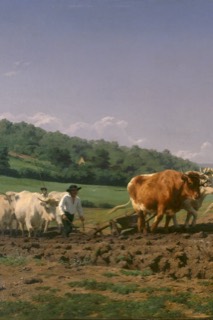
My thoughts had flown in this direction, without my perceiving that my confidence in the capacity of man for education was strengthened by external influences. I was walking along the edge of a field, which some peasants were preparing to sow. The space was vast as that in Holbein’s picture; the landscape, too, was vast and framed in a great sweep of green, slightly reddened by the approach of autumn. Here and there in the great russet field, slender rivulets of water left in the furrows by the late rains sparkled in the sunlight like silver threads. The day was clear and mild, and the soil, freshly cleft by the plowshare, sent up a light steam. At the other extremity of the field, an old man, whose broad shoulders and stern face recalled Holbein’s plowman, but whose clothes carried no suggestion of poverty, was gravely driving his plow of antique shape, drawn by two placid oxen, true patriarchs of the meadow, tall and rather thin, with pale yellow coats and long, drooping horns. They were those old workers who, through long habit, have grown to be brothers, as they are called in our country, and who, when one loses the other, refuse to work with a new comrade, and pine away with grief. People who are unfamiliar with the country call the love of the ox for his yoke-fellow a fable.