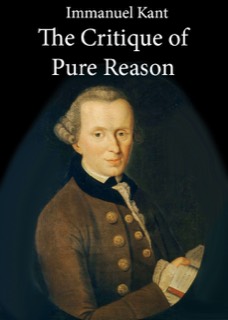
Doomreader

The Critique of Pure Reason

by Immanuel Kant

Length: 209,970 words, about 840 pages, about 15 hours to read

Philosophy

Read The Critique of Pure Reason free, starting with its best pages and lines below. Listen to it free too, read aloud by your phone's own voice.

The best passages

Pages from the book itself, chosen to make you want to read on. Each opens in the reader at that exact spot.

PREFACE TO THE FIRST EDITION 1781

Human reason, in one sphere of its cognition, is called upon to consider questions, which it cannot decline, as they are presented by its own nature, but which it cannot answer, as they transcend every faculty of the mind.

It falls into this difficulty without any fault of its own. It begins with principles, which cannot be dispensed with in the field of experience, and the truth and sufficiency of which are, at the same time, insured by experience. With these principles it rises, in obedience to the laws of its own nature, to ever higher and more remote conditions. But it quickly discovers that, in this way, its labours must remain ever incomplete, because new questions never cease to present themselves; and thus it finds itself compelled to have recourse to principles which transcend the region of experience, while they are regarded by common sense without distrust. It thus falls into confusion and contradictions, from which it conjectures the presence of latent errors, which, however, it is unable to discover, because the principles it employs, transcending the limits of experience, cannot be tested by that criterion. The arena of these endless contests is called Metaphysic.
Keep reading from here

PREFACE TO THE FIRST EDITION 1781

This tribunal is nothing less than the Critical Investigation of Pure Reason.

[1] We very often hear complaints of the shallowness of the present age, and of the decay of profound science. But I do not think that those which rest upon a secure foundation, such as mathematics, physical science, etc., in the least deserve this reproach, but that they rather maintain their ancient fame, and in the latter case, indeed, far surpass it. The same would be the case with the other kinds of cognition, if their principles were but firmly established. In the absence of this security, indifference, doubt, and finally, severe criticism are rather signs of a profound habit of thought. Our age is the age of criticism, to which everything must be subjected. The sacredness of religion, and the authority of legislation, are by many regarded as grounds of exemption from the examination of this tribunal. But, if they are exempted, they become the subjects of just suspicion, and cannot lay claim to sincere respect, which reason accords only to that which has stood the test of a free and public examination.

Keep reading from here

PREFACE TO THE SECOND EDITION 1787

This leads us to inquire why it is that, in metaphysics, the sure path of science has not hitherto been found. Shall we suppose that it is impossible to discover it? Why then should nature have visited our reason with restless aspirations after it, as if it were one of our weightiest concerns? Nay, more, how little cause should we have to place confidence in our reason, if it abandons us in a matter about which, most of all, we desire to know the truth—and not only so, but even allures us to the pursuit of vain phantoms, only to betray us in the end? Or, if the path has only hitherto been missed, what indications do we possess to guide us in a renewed investigation, and to enable us to hope for greater success than has fallen to the lot of our predecessors?

Keep reading from here

III. Of the Division of General Logic into Analytic and Dialectic.

The old question with which people sought to push logicians into a corner, so that they must either have recourse to pitiful sophisms or confess their ignorance, and consequently the vanity of their whole art, is this: “What is truth?” The definition of the word truth, to wit, “the accordance of the cognition with its object,” is presupposed in the question; but we desire to be told, in the answer to it, what is the universal and secure criterion of the truth of every cognition.

To know what questions we may reasonably propose is in itself a strong evidence of sagacity and intelligence. For if a question be in itself absurd and unsusceptible of a rational answer, it is attended with the danger—not to mention the shame that falls upon the person who proposes it—of seducing the unguarded listener into making absurd answers, and we are presented with the ridiculous spectacle of one (as the ancients said) “milking the he-goat, and the other holding a sieve.”

Keep reading from here

10 of the best lines

Human reason, in one sphere of its cognition, is called upon to consider questions, which it cannot decline, as they are presented by its own nature, but which it cannot answer, as they transcend every faculty of the mind.

PREFACE TO THE FIRST EDITION 1781Keep reading from here

It is, indeed, the common fate of human reason in speculation, to finish the imposing edifice of thought as rapidly as possible, and then for the first time to begin to examine whether the foundation is a solid one or no.

III. Philosophy stands in need of a Science which shall Determine the Possibility, Principles, and Extent of Human Knowledge “à priori”Keep reading from here

Deficiency in judgement is properly that which is called stupidity; and for such a failing we know no remedy.

INTRODUCTION. Of the Transcendental Faculty of judgement in GeneralKeep reading from here

All our knowledge begins with sense, proceeds thence to understanding, and ends with reason, beyond which nothing higher can be discovered in the human mind for elaborating the matter of intuition and subjecting it to the highest unity of thought.

II. Of Pure Reason as the Seat of Transcendental Illusory AppearanceKeep reading from here

The reader will observe in this antinomy a very remarkable contrast.

Section II. Antithetic of Pure ReasonKeep reading from here

Understanding knows nothing in nature but that which is, or has been, or will be.

III. Solution of the Cosmological Idea of the Totality of the Deduction of Cosmical Events from their CausesKeep reading from here

Thus all human cognition begins with intuitions, proceeds from thence to conceptions, and ends with ideas.

APPENDIX. Of the Regulative Employment of the Ideas of Pure ReasonKeep reading from here

But, in general, the uprightness of the defence stands in an inverse ratio to the goodness of the cause; and perhaps more honesty and fairness are shown by those who deny than by those who uphold these doctrines.

Section II. The Discipline of Pure Reason in PolemicsKeep reading from here

The greatest, and perhaps the only, use of all philosophy of pure reason is, accordingly, of a purely negative character.

Chapter II. The Canon of Pure ReasonKeep reading from here

In the transcendental sphere of reason, on the other hand, the term opinion is too weak, while the word knowledge is too strong.

Section III. Of Opinion, Knowledge, and BeliefKeep reading from here

All 64 The Critique of Pure Reason quotes, with the words around each

Reviews

No reviews yet. Be the first, in the app.

Write a review in Doomreader

Contents

All 95 parts
  1. PREFACE TO THE FIRST EDITION 1781
  2. PREFACE TO THE SECOND EDITION 1787
  3. Introduction
  4. I. Of the difference between Pure and Empirical Knowledge
  5. II. The Human Intellect, even in an Unphilosophical State, is in Possession of Certain Cognitions “à priori”.
  6. III. Philosophy stands in need of a Science which shall Determine the Possibility, Principles, and Extent of Human Knowledge “à priori”
  7. IV. Of the Difference Between Analytical and Synthetical Judgements.
  8. V. In all Theoretical Sciences of Reason, Synthetical Judgements “à priori” are contained as Principles.
  9. VI. The Universal Problem of Pure Reason.
  10. VII. Idea and Division of a Particular Science, under the Name of a Critique of Pure Reason.
  11. I. TRANSCENDENTAL DOCTRINE OF ELEMENTS.
  12. FIRST PART. TRANSCENDENTAL ÆSTHETIC. § I. Introductory.
  13. SECTION I. Of Space. § 2. Metaphysical Exposition of this Conception.
  14. § 3. Transcendental Exposition of the Conception of Space.
  15. § 4. Conclusions from the foregoing Conceptions.
  16. SECTION II. Of Time. § 5. Metaphysical Exposition of this Conception.
  17. § 6 Transcendental Exposition of the Conception of Time.
  18. § 7. Conclusions from the above Conceptions.
  19. § 8. Elucidation.
  20. § 9. General Remarks on Transcendental Æsthetic.
  21. § 10. Conclusion of the Transcendental Æsthetic.
  22. Second Part—TRANSCENDENTAL LOGIC INTRODUCTION. Idea of a Transcendental Logic. I. Of Logic in General.
  23. II. Of Transcendental Logic.
  24. III. Of the Division of General Logic into Analytic and Dialectic.
  25. IV. Of the Division of Transcendental Logic into Transcendental Analytic and Dialectic.
  26. FIRST DIVISION. TRANSCENDENTAL LOGIC. TRANSCENDENTAL ANALYTIC. § 1
  27. BOOK I. Analytic of Conceptions. § 2
  28. Chapter I. Of the Transcendental Clue to the Discovery of all Pure Conceptions of the Understanding Introductory § 3
  29. Section I. Of the Logical Use of the Understanding in General § 4
  30. Section II. Of the Logical Function of the Understanding in Judgements § 5
  31. Section III. Of the Pure Conceptions of the Understanding, or Categories § 6
  32. Chapter II. Of the Deduction of the Pure Conceptions of the Understanding Section I. Of the Principles of a Transcendental Deduction in general § 9
  33. Transition to the Transcendental Deduction of the Categories § 10
  34. Section II Transcendental Deduction of the pure Conceptions of the Understanding Of the Possibility of a Conjunction of the manifold representations given by Sense § 11.
  35. Of the Originally Synthetical Unity of Apperception § 12
  36. The Principle of the Synthetical Unity of Apperception is the highest Principle of all exercise of the Understanding § 13
  37. What Objective Unity of Self-consciousness is § 14
  38. The Logical Form of all Judgements consists in the Objective Unity of Apperception of the Conceptions contained therein § 15
  39. All Sensuous Intuitions are subject to the Categories, as Conditions under which alone the manifold Content of them can be united in one Consciousness § 16
  40. Observation § 17
  41. In Cognition, its Application to Objects of Experience is the only legitimate use of the Category § 18
  42. Of the Application of the Categories to Objects of the Senses in general § 20
  43. Transcendental Deduction of the universally possible employment in experience of the Pure Conceptions of the Understanding § 22
  44. Result of this Deduction of the Conceptions of the Understanding § 23
  45. BOOK II. Analytic of Principles
  46. INTRODUCTION. Of the Transcendental Faculty of judgement in General
  47. TRANSCENDENTAL DOCTRINE OF THE FACULTY OF JUDGEMENT OR, ANALYTIC OF PRINCIPLES Chapter I. Of the Schematism at of the Pure Conceptions of the Understanding
  48. Chapter II. System of all Principles of the Pure Understanding
  49. Section I. Of the Supreme Principle of all Analytical Judgements
  50. Section II. Of the Supreme Principle of all Synthetical Judgements
  51. Section III. Systematic Representation of all Synthetical Principles of the Pure Understanding
  52. Chapter III Of the Ground of the Division of all Objects into Phenomena and Noumena
  53. APPENDIX
  54. SECOND DIVISION—TRANSCENDENTAL LOGIC TRANSCENDENTAL DIALECTIC. INTRODUCTION. I. Of Transcendental Illusory Appearance
  55. II. Of Pure Reason as the Seat of Transcendental Illusory Appearance
  56. TRANSCENDENTAL DIALECTIC—BOOK I—OF THE CONCEPTIONS OF PURE REASON.
  57. Section I—Of Ideas in General
  58. Section II. Of Transcendental Ideas
  59. Section III. System of Transcendental Ideas
  60. TRANSCENDENTAL DIALECTIC—BOOK II—OF THE DIALECTICAL PROCEDURE OF PURE REASON
  61. Chapter I. Of the Paralogisms of Pure Reason
  62. Chapter II. The Antinomy of Pure Reason
  63. Section I. System of Cosmological Ideas
  64. Section II. Antithetic of Pure Reason
  65. Section III. Of the Interest of Reason in these Self-contradictions
  66. Section IV. Of the necessity imposed upon Pure Reason of presenting a Solution of its Transcendental Problems
  67. Section V. Sceptical Exposition of the Cosmological Problems presented in the four Transcendental Ideas
  68. Section VI. Transcendental Idealism as the Key to the Solution of Pure Cosmological Dialectic
  69. Section VII. Critical Solution of the Cosmological Problem
  70. Section VIII. Regulative Principle of Pure Reason in relation to the Cosmological Ideas
  71. Section IX. Of the Empirical Use of the Regulative Principle of Reason with regard to the Cosmological Ideas
  72. I. Solution of the Cosmological Idea of the Totality of the Composition of Phenomena in the Universe
  73. II. Solution of the Cosmological Idea of the Totality of the Division of a Whole given in Intuition
  74. III. Solution of the Cosmological Idea of the Totality of the Deduction of Cosmical Events from their Causes
  75. IV. Solution of the Cosmological Idea of the Totality of the Dependence of Phenomenal Existences
  76. Chapter III. The Ideal of Pure Reason Section I. Of the Ideal in General
  77. Section II. Of the Transcendental Ideal (Prototypon Trancendentale)
  78. Section III. Of the Arguments employed by Speculative Reason in Proof of the Existence of a Supreme Being
  79. Section IV. Of the Impossibility of an Ontological Proof of the Existence of God
  80. Section V. Of the Impossibility of a Cosmological Proof of the Existence of God
  81. Section VI. Of the Impossibility of a Physico-Theological Proof
  82. Section VII. Critique of all Theology based upon Speculative Principles of Reason
  83. APPENDIX. Of the Regulative Employment of the Ideas of Pure Reason
  84. II. Transcendental Doctrine of Method
  85. Chapter I. The Discipline of Pure Reason
  86. Section I. The Discipline of Pure Reason in the Sphere of Dogmatism
  87. Section II. The Discipline of Pure Reason in Polemics
  88. Section III. The Discipline of Pure Reason in Hypothesis
  89. Section IV. The Discipline of Pure Reason in Relation to Proofs
  90. Chapter II. The Canon of Pure Reason
  91. Section I. Of the Ultimate End of the Pure Use of Reason
  92. Section II. Of the Ideal of the Summum Bonum as a Determining Ground of the Ultimate End of Pure Reason
  93. Section III. Of Opinion, Knowledge, and Belief
  94. Chapter III. The Architectonic of Pure Reason
  95. Chapter IV. The History of Pure Reason

Listen to The Critique of Pure Reason free

The Critique of Pure Reason as a free audiobook: Doomreader reads any book aloud, free, in your phone's or computer's own voice. Open the book and tap listen, at the speed you like, hands free.

Want a more natural voice? The AI voices read with AI credits.

Listen free in Doomreader

Download The Critique of Pure Reason free

The whole book as an EPUB file, free and legal, from Project Gutenberg. It opens in any ebook app, or read it here in Doomreader with nothing to install.

Download the EPUB (0.6 MB)

More by Immanuel Kant

More like The Critique of Pure Reason

About this edition

Text from Project Gutenberg. In the public domain in the USA. The Project Gutenberg License is kept inside the file. Every passage and line on this page is the book's own words, checked against the text.