Doomreader

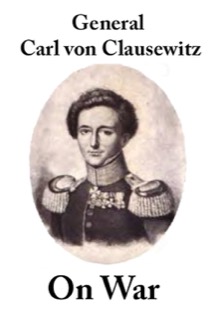
On War

by Carl von Clausewitz

Length: 294,061 words, about 1,176 pages, about 21 hours to read

History and travel, Politics and society

Read On War free, starting with its best pages and lines below. Listen to it free too, read aloud by your phone's own voice.

The best passages

Pages from the book itself, chosen to make you want to read on. Each opens in the reader at that exact spot.

CHAPTER III. The Genius for War

War is the province of physical exertion and suffering. In order not to be completely overcome by them, a certain strength of body and mind is required, which, either natural or acquired, produces indifference to them. With these qualifications, under the guidance of simply a sound understanding, a man is at once a proper instrument for War; and these are the qualifications so generally to be met with amongst wild and half-civilised tribes. If we go further in the demands which War makes on it, then we find the powers of the understanding predominating. War is the province of uncertainty: three-fourths of those things upon which action in War must be calculated, are hidden more or less in the clouds of great uncertainty. Here, then, above all a fine and penetrating mind is called for, to search out the truth by the tact of its judgment.

An average intellect may, at one time, perhaps hit upon this truth by accident; an extraordinary courage, at another, may compensate for the want of this tact; but in the majority of cases the average result will always bring to light the deficient understanding.

War is the province of chance. In no sphere of human activity is such a margin to be left for this intruder, because none is so much in constant contact with him on all sides. He increases the uncertainty of every circumstance, and deranges the course of events.

Keep reading from here

CHAPTER IV. Of Danger in War

Let us accompany the novice to the battle-field. As we approach, the thunder of the cannon becoming plainer and plainer is soon followed by the howling of shot, which attracts the attention of the inexperienced. Balls begin to strike the ground close to us, before and behind. We hasten to the hill where stands the General and his numerous Staff. Here the close striking of the cannon balls and the bursting of shells is so frequent that the seriousness of life makes itself visible through the youthful picture of imagination. Suddenly some one known to us falls—a shell strikes amongst the crowd and causes some involuntary movements—we begin to feel that we are no longer perfectly at ease and collected; even the bravest is at least to some degree confused. Now, a step farther into the battle which is raging before us like a scene in a theatre, we get to the nearest General of Division; here ball follows ball, and the noise of our own guns increases the confusion. From the General of Division to the Brigadier. He, a man of acknowledged bravery, keeps carefully behind a rising ground, a house, or a tree—a sure sign of increasing danger. Grape rattles on the roofs of the houses and in the fields; cannon balls howl over us, and plough the air in all directions, and soon there is a frequent whistling of musket balls. A step farther towards the troops, to that sturdy infantry which for hours has maintained its firmness under this heavy fire; here the air is filled with

Keep reading from here

CHAPTER VII. Friction in War

Everything is very simple in War, but the simplest thing is difficult. These difficulties accumulate and produce a friction which no man can imagine exactly who has not seen War, Suppose now a traveller, who towards evening expects to accomplish the two stages at the end of his day’s journey, four or five leagues, with post-horses, on the high road—it is nothing. He arrives now at the last station but one, finds no horses, or very bad ones; then a hilly country, bad roads; it is a dark night, and he is glad when, after a great deal of trouble, he reaches the next station, and finds there some miserable accommodation. So in War, through the influence of an infinity of petty circumstances, which cannot properly be described on paper, things disappoint us, and we fall short of the mark. A powerful iron will overcomes this friction; it crushes the obstacles, but certainly the machine along with them. We shall often meet with this result. Like an obelisk towards which the principal streets of a town converge, the strong will of a proud spirit stands prominent and commanding in the middle of the Art of War.

Keep reading from here

CHAPTER I. Strategy

Where the latter is the principal question, as in the single acts both great and small in War, the moral quantities are already reduced to a very small number.

Thus, then, in Strategy everything is very simple, but not on that account very easy. Once it is determined from the relations of the State what should and may be done by War, then the way to it is easy to find; but to follow that way straightforward, to carry out the plan without being obliged to deviate from it a thousand times by a thousand varying influences, requires, besides great strength of character, great clearness and steadiness of mind, and out of a thousand men who are remarkable, some for mind, others for penetration, others again for boldness or strength of will, perhaps not one will combine in himself all those qualities which are required to raise a man above mediocrity in the career of a general.

It may sound strange, but for all who know War in this respect it is a fact beyond doubt, that much more strength of will is required to make an important decision in Strategy than in tactics. In the latter we are hurried on with the moment; a Commander feels himself borne along in a strong current, against which he durst not contend without the most destructive consequences, he suppresses the rising fears, and boldly ventures further. In Strategy, where all goes on at a slower rate, there is more room allowed for our own apprehensions and those of others, for objections and remonstrances, consequently also for unseasonable regrets; and as we do not see things in Strategy as we do at least half of them in tactics, with the living eye, but everything must be conjectured and assumed, the convictions produced are less powerful.

Keep reading from here

CHAPTER XIV. Night Fighting

Fundamentally every night attack is only a more vehement form of surprise. Now at the first look of the thing such an attack appears quite pre-eminently advantageous, for we suppose the enemy to be taken by surprise, the assailant naturally to be prepared for everything which can happen. What an inequality! Imagination paints to itself a picture of the most complete confusion on the one side, and on the other side the assailant only occupied in reaping the fruits of his advantage. Hence the constant creation of schemes for night attacks by those who have not to lead them, and have no responsibility, whilst these attacks seldom take place in reality.

Keep reading from here

10 of the best lines

War is nothing but a duel on an extensive scale.

2. DEFINITION.Keep reading from here

Resolution is an act of courage in single instances, and if it becomes a characteristic trait, it is a habit of the mind.

CHAPTER III. The Genius for WarKeep reading from here

Pity the theory which sets itself in opposition to the mind!

13. AS A RULE THEY EXCLUDE GENIUS.Keep reading from here

The reader will readily agree with us that, supposing an equal degree of discernment to be forthcoming in a certain number of cases, a thousand times as many of them will end in disaster through over-anxiety as through boldness.

CHAPTER VI. BoldnessKeep reading from here

No battle is decided in a single moment, although in every battle there arise moments of crisis, on which the result depends.

CHAPTER VII. Decision of the CombatKeep reading from here

The conditions have been mistaken for the thing itself, the instrument for the hand.

CHAPTER XVIII. Command of GroundKeep reading from here

In general, the best key to the country lies in the enemy’s army; and when the idea of country predominates over that of the armed force, some very specially advantageous circumstances must prevail.

CHAPTER XXIII. Key to the CountryKeep reading from here

At last the general sees nothing but mountains and passes, and that which should be a measure of free choice guided by circumstances becomes mannerism, becomes second nature.

CHAPTER XXX. Defence of a Theatre of War (continued) When no Decision is Sought for.Keep reading from here

Theory ought to throw a clear light on the mass of objects, that the mind may the easier find its bearings; theory ought to pull up the weeds which error has sown broadcast; it should show the relations of things to each other, separate the important from the trifling.

CHAPTER I. IntroductionKeep reading from here

Thus a great positive success can never be obtained except through positive measures, planned not with a view to a mere state of “waiting-for,” but with a view to a decision, in short, even on the defensive, there is no great gain to be won except by a great stake.

CHAPTER VIII. Limited Object—DefenceKeep reading from here

All 134 On War quotes, with the words around each

Reviews

No reviews yet. Be the first, in the app.

Write a review in Doomreader

Contents

All 247 parts
  1. 1874 was 1st edition of this translation. 1909 was the London reprinting. NEW AND REVISED EDITION WITH AN INTRODUCTION AND NOTES BY COLONEL F.N. MAUDE C.B. (LATE R.E.) EIGHTH IMPRESSION IN THREE VOLUMES
  2. INTRODUCTION
  3. NOTICE
  4. THE INTRODUCTION OF THE AUTHOR
  5. BRIEF MEMOIR OF GENERAL CLAUSEWITZ (BY TRANSLATOR)
  6. BOOK I. ON THE NATURE OF WAR
  7. CHAPTER I. What is War?
  8. 1. INTRODUCTION.
  9. 2. DEFINITION.
  10. 3. UTMOST USE OF FORCE.
  11. 4. THE AIM IS TO DISARM THE ENEMY.
  12. 5. UTMOST EXERTION OF POWERS.
  13. 6. MODIFICATION IN THE REALITY.
  14. 7. WAR IS NEVER AN ISOLATED ACT.
  15. 8. WAR DOES NOT CONSIST OF A SINGLE INSTANTANEOUS BLOW.
  16. 9. THE RESULT IN WAR IS NEVER ABSOLUTE.
  17. 10. THE PROBABILITIES OF REAL LIFE TAKE THE PLACE OF THE CONCEPTIONS OF THE EXTREME AND THE ABSOLUTE.
  18. 11. THE POLITICAL OBJECT NOW REAPPEARS.
  19. 12. A SUSPENSION IN THE ACTION OF WAR UNEXPLAINED BY ANYTHING SAID AS YET.
  20. 13. THERE IS ONLY ONE CAUSE WHICH CAN SUSPEND THE ACTION, AND THIS SEEMS TO BE ONLY POSSIBLE ON ONE SIDE IN ANY CASE.
  21. 14. THUS A CONTINUANCE OF ACTION WILL ENSUE WHICH WILL ADVANCE TOWARDS A CLIMAX.
  22. 15. HERE, THEREFORE, THE PRINCIPLE OF POLARITY IS BROUGHT INTO REQUISITION.
  23. 16. ATTACK AND DEFENCE ARE THINGS DIFFERING IN KIND AND OF UNEQUAL FORCE. POLARITY IS, THEREFORE, NOT APPLICABLE TO THEM.
  24. 17. THE EFFECT OF POLARITY IS OFTEN DESTROYED BY THE SUPERIORITY OF THE DEFENCE OVER THE ATTACK, AND THUS THE SUSPENSION OF ACTION IN WAR IS EXPLAINED.
  25. 18 A SECOND GROUND CONSISTS IN THE IMPERFECT KNOWLEDGE OF CIRCUMSTANCES.
  26. 19. FREQUENT PERIODS OF INACTION IN WAR REMOVE IT FURTHER FROM THE ABSOLUTE, AND MAKE IT STILL MORE A CALCULATION OF PROBABILITIES.
  27. 20. THEREFORE, THE ELEMENT OF CHANCE ONLY IS WANTING TO MAKE OF WAR A GAME, AND IN THAT ELEMENT IT IS LEAST OF ALL DEFICIENT.
  28. 21. WAR IS A GAME BOTH OBJECTIVELY AND SUBJECTIVELY.
  29. 22. HOW THIS ACCORDS BEST WITH THE HUMAN MIND IN GENERAL.
  30. 23. WAR IS ALWAYS A SERIOUS MEANS FOR A SERIOUS OBJECT. ITS MORE PARTICULAR DEFINITION.
  31. 24. WAR IS A MERE CONTINUATION OF POLICY BY OTHER MEANS.
  32. 25. DIVERSITY IN THE NATURE OF WARS.
  33. 26. THEY MAY ALL BE REGARDED AS POLITICAL ACTS.
  34. 27. INFLUENCE OF THIS VIEW ON THE RIGHT UNDERSTANDING OF MILITARY HISTORY, AND ON THE FOUNDATIONS OF THEORY.
  35. 28. RESULT FOR THEORY.
  36. CHAPTER II. Ends and Means in War
  37. CHAPTER III. The Genius for War
  38. CHAPTER IV. Of Danger in War
  39. CHAPTER V. Of Bodily Exertion in War
  40. CHAPTER VI. Information in War
  41. CHAPTER VII. Friction in War
  42. CHAPTER VIII. Concluding Remarks, Book I
  43. BOOK II. ON THE THEORY OF WAR
  44. CHAPTER I. Branches of the Art of War
  45. CHAPTER II. On the Theory of War
  46. 1. THE FIRST CONCEPTION OF THE “ART OF WAR” WAS MERELY THE PREPARATION OF THE ARMED FORCES.
  47. 2. TRUE WAR FIRST APPEARS IN THE ART OF SIEGES.
  48. 3. THEN TACTICS TRIED TO FIND ITS WAY IN THE SAME DIRECTION.
  49. 4. THE REAL CONDUCT OF WAR ONLY MADE ITS APPEARANCE INCIDENTALLY AND INCOGNITO.
  50. 5. REFLECTIONS ON MILITARY EVENTS BROUGHT ABOUT THE WANT OF A THEORY.
  51. 6. ENDEAVOURS TO ESTABLISH A POSITIVE THEORY.
  52. 7. LIMITATION TO MATERIAL OBJECTS.
  53. 8. SUPERIORITY OF NUMBERS.
  54. 9. VICTUALLING OF TROOPS.
  55. 10. BASE.
  56. 11. INTERIOR LINES.
  57. 12. ALL THESE ATTEMPTS ARE OPEN TO OBJECTION.
  58. 13. AS A RULE THEY EXCLUDE GENIUS.
  59. 14. THE DIFFICULTY OF THEORY AS SOON AS MORAL QUANTITIES COME INTO CONSIDERATION.
  60. 15. THE MORAL QUANTITIES MUST NOT BE EXCLUDED IN WAR.
  61. 16. PRINCIPAL DIFFICULTY OF A THEORY FOR THE CONDUCT OF WAR.
  62. 17. FIRST SPECIALITY.—MORAL FORCES AND THEIR EFFECTS. (HOSTILE FEELING.)
  63. 18. THE IMPRESSIONS OF DANGER. (COURAGE.)
  64. 19. EXTENT OF THE INFLUENCE OF DANGER.
  65. 20. OTHER POWERS OF FEELING.
  66. 21. PECULIARITY OF MIND.
  67. 22. FROM THE DIVERSITY IN MENTAL INDIVIDUALITIES ARISES THE DIVERSITY OF WAYS LEADING TO THE END.
  68. 23. SECOND PECULIARITY.—LIVING REACTION.
  69. 24. THIRD PECULIARITY.—UNCERTAINTY OF ALL DATA.
  70. 25. POSITIVE THEORY IS IMPOSSIBLE.
  71. 26. MEANS LEFT BY WHICH A THEORY IS POSSIBLE (THE DIFFICULTIES ARE NOT EVERYWHERE EQUALLY GREAT).
  72. 27. THEORY MUST BE OF THE NATURE OF OBSERVATIONS NOT OF DOCTRINE.
  73. 28. BY THIS POINT OF VIEW THEORY BECOMES POSSIBLE, AND CEASES TO BE IN CONTRADICTION TO PRACTICE.
  74. 29. THEORY THEREFORE CONSIDERS THE NATURE OF ENDS AND MEANS—ENDS AND MEANS IN TACTICS.
  75. 30. CIRCUMSTANCES WHICH ALWAYS ATTEND THE APPLICATION OF THE MEANS.
  76. 31. LOCALITY.
  77. 32. TIME OF DAY.
  78. 33. WEATHER.
  79. 34. END AND MEANS IN STRATEGY.
  80. 35. CIRCUMSTANCES WHICH ATTEND THE APPLICATION OF THE MEANS OF STRATEGY.
  81. 36. THESE FORM NEW MEANS.
  82. 37. STRATEGY DEDUCES ONLY FROM EXPERIENCE THE ENDS AND MEANS TO BE EXAMINED.
  83. 38. HOW FAR THE ANALYSIS OF THE MEANS SHOULD BE CARRIED.
  84. 39. GREAT SIMPLIFICATION OF THE KNOWLEDGE REQUIRED.
  85. 40. THIS EXPLAINS THE RAPID GROWTH OF GREAT GENERALS, AND WHY A GENERAL IS NOT A MAN OF LEARNING.
  86. 41. FORMER CONTRADICTIONS.
  87. 42. ON THIS ACCOUNT ALL USE OF KNOWLEDGE WAS DENIED, AND EVERYTHING ASCRIBED TO NATURAL TALENTS.
  88. 43. THE KNOWLEDGE MUST BE MADE SUITABLE TO THE POSITION.
  89. 44. THE KNOWLEDGE IN WAR IS VERY SIMPLE, BUT NOT, AT THE SAME TIME, VERY EASY.
  90. 45. OF THE NATURE OF THIS KNOWLEDGE.
  91. 46. SCIENCE MUST BECOME ART.
  92. CHAPTER III. Art or Science of War
  93. 1.—USAGE STILL UNSETTLED (POWER AND KNOWLEDGE. SCIENCE WHEN MERE KNOWING; ART, WHEN DOING, IS THE OBJECT.)
  94. 2. DIFFICULTY OF SEPARATING PERCEPTION FROM JUDGMENT. (ART OF WAR.)
  95. 3. WAR IS PART OF THE INTERCOURSE OF THE HUMAN RACE.
  96. 4. DIFFERENCE.
  97. CHAPTER IV. Methodicism
  98. CHAPTER V. Criticism
  99. CHAPTER VI. On Examples
  100. BOOK III. OF STRATEGY IN GENERAL
  101. CHAPTER I. Strategy
  102. OBSERVATION.
  103. 1. POSSIBLE COMBATS ARE ON ACCOUNT OF THEIR RESULTS TO BE LOOKED UPON AS REAL ONES.
  104. 2. TWOFOLD OBJECT OF THE COMBAT.
  105. 3. EXAMPLE.
  106. 4. WHEN THIS VIEW IS NOT TAKEN, THEN A FALSE VALUE IS GIVEN TO OTHER THINGS.
  107. CHAPTER II. Elements of Strategy
  108. CHAPTER III. Moral Forces
  109. CHAPTER IV. The Chief Moral Powers
  110. CHAPTER V. Military Virtue of an Army
  111. CHAPTER VI. Boldness
  112. CHAPTER VII. Perseverance
  113. CHAPTER VIII. Superiority of Numbers
  114. CHAPTER IX. The Surprise
  115. CHAPTER X. Stratagem
  116. CHAPTER XI. Assembly of Forces in Space
  117. CHAPTER XII. Assembly of Forces in Time
  118. CHAPTER XIII. Strategic Reserve
  119. CHAPTER XIV. Economy of Forces
  120. CHAPTER XV. Geometrical Element
  121. CHAPTER XVI. On the Suspension of the Act in War
  122. CHAPTER XVII. On the Character of Modern War
  123. CHAPTER XVIII. Tension and Rest
  124. The Dynamic Law of War
  125. BOOK IV THE COMBAT
  126. CHAPTER I. Introductory
  127. CHAPTER II. Character of a Modern Battle
  128. CHAPTER III. The Combat in General
  129. CHAPTER IV. The Combat in General (continuation)
  130. CHAPTER V. On the Signification of the Combat
  131. CHAPTER VI. Duration of Combat
  132. CHAPTER VII. Decision of the Combat
  133. CHAPTER VIII. Mutual Understanding as to a Battle
  134. CHAPTER IX. The Battle(*)
  135. ITS DECISION
  136. CHAPTER X. Effects of Victory
  137. CHAPTER XI. The Use of the Battle
  138. CHAPTER XII. Strategic Means of Utilising Victory
  139. CHAPTER XIII. Retreat After a Lost Battle
  140. CHAPTER XIV. Night Fighting
  141. BOOK V MILITARY FORCES
  142. CHAPTER I. General Scheme
  143. CHAPTER II. Theatre of War, Army, Campaign
  144. 1.—Theatre of War.
  145. 2.—Army.
  146. 3.—Campaign.
  147. CHAPTER III. Relation of Power
  148. CHAPTER IV. Relation of the Three Arms
  149. CHAPTER V. Order of Battle of an Army
  150. 1.—Division.
  151. 2.—Combination of Arms.
  152. 3.—The Disposition.
  153. CHAPTER VI. General Disposition of an Army
  154. CHAPTER VII. Advanced Guard and Out-Posts
  155. CHAPTER VIII. Mode of Action of Advanced Corps
  156. CHAPTER IX. Camps
  157. CHAPTER X. Marches
  158. CHAPTER XI. Marches (Continued)
  159. CHAPTER XII. Marches (continued)
  160. CHAPTER XIII. Cantonments
  161. CHAPTER XIV. Subsistence
  162. 1.—Living on the inhabitants, or on the community, which is the same thing.
  163. 2.—Subsistence through exactions enforced by the troops themselves.
  164. 3.—By regular requisitions.
  165. 4.—Subsistence from Magazines.
  166. CHAPTER XV. Base of Operations
  167. CHAPTER XVI. Lines of Communication
  168. CHAPTER XVII. On Country and Ground
  169. CHAPTER XVIII. Command of Ground
  170. BOOK VI DEFENCE
  171. CHAPTER I. Offence and Defence
  172. 1.—Conception of Defence.
  173. 2.—Advantages of the Defensive.
  174. CHAPTER II. The Relations of the Offensive and Defensive to Each Other in Tactics
  175. CHAPTER III. The Relations of the Offensive and Defensive to Each Other in Strategy
  176. CHAPTER IV. Convergence of Attack and Divergence of Defence
  177. CHAPTER V. Character of the Strategic Defensive
  178. CHAPTER VI. Extent of the Means of Defence
  179. 1.—Landwehr (Militia).
  180. 2.—Fortresses.
  181. 3.—The People.
  182. 4.—The National Armament,
  183. 5.—Allies.
  184. CHAPTER VII. Mutual Action and Reaction of Attack and Defence
  185. CHAPTER VIII. Methods of Resistance
  186. CHAPTER IX. Defensive Battle
  187. CHAPTER X. Fortresses
  188. CHAPTER XI. Fortresses (Continued)
  189. CHAPTER XII. Defensive Position
  190. CHAPTER XIII. Strong Positions and Entrenched Camps
  191. CHAPTER XIV. Flank Positions
  192. CHAPTER XV. Defence of Mountains
  193. CHAPTER XVI. Defence of Mountains (Continued)
  194. 1. A mountain system as a battle-field.
  195. 2. The influence of mountains on other parts of the country.
  196. 3. Mountains considered in their aspect of a strategic barrier.
  197. 4. Mountains in their relation to the provisioning of an army.
  198. CHAPTER XVII. Defence of Mountains (continued)
  199. CHAPTER XVIII. Defence of Streams and Rivers
  200. CHAPTER XIX. Defence of Streams and Rivers (continued)
  201. CHAPTER XX. A. Defence of Swamps
  202. B. Inundations
  203. CHAPTER XXI. Defence of Forests
  204. CHAPTER XX. The Cordon
  205. CHAPTER XXIII. Key to the Country
  206. CHAPTER XXIV. Operating Against a Flank
  207. CHAPTER XXV. Retreat into the Interior of the Country
  208. CHAPTER XXVI. Arming the Nation
  209. CHAPTER XXVII. Defence of a Theatre of War
  210. CHAPTER XXVIII. Defence of a Theatre of War—(continued)
  211. CHAPTER XXIX. Defence of a Theatre of War (continued) Successive Resistance.
  212. CHAPTER XXX. Defence of a Theatre of War (continued) When no Decision is Sought for.
  213. SKETCHES FOR BOOK VII THE ATTACK
  214. CHAPTER I. The Attack in Relation to the Defence
  215. CHAPTER II. Nature of the Strategical Attack
  216. CHAPTER III. Of the Objects of Strategical Attack
  217. CHAPTER IV. Decreasing Force of the Attack
  218. CHAPTER V. Culminating Point of the Attack
  219. CHAPTER VI. Destruction of the Enemy’s Armies
  220. CHAPTER VII. The Offensive Battle
  221. CHAPTER VIII. Passage of Rivers
  222. CHAPTER IX. Attack on Defensive Positions
  223. CHAPTER X. Attack on an Entrenched Camp
  224. CHAPTER XI. Attack on a Mountain
  225. CHAPTER XII. Attack on Cordon Lines
  226. CHAPTER XIII. Manœuvring
  227. CHAPTER XIV. Attack on Morasses, Inundations, Woods
  228. CHAPTER XV. Attack on a Theatre of War with the View to a Decision
  229. CHAPTER XVI. Attack on a Theatre of War without the View to a Great Decision
  230. CHAPTER XVII. Attack on Fortresses
  231. CHAPTER XVIII. Attack on Convoys
  232. CHAPTER XIX. Attack on the Enemy’s Army in its Cantonments
  233. CHAPTER XX. Diversion
  234. CHAPTER XXI. Invasion
  235. CHAPTER XXII. On the Culminating Point of Victory(*)
  236. SKETCHES FOR BOOK VIII PLAN OF WAR
  237. CHAPTER I. Introduction
  238. CHAPTER II. Absolute and Real War
  239. CHAPTER III. A. Interdependence of the Parts in War
  240. B. On the Magnitude of the Object of the War, and the Efforts to be Made.
  241. CHAPTER IV. Ends in War More Precisely Defined Overthrow of the Enemy
  242. CHAPTER V. Ends in War More Precisely Defined (continued) Limited Object
  243. CHAPTER VI. A. Influence of the Political Object on the Military Object
  244. B. War as an Instrument of Policy
  245. CHAPTER VII. Limited Object—Offensive War
  246. CHAPTER VIII. Limited Object—Defence
  247. CHAPTER IX. Plan of War when the Destruction of the Enemy is the Object

Listen to On War free

On War as a free audiobook: Doomreader reads any book aloud, free, in your phone's or computer's own voice. Open the book and tap listen, at the speed you like, hands free.

Want a more natural voice? The AI voices read with AI credits.

Listen free in Doomreader

Download On War free

The whole book as an EPUB file, free and legal, from Project Gutenberg. It opens in any ebook app, or read it here in Doomreader with nothing to install.

Download the EPUB (0.9 MB)

More like On War

About this edition

Text from Project Gutenberg. In the public domain in the USA. The Project Gutenberg License is kept inside the file. Every passage and line on this page is the book's own words, checked against the text.