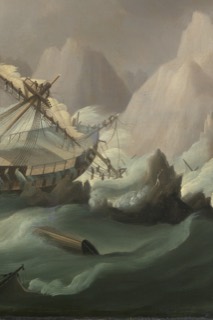
Doomreader

Melmoth the Wanderer

by Charles Robert Maturin

Length: 238,316 words, about 953 pages, about 17 hours to read

Horror

Read Melmoth the Wanderer free, starting with its best pages and lines below. Listen to it free too, read aloud by your phone's own voice.

What it is

A set of overlapping tales tell the story of a mysterious, malevolent, ageless stranger.

The best passages

Pages from the book itself, chosen to make you want to read on. Each opens in the reader at that exact spot.

Chapter I

At this moment of involuntary awe on the part of John, and of terrified silence on that of the rest, an unusual sound was heard in the house, and the whole company started as if a musket had been discharged among them:⁠—it was the unwonted sound of old Melmoth’s bell. His domestics were so few, and so constantly near him, that the sound of his bell startled them as much as if he had been ringing the knell for his own interment. “He used always to rap down for me,” said the old housekeeper, hurrying out of the kitchen; “he said pulling the bells wore out the ropes.”

The sound of the bell produced its full effect. The housekeeper rushed into the room, followed by a number of women (the Irish praeficae), all ready to prescribe for the dying or weep for the dead⁠—all clapping their hard hands, or wiping their dry eyes. These hags all surrounded the bed; and to witness their loud, wild, and desperate grief, their cries of “Oh! he’s going, his honor’s going, his honor’s going,” one would have imagined their lives were bound up in his, like those of the wives in the story of Sinbad the Sailor, who were to be interred alive with their deceased husbands.

Four of them wrung their hands and howled round the bed, while one, with all the adroitness of a Mrs. Quickly, felt his honor’s feet, and “upward and upward,” and “all was cold as any stone.”
Keep reading from here

Chapter I

He remembered in one moment most distinctly, that no one but his uncle had ever been known to enter it for many years.

Before he quitted it, he held up the dim light, and looked around him with a mixture of terror and curiosity. There was a great deal of decayed and useless lumber, such as might be supposed to be heaped up to rot in a miser’s closet; but John’s eyes were in a moment, and as if by magic, riveted on a portrait that hung on the wall, and appeared, even to his untaught eye, far superior to the tribe of family pictures that are left to moulder on the walls of a family mansion. It represented a man of middle age. There was nothing remarkable in the costume, or in the countenance, but the eyes, John felt, were such as one feels they wish they had never seen, and feels they can never forget. Had he been acquainted with the poetry of Southey, he might have often exclaimed in his after life,

“Only the eyes had life, They gleamed with demon light.”

—⁠Thalaba

From an impulse equally resistless and painful, he approached the portrait, held the candle towards it, and could distinguish the words on the border of the painting⁠—“Jno. Melmoth, anno 1646.” John was neither timid by nature, or nervous by constitution, or superstitious from habit, yet he continued to gaze in stupid horror on this singular picture, till, aroused by his uncle’s cough, he hurried into his room. The old man swallowed the wine. He appeared a little revived; it was long since he had tasted such a cordial⁠—his heart appeared to expand to a momentary confidence.

“John, what did you see in that room?”

Keep reading from here

Chapter IV

He had no leisure or inclination, then, to analyse the compound he called good, and resolve it into its component parts of curiosity, strong excitement, the pride of physical strength, or the comparative consciousness of safety. He had, indeed, no leisure, for just then he descried, standing a few yards above him on the rock, a figure that showed neither sympathy or terror⁠—uttered no sound⁠—offered no help. Melmoth could hardly keep his footing on the slippery and rocking crag on which he stood; the figure, who stood still higher, appeared alike unmoved by the storm, as by the spectacle. Melmoth’s surtout, in spite of his efforts to wrap it round him, was fluttering in rags⁠—not a thread of the stranger’s garments seemed ruffled by the blast. But this did not strike him so much as his obvious insensibility to the distress and terror around him, and he exclaimed aloud, “Good God! is it possible that anything bearing the human form should stand there without making an effort, without expressing a feeling, for those perishing wretches!”

A pause ensued, or the blast carried away the sound; but a few moments after, Melmoth distinctly heard the words, “Let them perish.”

He looked up, the figure still stood unmoved, the arms folded across the breast, the foot advanced, and fixed as in defiance of the white and climbing spray of

Keep reading from here

Chapter V

I heard this, and slept on. The morning came⁠—I knew what it would bring⁠—I dramatized the whole scene in my own mind. I imagined I witnessed the tears of my parents, the sympathy of the congregation. I thought I saw the hands of the priests tremble as they tossed the incense, and even the acolytes shiver as they held their robes. Suddenly my mind changed: I felt⁠—what was it I felt?⁠—a union of malignity, despair, and power, the most formidable. Lightning seemed flashing from my eyes as I reflected⁠—I might make the sacrificers and the sacrificed change places in one moment⁠—I might blast my mother as she stood, by a word⁠—I might break my father’s heart, by a single sentence⁠—I might scatter more desolation around me, than it was apparently possible for human vice, human power, or human malignity, more potent than both, to cause to its most abject victim.⁠—Yes!⁠—on that morning I felt within myself the struggles of nature, feeling, compunction, pride, malevolence, and despair.⁠—The former I had brought with me, the latter had been all acquired in the convent. I said to those who attended me that morning, “You are arraying me for a victim, but I can turn the executioners into the victims if I please”⁠—and I laughed. The laugh terrified those who were about me⁠—they retreated⁠—they represented my state to the Superior. He came to my apartment. The whole convent was by this time alarmed⁠—their credit was at stake⁠—the preparations had all been made⁠—the whole world was determined I was to be a monk, mad or not.

The Superior was terrified, I saw, as he entered my apartment. “My son, what means all this?”

“Nothing, my father⁠—nothing but a sudden thought that has struck me.”

“We will discuss it another time, my son; at present⁠—”

Keep reading from here

Chapter XV

On the evening of the day after the Indians had departed, Immalee, for that was the name her votarists had given her, was standing on the shore, when a being approached her unlike any she had ever beheld. The colour of his face and hands resembled her own more than those she was accustomed to see, but his garments (which were European), from their square uncouthness, their shapelessness, and their disfiguring projection about the hips (it was the fashion of the year 1680), gave her a mixed sensation of ridicule, disgust, and wonder, which her beautiful features could express only by a smile⁠—that smile, a “native of the face” from which not even surprise could banish it.

The stranger approached, and the beautiful vision approached also, but not like a European female with low and graceful bendings, still less like an Indian girl with her low salaams, but like a young fawn, all animation, timidity, confidence, and cowardice, expressed in almost a single action. She sprung from the sands⁠—ran to her favourite tree;⁠—returned again with her guard of peacocks, who expanded their superb trains with a kind of instinctive motion, as if they felt the danger that menaced their protectress, and, clapping her hands with exultation, seemed to invite them to share in the delight she felt in gazing at the new flower that had grown in the sand.

The stranger advanced, and, to Immalee’s utter astonishment, addressed her in the language which she herself had retained some words of since her infancy, and had endeavoured in vain to make her peacocks, parrots, and loxias, answer her in corresponding sounds.

Keep reading from here

10 of the best lines

“What the devil brought ye all here?”

Chapter IKeep reading from here

I had something to hope, and that is often better than something to enjoy.

Chapter VKeep reading from here

“Did you never hear a bell toll?”

Chapter VKeep reading from here

It is very frightful to behold crime in its merriment⁠—its smile must be purchased by many groans.

Chapter VIIIKeep reading from here

So she lived like a flower amid sun and storm, blooming in the light, and bending to the shower, and drawing the elements of her sweet and wild existence from both.

Chapter XVKeep reading from here

Smiles are the legitimate offspring of happiness, but laughter is often the misbegotten child of madness, that mocks its parent to her face.

Chapter XVIIKeep reading from here

Alas! the casement only shut out the form of the stranger⁠—not his image.

Chapter XXKeep reading from here

What enemy has man so deadly as himself?

Chapter XXVIIIKeep reading from here

When passion is deprived of its proper aliment, there is no telling the food on which it will prey

Chapter XXXKeep reading from here

He who is without a God must be without a heart!

Chapter XXXIVKeep reading from here

All 93 Melmoth the Wanderer quotes, with the words around each

Reviews

No reviews yet. Be the first, in the app.

Write a review in Doomreader

Contents

All 40 parts
  1. Preface
  2. Chapter I
  3. Chapter II
  4. Chapter III
  5. Chapter IV
  6. Chapter V
  7. Chapter VI
  8. Chapter VII
  9. Chapter VIII
  10. Chapter IX
  11. Chapter X
  12. Chapter XI
  13. Chapter XII
  14. Chapter XIII
  15. Chapter XIV
  16. Chapter XV
  17. Chapter XVI
  18. Chapter XVII
  19. Chapter XVIII
  20. Chapter XIX
  21. Chapter XX
  22. Chapter XXI
  23. Chapter XXII
  24. Chapter XXIII
  25. Chapter XXIV
  26. Chapter XXV
  27. Chapter XXVI
  28. Chapter XXVII
  29. Chapter XXVIII
  30. Chapter XXIX
  31. Chapter XXX
  32. Chapter XXXI
  33. Chapter XXXII
  34. Chapter XXXIII
  35. Chapter XXXIV
  36. Chapter XXXV
  37. Chapter XXXVI
  38. Chapter XXXVII
  39. Chapter XXXVIII
  40. Chapter XXXIX

Listen to Melmoth the Wanderer free

Melmoth the Wanderer as a free audiobook: Doomreader reads any book aloud, free, in your phone's or computer's own voice. Open the book and tap listen, at the speed you like, hands free.

Want a more natural voice? The AI voices read with AI credits.

Listen free in Doomreader

Download Melmoth the Wanderer free

The whole book as an EPUB file, free and legal, from Standard Ebooks. It opens in any ebook app, or read it here in Doomreader with nothing to install.

Download the EPUB (1.1 MB)

More like Melmoth the Wanderer

About this edition

Text from Standard Ebooks. Standard Ebooks dedicate their edition to the public domain (CC0 1.0). Every passage and line on this page is the book's own words, checked against the text.