Doomreader

Disenchantment

by C. E. Montague

Length: 61,089 words, about 244 pages, about 4 hours to read

History and travel

Read Disenchantment free, starting with its best pages and lines below. Listen to it free too, read aloud by your phone's own voice.

What it is

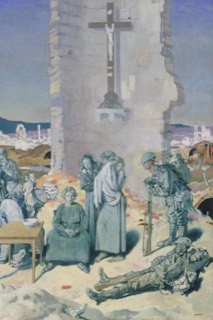
A World War I veteran analyzes how the war affected the collective British psyche.

The best passages

Pages from the book itself, chosen to make you want to read on. Each opens in the reader at that exact spot.

Chapter I

Now that most of our men in the prime of life have been in the army we seem to be in for a goodly literature of disappointment. All the ungifted young people came back from the war to tell us that they were “fed up.” That was their ailment, in outline. The gifted ones are now coming down to detail. They say that a web has been woven over the sky, or that something or other has made a goblin of the sun⁠—about as full details of a pain as you can fairly expect a gifted person to give, although he really may feel it.

No doubt disenchantment has flourished before. About the year 1880 nearly all the best art was wan and querulous; that of Burne-Jones was always in trouble; Matthew Arnold’s verse was a well-bred, melodious whine; Rossetti was all disenamourment and displacement. Yet you could feel that their broken-toy view of the world was only their nice little way with the public. Burne-Jones in his home was a red, jovial man; Arnold a diner-out of the first lustre; Rossetti a sworn friend to bacon and eggs and other plain pleasures. The young melancholiasts of today are less good at their craft, and yet they do give you a notion that some sort of silver cord really seems to them to have come loose in their insides, or some golden bowl, which mattered to them, to have been more or less broken, and that they are feeling honestly sour about it.

Keep reading from here

Chapter IV

To one recollection at least it has seemed that the New Army’s spring-tide of faith and joyous illusion came to its height on a night late in the most beautiful May of 1915, in a hut where thirty men slept near a forest in Essex. Nothing particular happened; the night was like others. Yet in the times that came after, when half of the thirty were dead and most of the others jaded and soured, the feel of that night would come back with the strange distinctness of those picked, remembered mornings and evenings of boyhood when everything that there was became everlastingly memorable as though it had been the morning or evening of the first day. Ten o’clock came and Lights Out, but a kind of luminous bloom still on the air and a bugle blowing Last Post in some faraway camp that kept worse hours than we. I believe the whole hut held its breath to hear the notes better. Who wouldn’t, to listen to that most lovely and melancholy of calls, the noble death of each day’s life, a sound moving about hither and thither, like a veiled figure making gestures both stately and tender, among the dim thoughts that we have about death the approaching extinguisher⁠—resignation and sadness and unfulfilment and triumph all coming back to the overbearing sense of extinction in those two recurrent notes of “Lights Out”? One listens as if with bowed mind, as though saying “Yes; out, out, brief candle.” A moment’s silence to let it sink in and the chaffing and laughter broke out like a splash of cool water in summer again. That hut always went to bed laughing and chaffing all round, and, though there was no wit among us, the stories tasted of life, the inexhaustible game and adventure.

Keep reading from here

Chapter II

Where, then, did the first shiver of disillusion begin? Perhaps with some trivial incident. Say a newborn company, quartered in a great town, was sent out for a long afternoon’s marching. Only through long, steady grinds can the perfect rhythm of marching, like that of rowing, be generated at last. The men, youthfully eager to kiss all possible rods and endure any obtainable hardness, march forth in a high state of delight⁠—they are going to learn how to march to Berlin! No officer being present⁠—and scarcely any existing as yet⁠—a sergeant-major is in command. He is a very old hand. For twenty minutes he leads his 250 adorers into the thick of a populous quarter. Then he orders them to fall out. A public-house resembling Buckingham Palace, but smaller, is near. Most of the men, in their ardour, stand about on the kerb, ready to leap back to their places as soon as the whistle shall sound. A few thirsty souls jostle hurriedly into the bars, where they find that arrangements for serving a multitude are surprisingly complete. Soon they are further reassured by descrying the sergeant-major’s handsome form, like Tam o’ Shanter’s, “planted unco’ right” in a chair in an inner holy of holies along with the landlord. This esoteric session has an air of permanence; the sergeant-major is evidently au mieux with the management. The thirsty souls settle down to their beer.

Keep reading from here

Chapter V

“Well, my man⁠—cold feet, I suppose?” he begins, to the first of my lamentable party. As some practitioners are said to begin all treatments with a prefatory purge, so would this psychologist start with a good full dose of insult and watch the patient’s reaction under the stimulus.

“No, sir, me ’eart’s thrutched up,” says the examinee. Then, while the Board perforates him from head to foot for some seconds with a basilisk stare of unbelief, he dribbles out at intervals, in a voice that bespeaks falling hope, such ineffective addenda as “Can’t get me sleep” and “Not a smile in me.”

“Very picturesque, indeed,” says the senior expert in doubting. “We’ll see to that ‘thrutched’ heart of yours. Cardiograph case. Next man.”

The suspect, duly spat upon, slinks out. The next man takes his place at the table. The president gives him the Dogberry eye that means: “Masters, it is proved already that you are little better than false knaves; and it will go near to be thought so shortly.” What he says is: “Another old hospital bird? Eh? Now, hadn’t you better get back to work before you’re in trouble?”

The target of this consputation is almost convinced by its force that he must be guilty of something, if only he knew what it was. Still, he repeats authority’s last diagnosis as well as he can: “Mine’s Arthuritic rheumatism, sir. An’ piles.”

Keep reading from here

Chapter II

Night came on cloudless and windless and braced with autumn’s first astringent tang of coolness. Above, as I lay on my back in the meadow, the whole dome had a stir of life in its shimmering fresco, stars flashing and winking with that eager air of having great things to impart⁠—they have it on frosty nights in the Alps, over a high bivouac. We were all worked up, you see. Could it be coming at last, I thought as I went to sleep⁠—the battle unlike other battles? How many I had seen outlive their little youth of groundless hope, from the approach along darkened roads through summer nights, the eastern sky pulsating with its crimson flush, the wild glow always leaping up and always drawing in, and the waiting cavalry’s lances upright, black and multitudinous in roadside fields, impaling the blenching sky just above the horizon; and then, in the bald dawn, the backward trickles of wastage swelling into great streams or rather endless friezes seen in silhouette across the fields, the trailing processions of wounded, English and German, on foot and on stretchers, dripping so much blood that some of the tracks were flamboyantly marked for miles across country; and then the evening’s reports, with their anxious efforts to show that we had gained something worth having. Was it to be only Loos and the Somme and Arras and Flanders and Cambrai, all over again?

Thought must have passed into dream when I was awakened by some bird that may have had a dream too and had fallen right off its perch in a bush near my head, with a disconcerted squeak and a scuffling sound among dry leaves.

Keep reading from here

10 of the best lines

All the ungifted young people came back from the war to tell us that they were “fed up.” That was their ailment, in outline.

Chapter IKeep reading from here

Perhaps, in another company or another battalion, some private of relative wealth has felt, in the strength of his youth and the heat of his zeal, that he wants more to do.

Chapter IIIKeep reading from here

Like smells that originate in the kitchen and work their way up by degrees to the best bedroom the new revelations of war ascended slowly from floor to floor of the hierarchy.

Chapter IVKeep reading from here

Nobody used it: the tide in the affairs of churches flowed its best, but no church came to take it.

Chapter VKeep reading from here

Yes; there is always an impasse before genius shows a way through.

Chapter IVKeep reading from here

Chivalry is about as likely to perish as brown eyes or the moon.

Chapter VIKeep reading from here

Because hope does spring eternal the evening before a great battle must always make fires leap up in the mind.

Chapter IKeep reading from here

So we had failed⁠—had won the fight and lost the prize; the garland of the war was withered before it was gained.

Chapter IVKeep reading from here

The bad men are not held down by force; they are only bluffed by the pretence of it.

Chapter VKeep reading from here

Everywhere the assumption that simple things have failed;

Chapter IVKeep reading from here

All 46 Disenchantment quotes, with the words around each

Reviews

No reviews yet. Be the first, in the app.

Write a review in Doomreader

Contents

All 97 parts
  1. I: The Vision
  2. Chapter I
  3. Chapter II
  4. Chapter III
  5. Chapter IV
  6. II: Misgiving
  7. Chapter I
  8. Chapter II
  9. Chapter III
  10. Chapter IV
  11. Chapter V
  12. Chapter VI
  13. III: At Agincourt and Ypres
  14. Chapter I
  15. Chapter II
  16. Chapter III
  17. Chapter IV
  18. Chapter V
  19. Chapter VI
  20. Chapter VII
  21. IV: Tedium
  22. Chapter I
  23. Chapter II
  24. Chapter III
  25. Chapter IV
  26. Chapter V
  27. Chapter VI
  28. V: The Sheep That Were Not Fed
  29. Chapter I
  30. Chapter II
  31. Chapter III
  32. Chapter IV
  33. Chapter V
  34. VI: ’Ware Politicians
  35. Chapter I
  36. Chapter II
  37. Chapter III
  38. Chapter IV
  39. VII: “Can’t Believe a Word”
  40. Chapter I
  41. Chapter II
  42. Chapter III
  43. Chapter IV
  44. Chapter V
  45. VIII: The Duty of Lying
  46. Chapter I
  47. Chapter II
  48. Chapter III
  49. Chapter IV
  50. Chapter V
  51. Chapter VI
  52. Chapter VII
  53. IX: Autumn Comes
  54. Chapter I
  55. Chapter II
  56. Chapter III
  57. Chapter IV
  58. X: Autumn Tints in Chivalry
  59. Chapter I
  60. Chapter II
  61. Chapter III
  62. Chapter IV
  63. Chapter V
  64. Chapter VI
  65. XI: Stars in Their Courses
  66. Chapter I
  67. Chapter II
  68. Chapter III
  69. Chapter IV
  70. Chapter V
  71. XII: Belated Boons
  72. Chapter I
  73. Chapter II
  74. Chapter III
  75. Chapter IV
  76. XIII: The Old Age of the War
  77. Chapter I
  78. Chapter II
  79. Chapter III
  80. Chapter IV
  81. XIV: Our Moderate Satanists
  82. Chapter I
  83. Chapter II
  84. Chapter III
  85. Chapter IV
  86. Chapter V
  87. XV: Any Cure?
  88. Chapter I
  89. Chapter II
  90. Chapter III
  91. Chapter IV
  92. XVI: Fair Warning
  93. Chapter I
  94. Chapter II
  95. Chapter III
  96. Chapter IV
  97. Chapter V

Listen to Disenchantment free

Disenchantment as a free audiobook: Doomreader reads any book aloud, free, in your phone's or computer's own voice. Open the book and tap listen, at the speed you like, hands free.

Want a more natural voice? The AI voices read with AI credits.

Listen free in Doomreader

Download Disenchantment free

The whole book as an EPUB file, free and legal, from Standard Ebooks. It opens in any ebook app, or read it here in Doomreader with nothing to install.

Download the EPUB (0.7 MB)

More like Disenchantment

About this edition

Text from Standard Ebooks. Standard Ebooks dedicate their edition to the public domain (CC0 1.0). Every passage and line on this page is the book's own words, checked against the text.